
There’s something really special about walking into a bedroom that feels quiet, warm, and completely intentional. I think that’s exactly what the minimalist neutral bedroom aesthetic does so well it strips away the noise and leaves only what genuinely matters. You don’t need a huge budget or a perfectly square room to make this work. Honestly, what you need is a clear sense of what you love and the confidence to keep things simple. Whether you’re starting from scratch or just refreshing a tired space, these ideas will give you the visual direction and the practical grounding to build something beautiful.
Soft Linen Bedding in Warm Ivory Tones
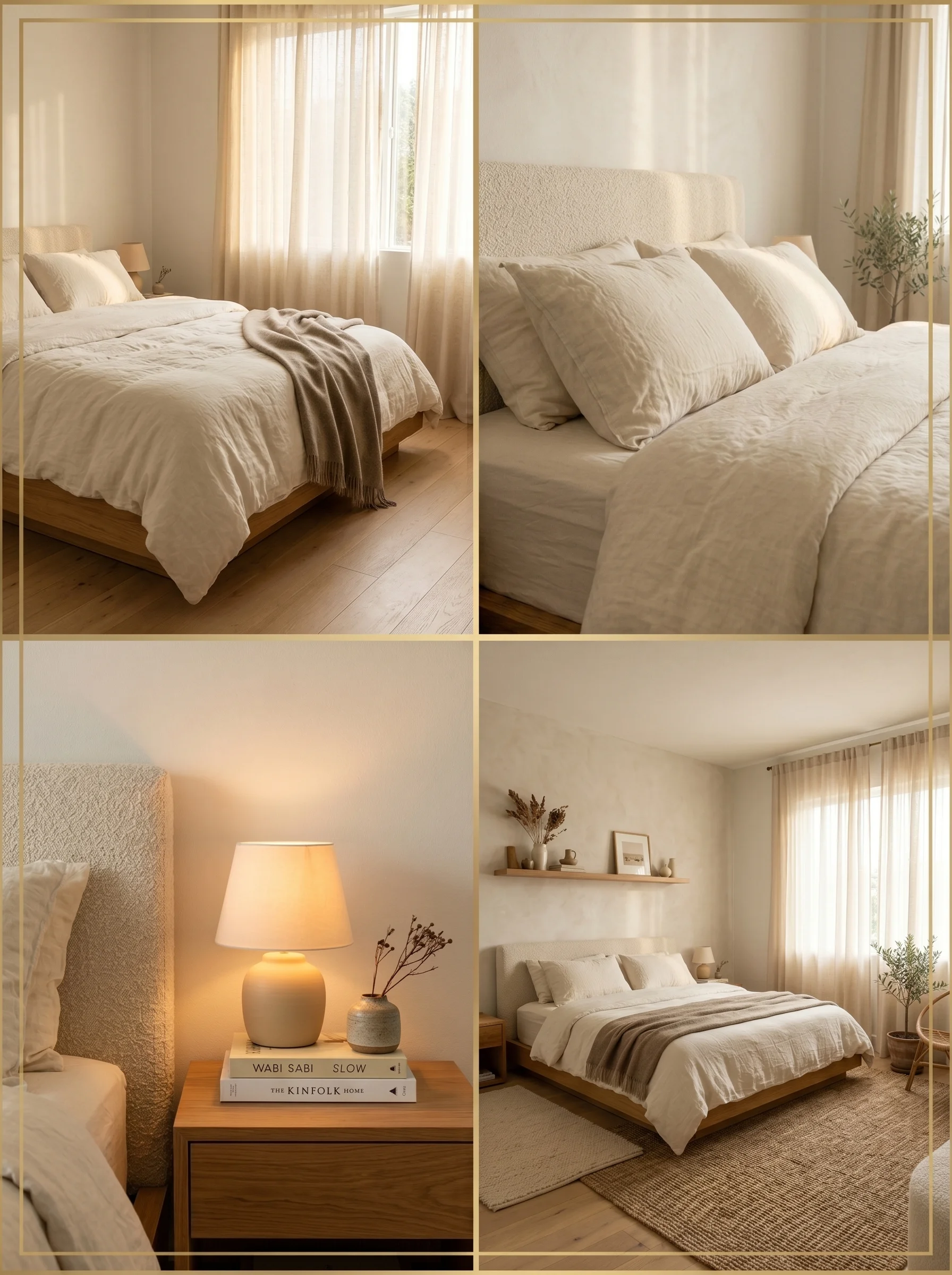
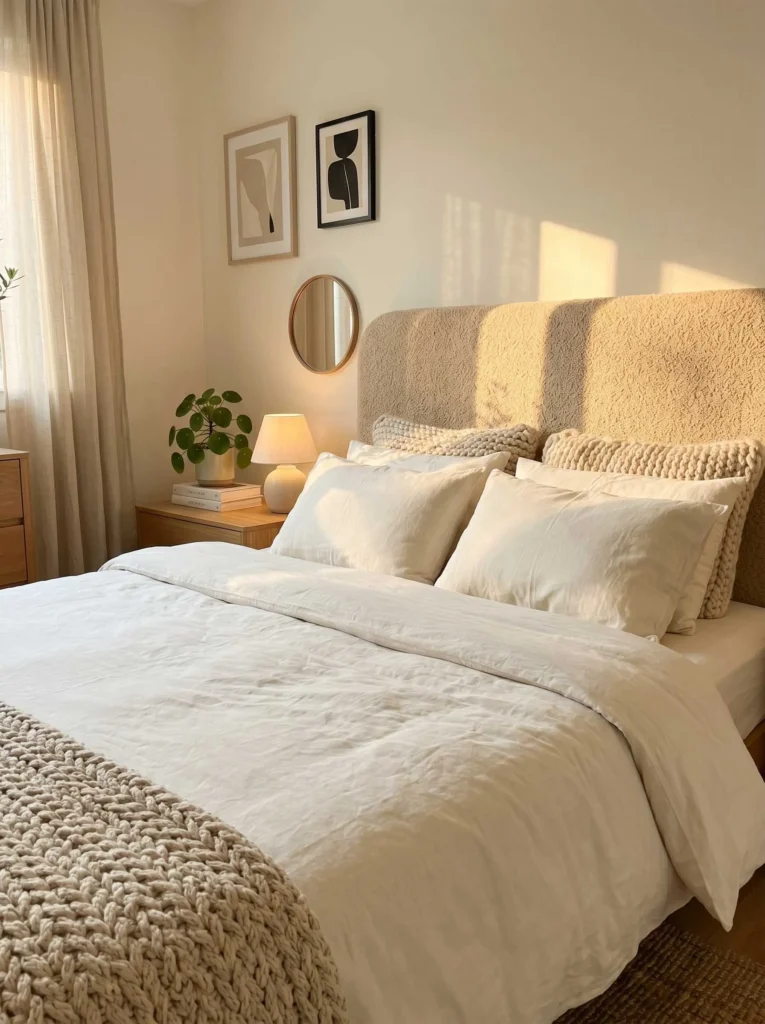
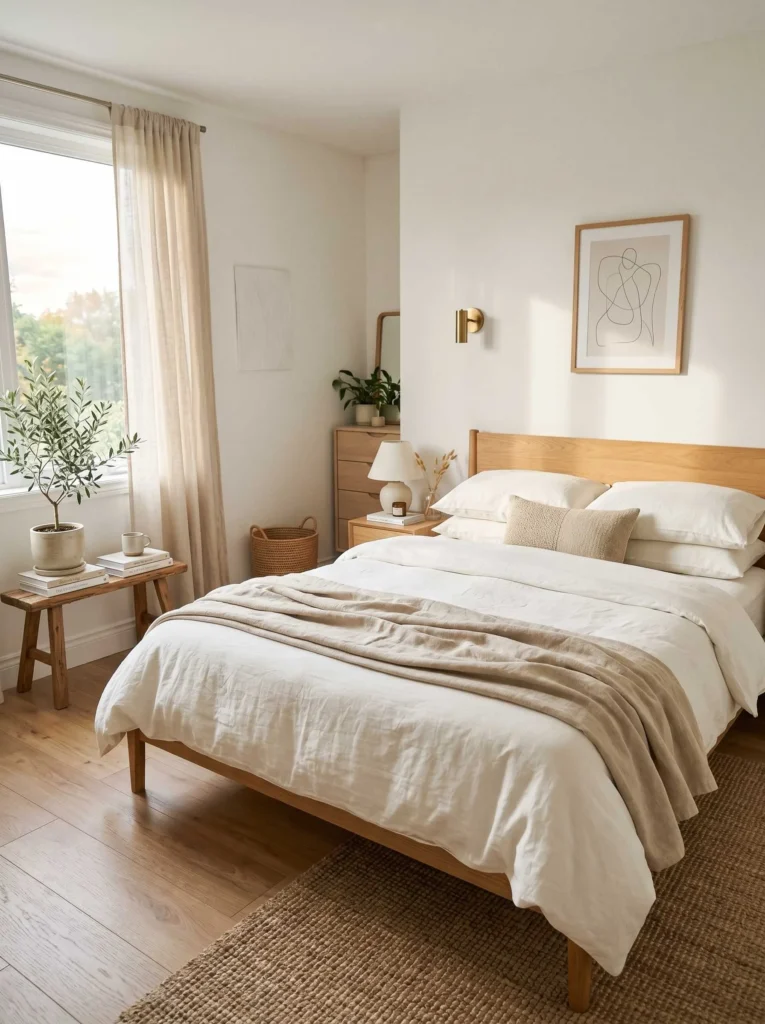
Nothing sets the tone of a minimalist neutral bedroom faster than the bedding you choose. Soft linen in warm ivory is one of those choices that just works in almost every layout. The texture of natural linen adds depth without needing any pattern or color it breathes, it wrinkles beautifully, and it gets softer with every wash. Layer a slightly darker taupe throw at the foot of the bed to create that quiet contrast that feels so intentional. Keep your pillows simple two sleeping pillows in matching linen cases and maybe one slightly oversized euro sham. The whole effect reads as relaxed luxury without trying too hard.
Warm White Walls with a Subtle Greige Undertone
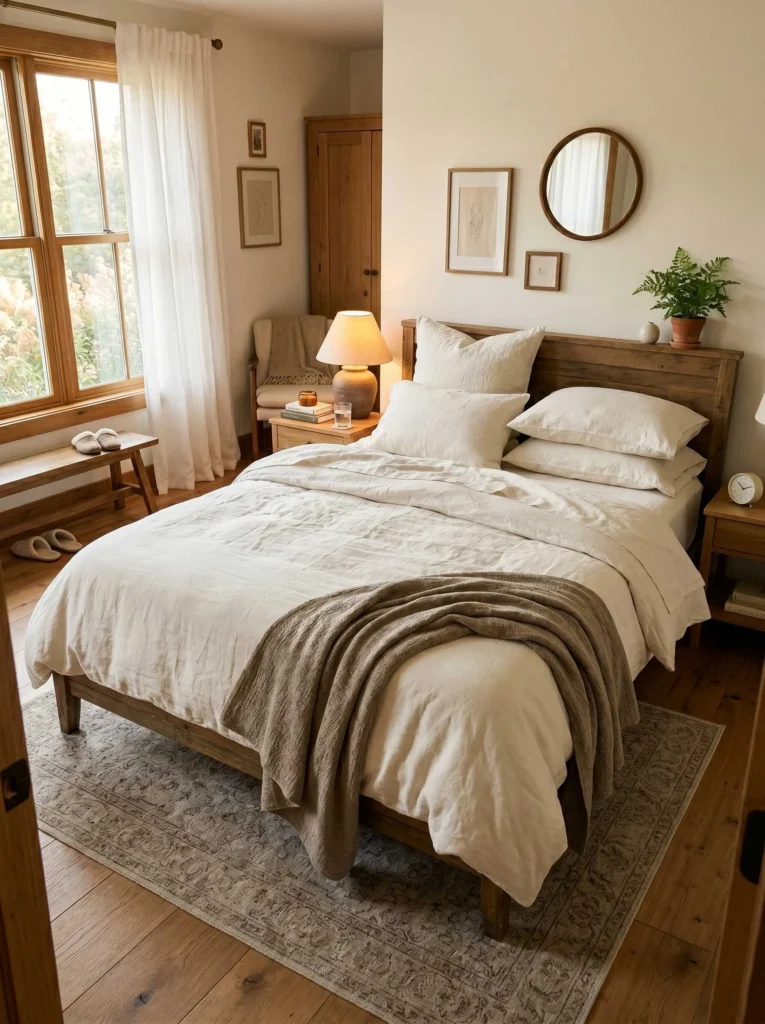
Choosing the right white for your walls is honestly more complicated than it sounds, but greige-leaning whites are where minimalist neutral bedrooms really shine. A shade with warm beige undertones keeps the room feeling cozy rather than clinical think less hospital, more Scandinavian farmhouse. The warmth in the wall color also makes wood tones and natural textures pop in the most gentle way. In good natural light, this kind of wall color almost glows softly. Paired with white trim, it creates just enough contrast to define the space without adding visual clutter. It’s a quiet background that lets everything else breathe.
Low-Profile Platform Bed in Natural Oak
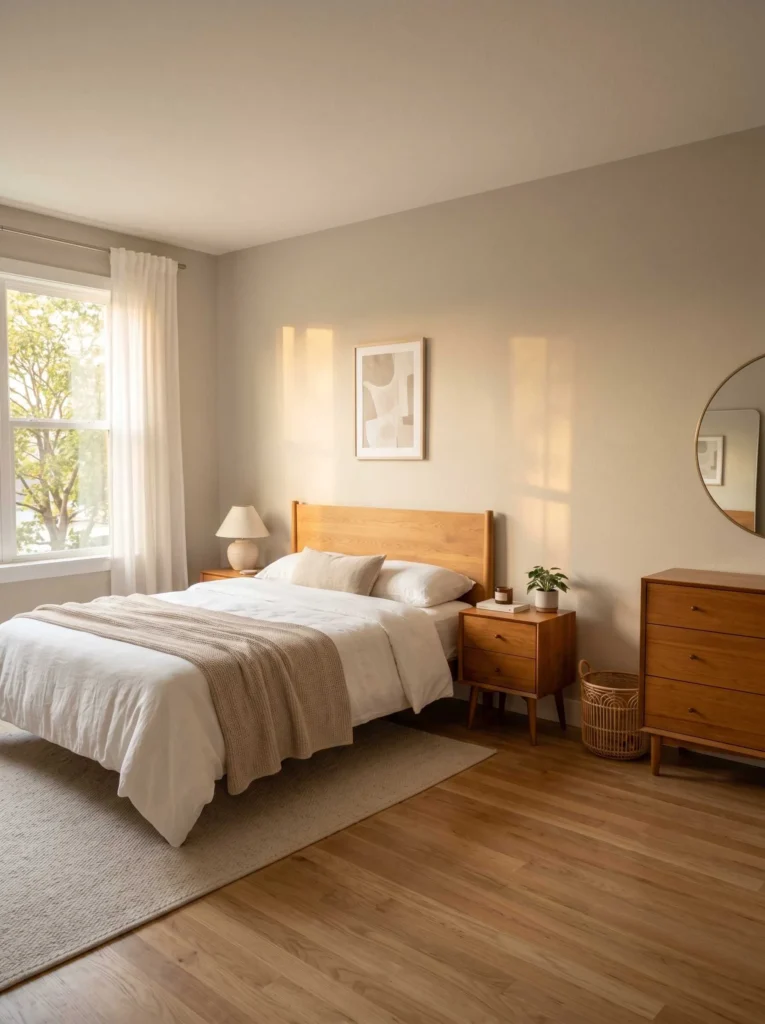
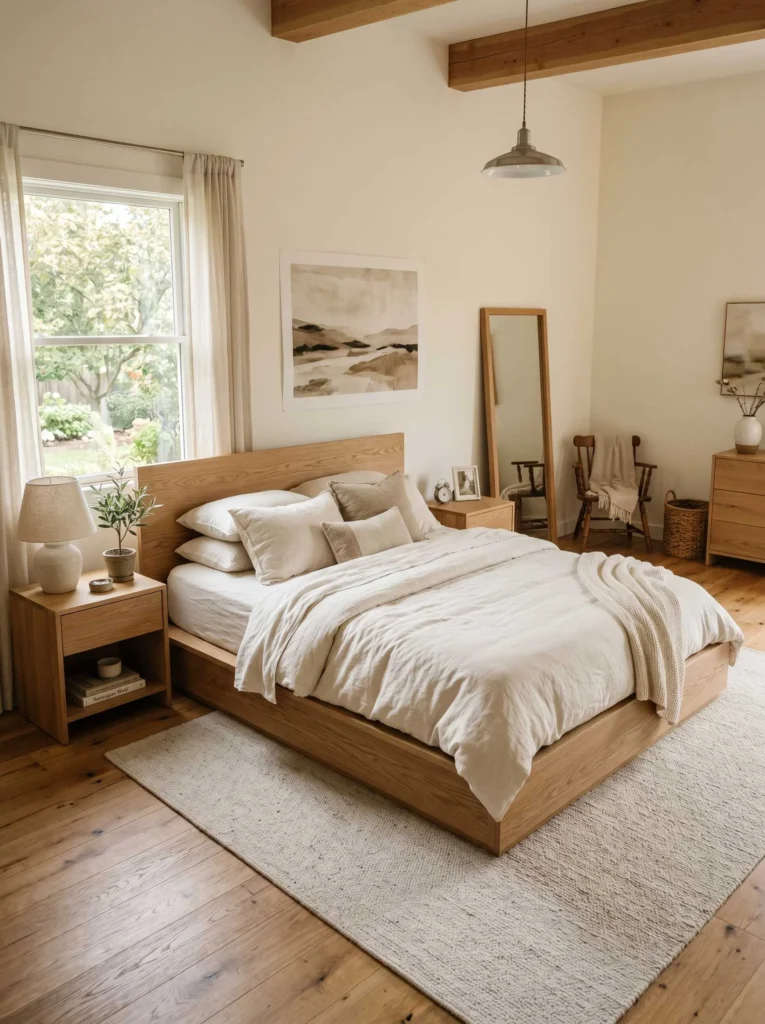
A low platform bed in natural oak is one of those foundational choices that anchors a minimalist neutral bedroom without dominating it. The natural grain of the wood brings organic warmth, and the low height keeps the room feeling open and airy which is especially great in smaller spaces. I love how this style of bed feels grounded and calm, almost like it grew there. Skip the ornate headboard. A simple, flat panel or a slightly padded linen headboard in oat or sand is all you need. The whole look is about clean horizontal lines and natural material, and honestly, once you have this piece in place, the rest of the room follows naturally.
Layered Woven Rugs on Light Hardwood Floors
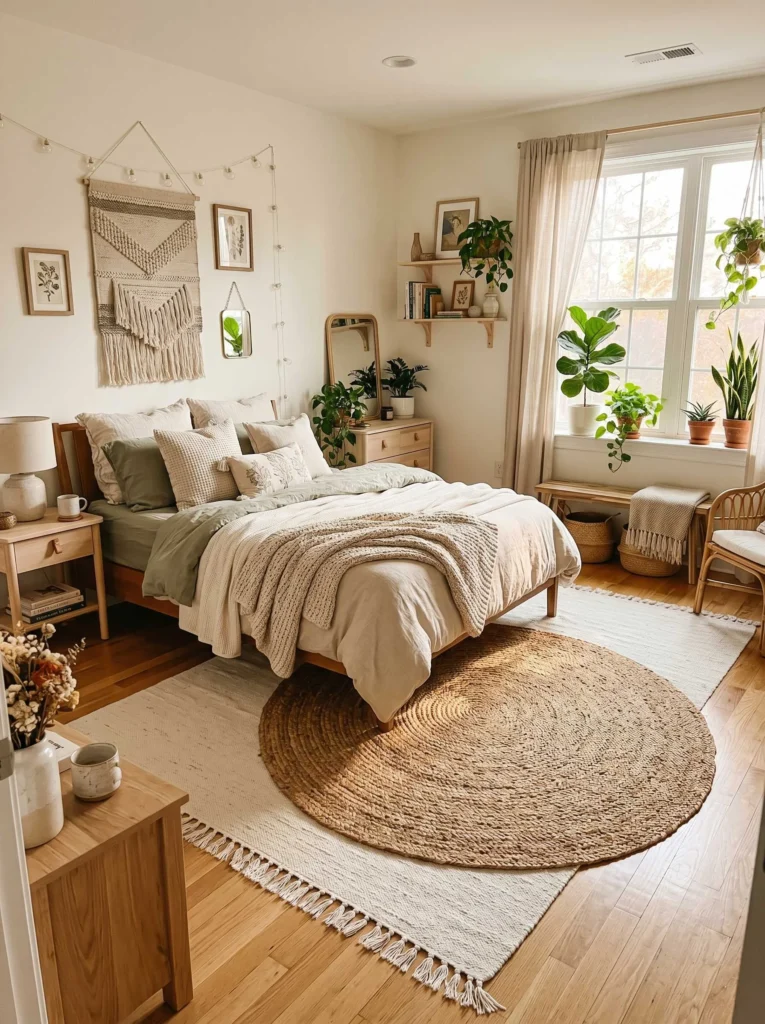
Layering rugs is one of the easiest ways to add texture and warmth to a minimalist neutral bedroom without overwhelming the palette. Start with a flat-weave cotton rug in off-white or natural undyed cotton as your base, then layer a smaller jute or chunky wool piece on top. The combination of textures tight weave underneath and a looser, more organic weave on top creates something visually interesting without needing color. Light hardwood floors peek out at the edges and tie everything together. I think this approach works especially well around the bed because it creates a soft landing zone that feels cozy and considered. The layers also add a sense of depth that a single rug just can’t achieve.
Sheer Linen Curtains That Pool Slightly at the Floor
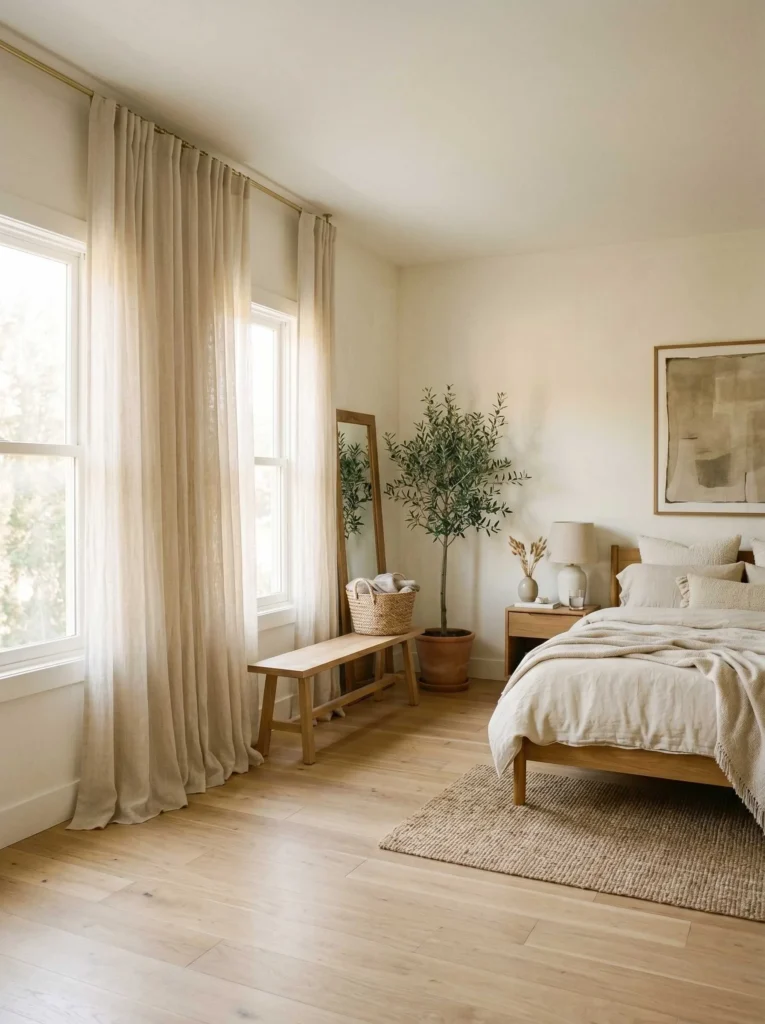
Window treatments can completely change how a room feels, and sheer linen curtains hung close to the ceiling are one of the most underrated tools in the minimalist neutral bedroom playbook. When the panels are just long enough to pool slightly at the floor, the whole room suddenly feels taller and more luxurious. Natural linen in unbleached or pale flax tones filters light beautifully the glow you get in the morning is genuinely soft and warm. Hang two panels per window even on a small window because the fullness reads as intentional rather than accidental. The slight drape at the floor adds an organic, lived-in quality that keeps the room from feeling too rigid.
A Warm Wood Nightstand with Simple Lines
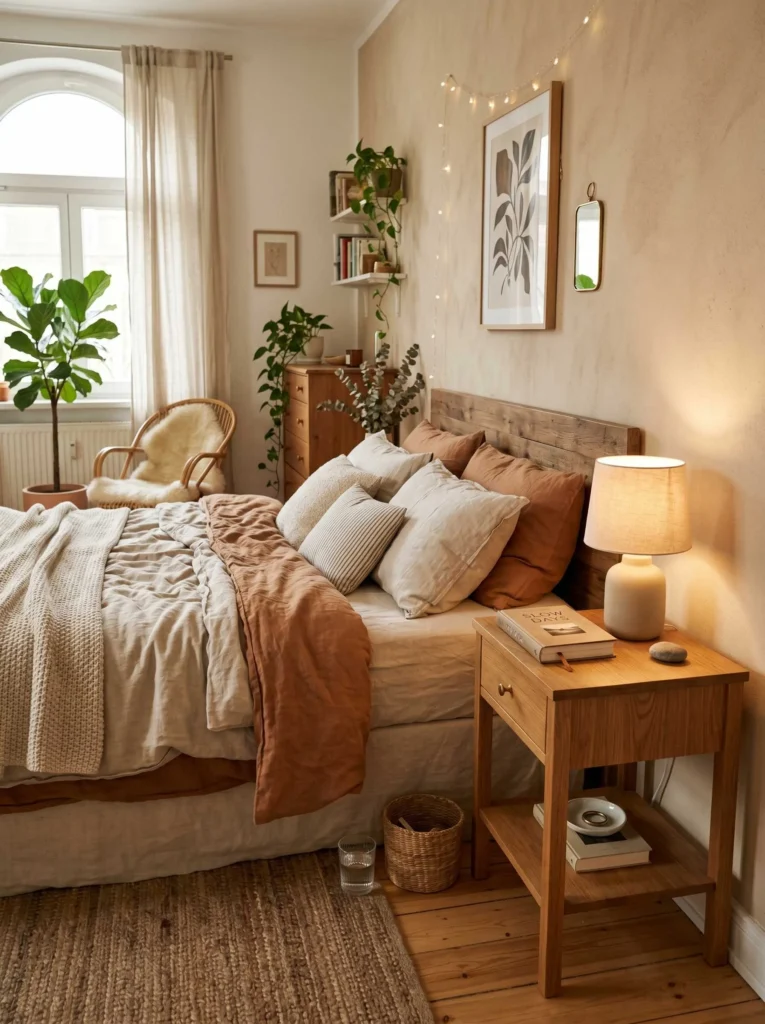
The nightstand is one of those pieces that’s easy to overlook, but it has a surprisingly big impact on the feel of a minimalist neutral bedroom. A small, warm-toned wood piece mango wood, walnut, or even light ash with clean, straight lines and minimal hardware keeps things grounded and natural. Avoid nightstands with lots of drawers or ornate detail. Instead, look for something with one small drawer and an open lower shelf so you can style it simply. Keep the surface clean: a small ceramic lamp, a single book, and maybe a tiny plant or a smooth stone. That’s genuinely all you need. Less on the nightstand always reads as more considered and more styled.
Rattan or Wicker Accent Chair in a Corner
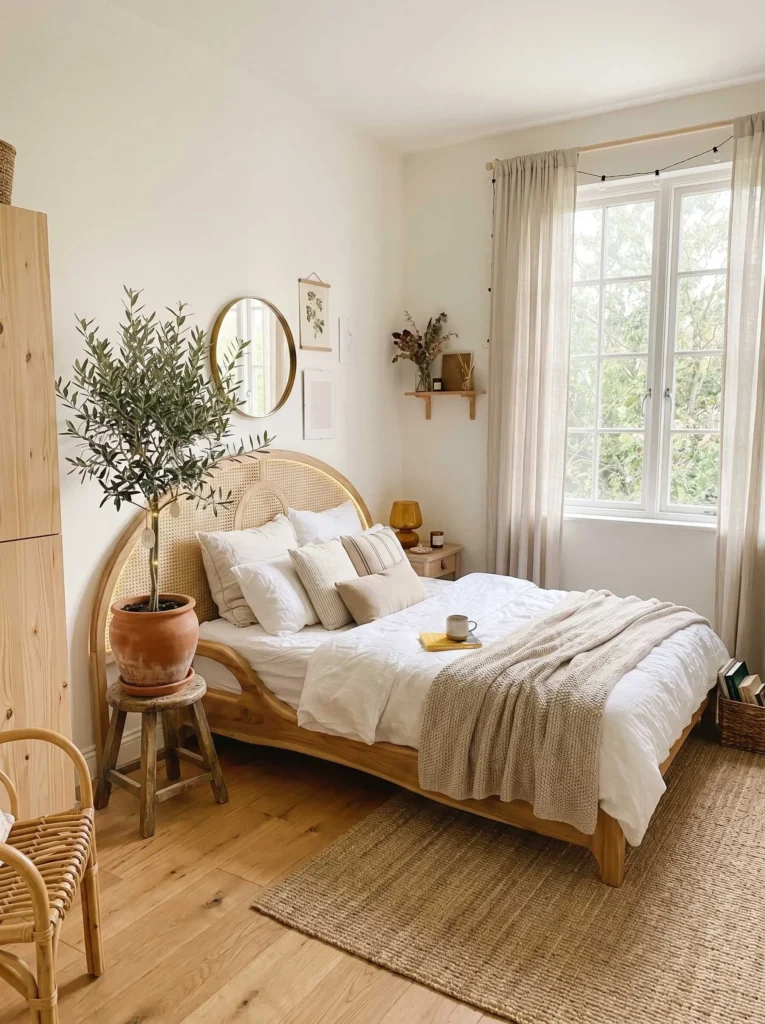
Adding a rattan or wicker chair to a corner of the minimalist neutral bedroom brings in that organic, earthy texture that makes the whole space feel more collected and intentional. A round-backed rattan chair with a simple linen cushion in oat or cream works especially well against warm white walls. It creates a little reading nook energy without needing a full bookshelf or elaborate styling. The natural material also plays really well with other organic textures in the room jute rugs, linen bedding, wood furniture. I feel like this is one of those additions that immediately makes a bedroom look like it belongs in a beautifully curated editorial, but it’s actually very easy to pull off in real life.
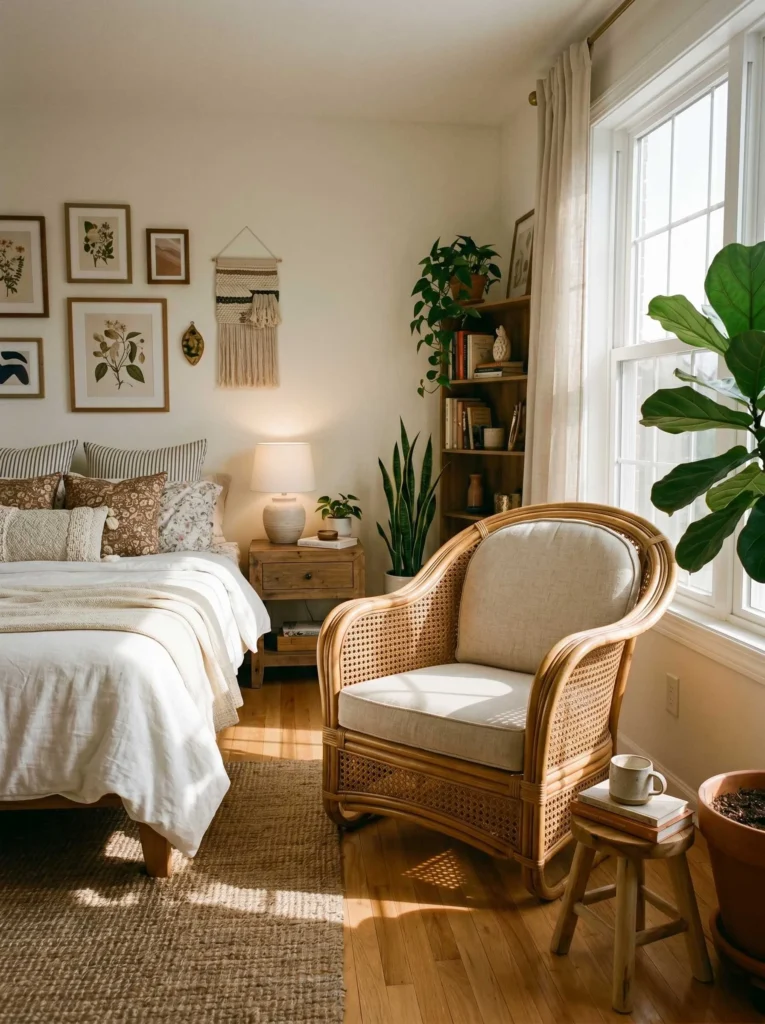
A Gallery Wall of Soft Neutral Prints in Simple Frames
A gallery wall sounds like it might conflict with minimalist principles, but when done with restraint, it adds so much warmth and personality to a neutral bedroom. The key is to keep the frames consistent thin black metal or natural wood in the same tone and choose prints that stay fully within a warm neutral palette. Think abstract sand and stone textures, simple botanical line art, or quiet landscape photography with muted tones. Space the frames generously so the wall has room to breathe. Three to five pieces arranged intentionally feel much more purposeful than a crowded collage. The artwork becomes a quiet focal point rather than visual noise, which is exactly what a minimalist neutral bedroom needs.
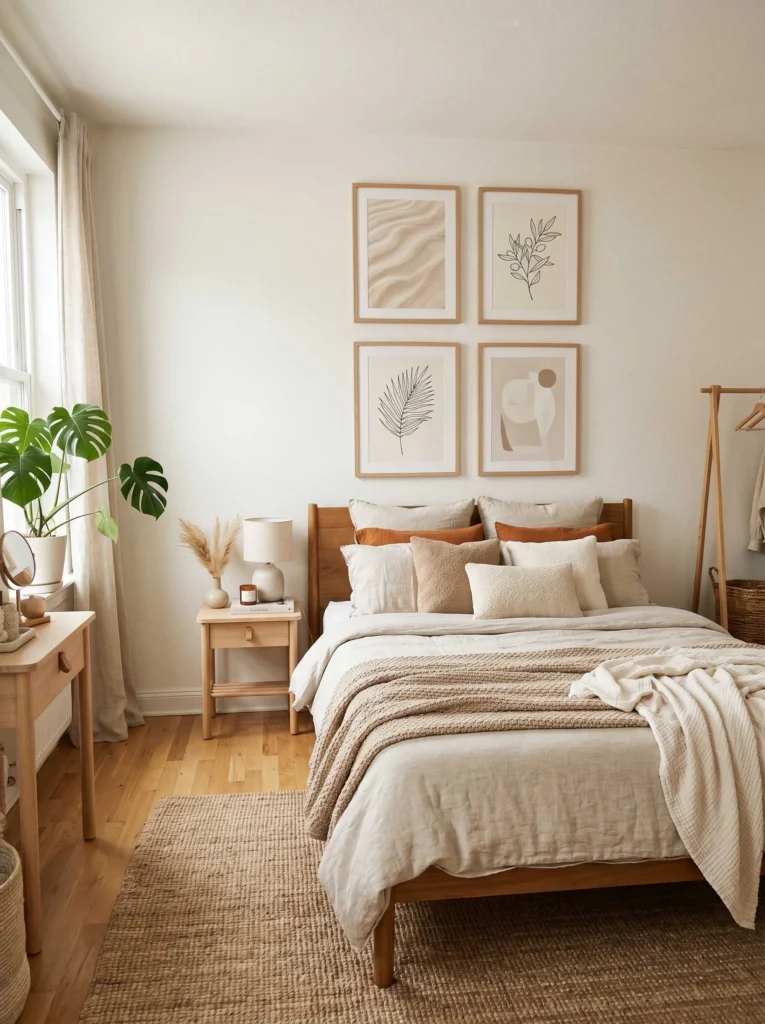
Neutral Linen Bench at the Foot of the Bed
A bench at the foot of the bed is one of those classic bedroom elements that makes a space feel complete and hotel-like in the best possible way. In a minimalist neutral bedroom, the best option is a low, upholstered bench in linen or bouclé fabric in a natural oat or warm sand tone. Keep the legs short and in a material that echoes other wood tones in the room. Avoid heavy tufting or ornate detail a simple bench with clean stitching or a natural seam is far more in line with the aesthetic. Beyond looking beautiful, it’s incredibly functional as a place to sit while getting dressed or to fold a blanket at the end of the day.
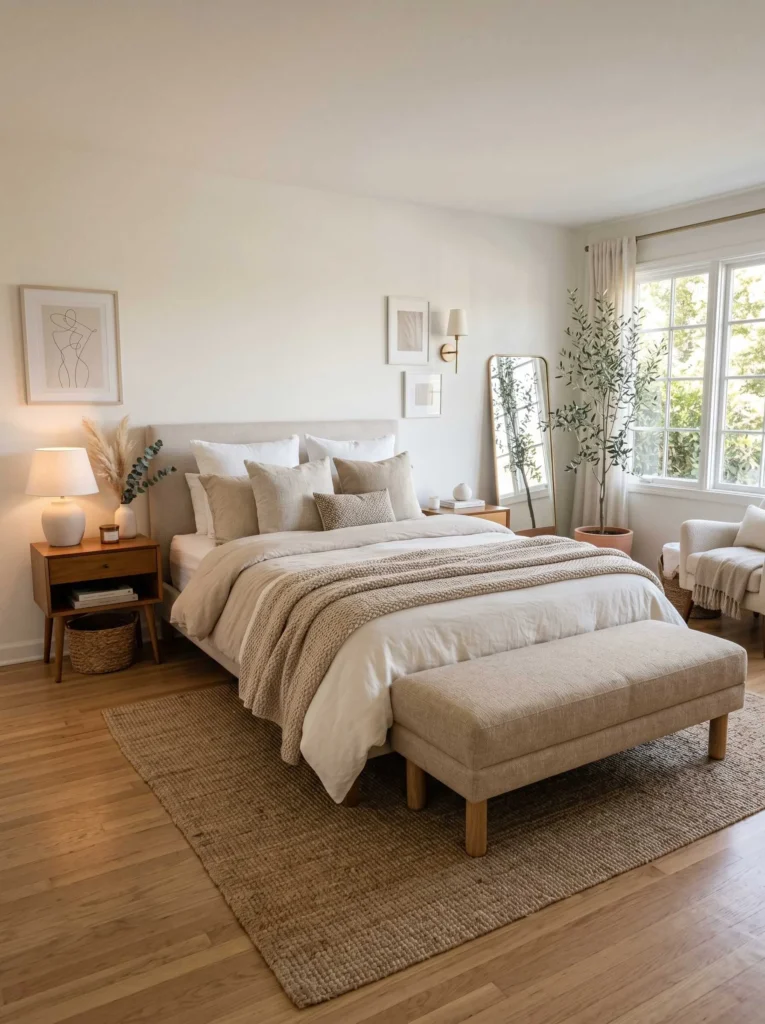
Organic Ceramic Vases with Dried Botanicals
One of the simplest ways to bring life and texture to a minimalist neutral bedroom is through a grouping of organic ceramic vases with dried botanicals. Handmade ceramics in matte white, warm clay, or soft sage tones have this beautiful irregularity that feels very human and warm rather than perfectly manufactured. Fill them loosely with dried pampas grass, cotton stems, or bleached branches. The arrangement doesn’t need to be perfectly symmetrical in fact, slight variation in height and fullness looks more natural and considered. Place them on a dresser, a floating shelf, or even on the floor in a corner for a more editorial effect. The dried elements don’t wilt or need maintenance, which is also a very practical win.
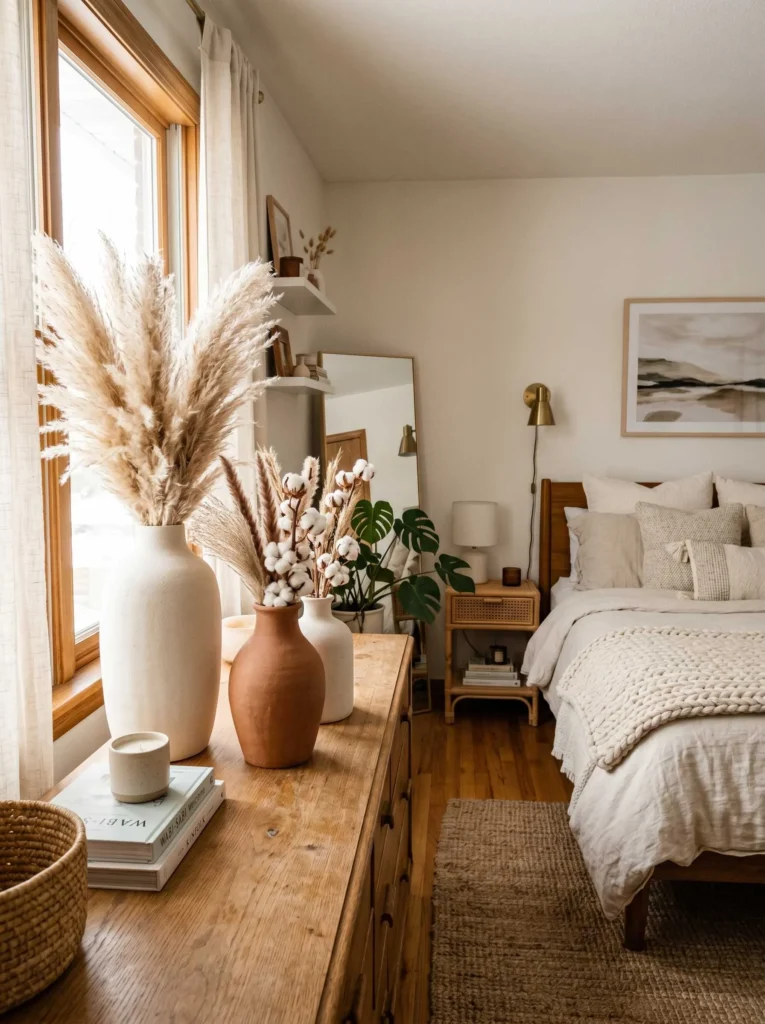
A Simple Floating Shelf for Intentional Styling
Floating shelves are a minimalist neutral bedroom’s best friend when they’re used with real restraint. One shelf, not three. Positioned above a nightstand or across from the bed, a single narrow shelf in warm wood tone gives you a place to display a few meaningful objects without cluttering the room. A small plant, a ceramic cup holding a candle, one or two books stacked horizontally that’s the kind of styling that reads as curated rather than cluttered. The negative space around the objects is just as important as the objects themselves. I always think of it as giving each thing room to breathe so it feels intentional rather than forgotten.
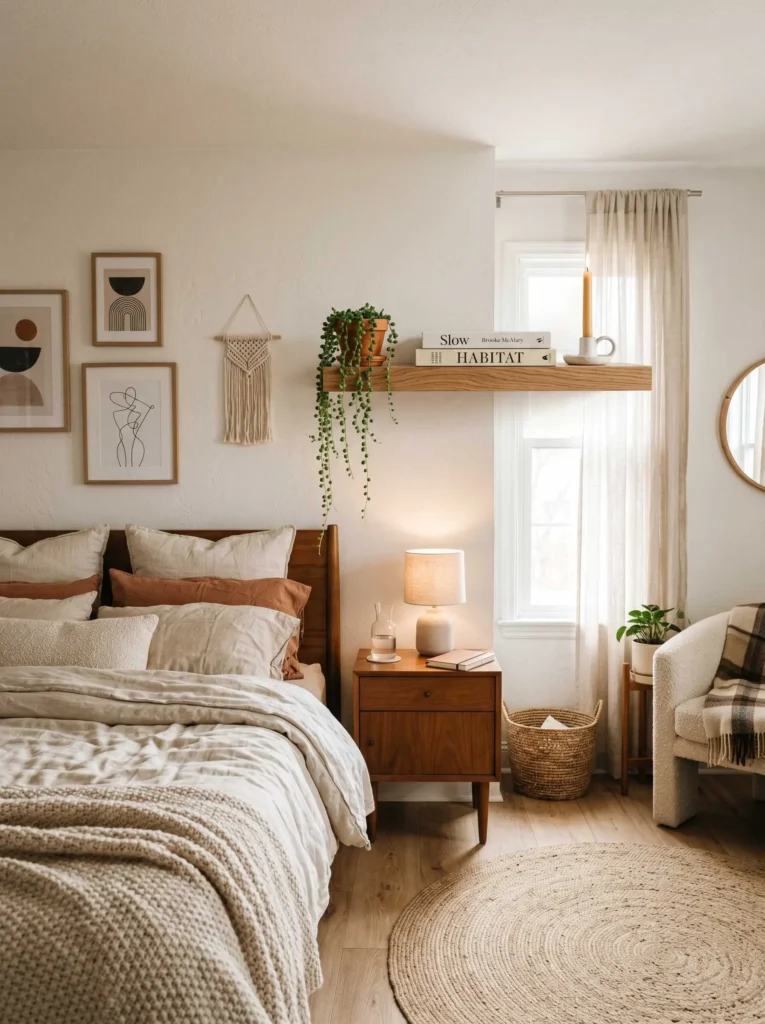
Soft Ambient Lighting with a Warm-Toned Bulb
Lighting is genuinely one of the most important things to get right in a minimalist neutral bedroom, and it’s one of the easiest things to overlook until it’s already wrong. Overhead lighting is almost never the answer for a bedroom it’s too harsh and too flat. Instead, rely on a combination of table lamps and floor lamps positioned at lower levels for warm, diffused light. Choose bulbs in the 2700K range for that golden, amber glow that makes skin look beautiful and makes the room feel like evening even when it’s barely dusk. A simple ceramic or linen-shade lamp on each nightstand creates a symmetry that feels both calming and deliberately styled.
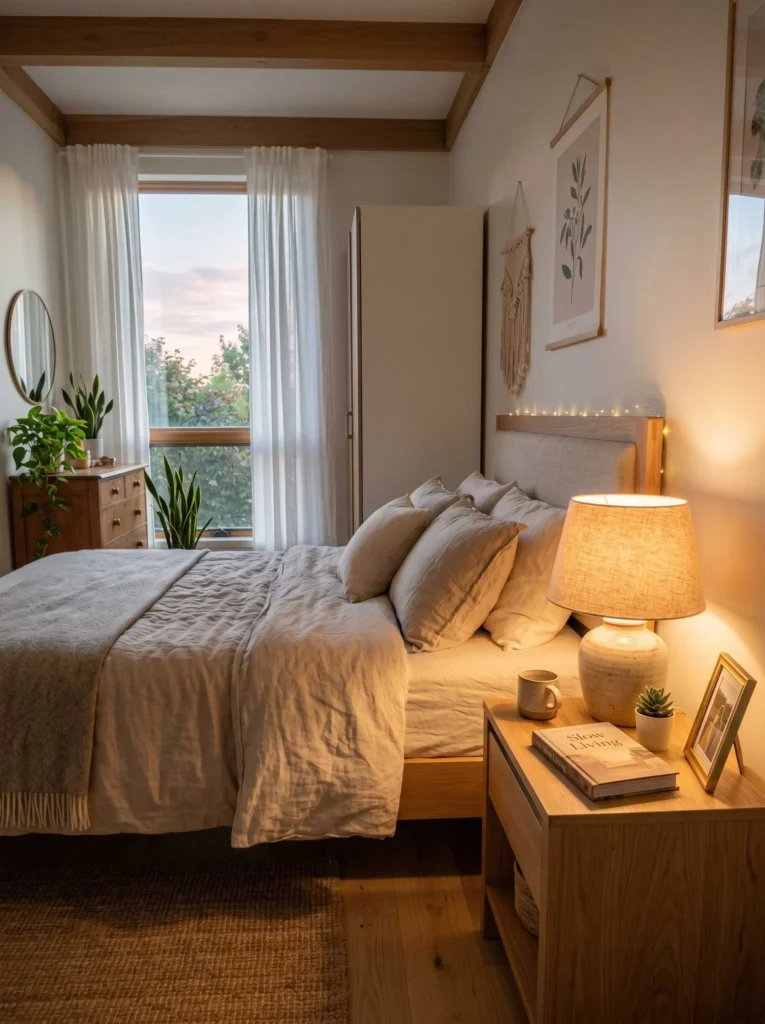
Monochrome Throw Pillows in Varying Textures
Throw pillows are where a lot of people accidentally add too much color to a minimalist neutral bedroom without meaning to. The secret to getting this right is to stay fully within one color family creams, oats, tawny tans, and soft whites but vary the texture significantly. A chunky knit pillow next to a smooth velvet one next to a cotton slub pillow creates this really satisfying visual richness that you feel rather than consciously notice. Limit yourself to three or four pillows total. More than that starts to look decorative rather than restful, which defeats the whole purpose of the aesthetic. The variations in texture are what do the heavy lifting here, not the number of pillows.
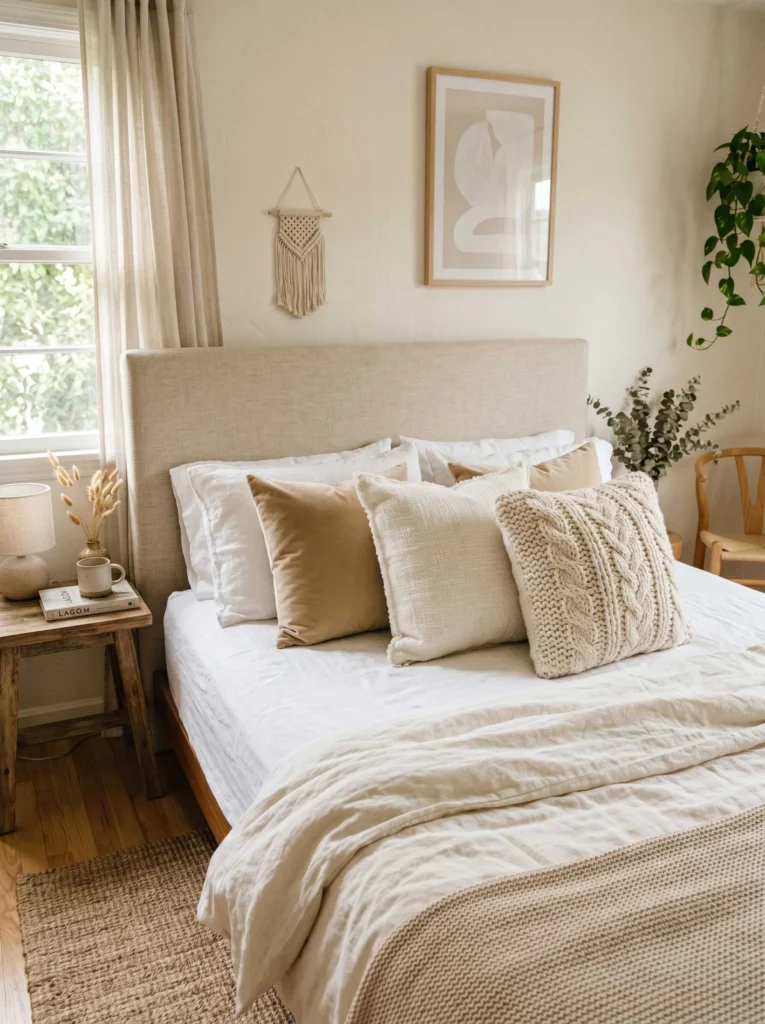
A Minimal Dresser in Matte White or Light Wood
The dresser is a piece that needs to earn its place in a minimalist neutral bedroom, which means it should store a lot while looking like it does very little. A low, long dresser in matte white or light-toned wood with simple bar pulls or no hardware at all is the ideal choice. Keep the top surface styled lightly a tray, a plant, a single framed photo, and nothing more. The clean horizontal line of the dresser also works as a natural place for your eyes to rest, which adds to the overall calm of the room. If you can choose a piece with smooth-gliding drawers and solid construction, even better quality matters more than brand when it comes to this kind of essential furniture.
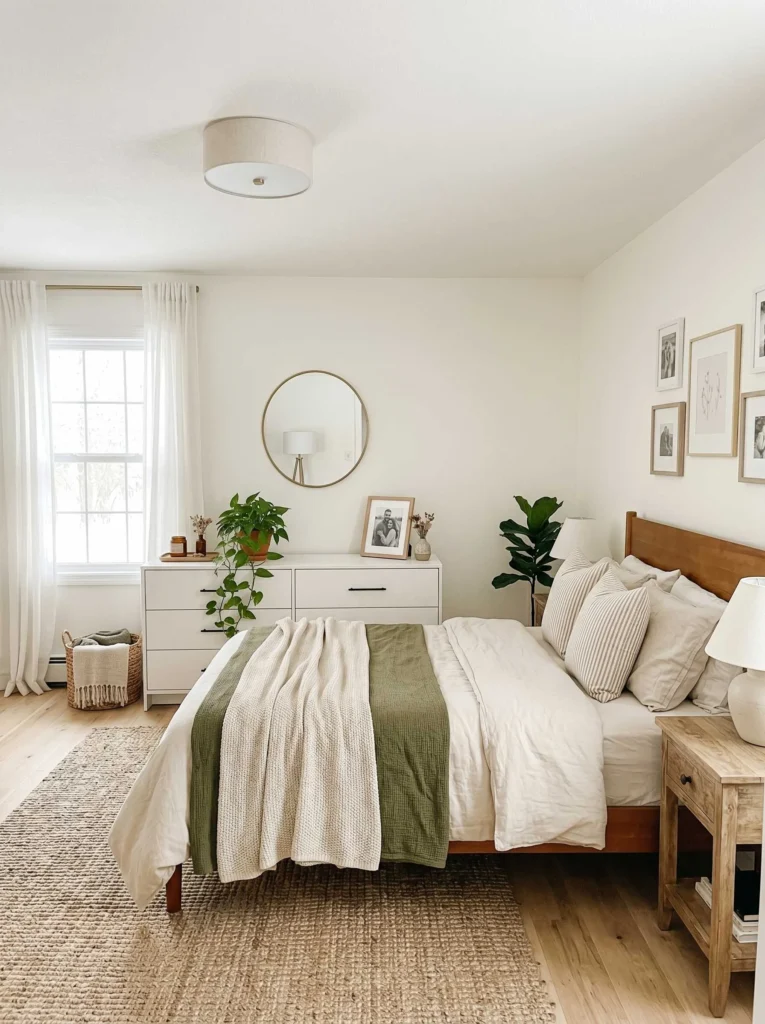
Textured Plaster Wall Treatment Behind the Bed
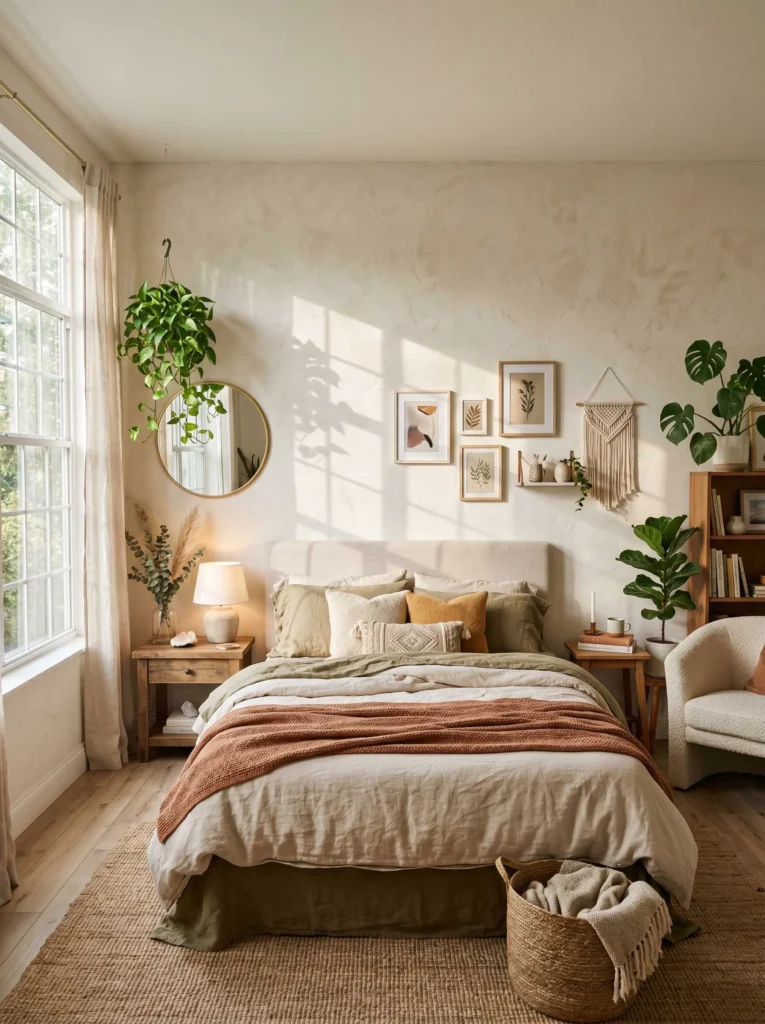
A textured plaster wall finish is one of those design moves that looks incredibly intentional and high-end but is actually very achievable as a DIY project with the right materials. Applied only to the wall directly behind the bed, it creates a soft, organic focal point that replaces the need for a traditional headboard or a full accent wall in paint. The texture catches light differently throughout the day in the morning it looks pale and ethereal, in the afternoon it takes on warmth, and in the evening it creates long, gentle shadows. Keep the plaster in a tone very close to the surrounding wall color just a touch warmer or more textured so it reads as a subtle shift rather than a dramatic contrast.
A Simple Canopy Effect with Sheer Linen Fabric
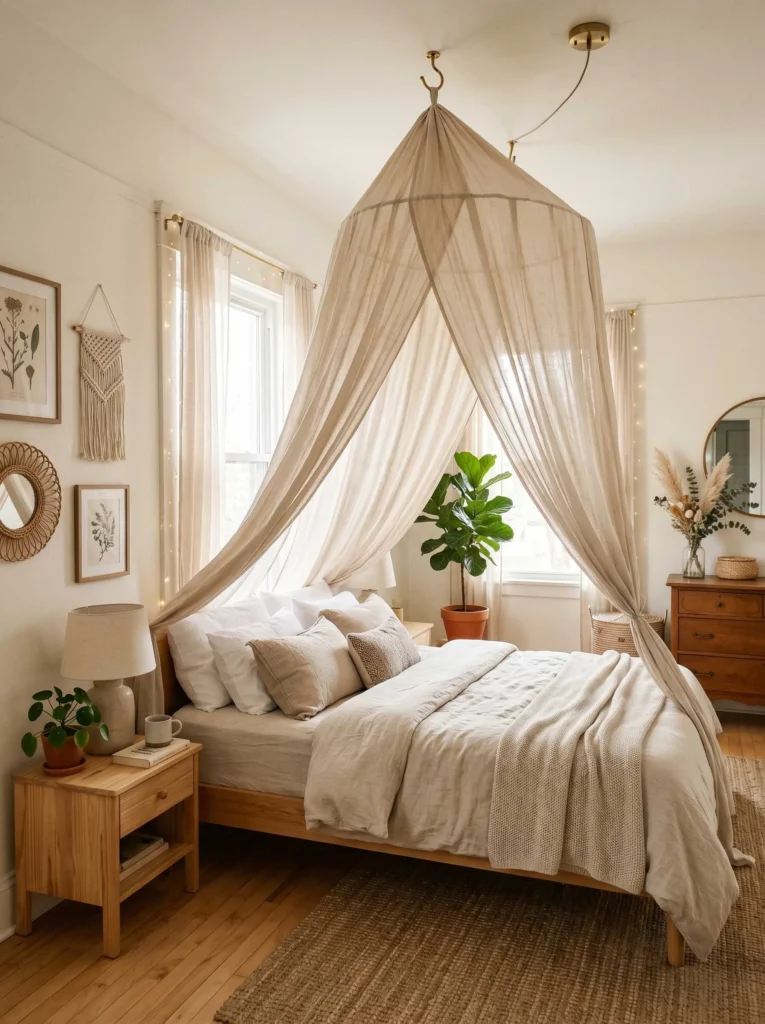
You don’t need a traditional four-poster frame to achieve that dreamy, draped canopy look in a minimalist neutral bedroom. A single ceiling hook positioned above the center of the bed and two side hooks on the wall can support a length of unbleached sheer linen fabric draped in a loose, flowing shape above and around the headboard. The effect is romantic without being fussy and adds a sense of enclosure that makes the bed feel like a true sanctuary. The key is keeping the fabric very simple — no pattern, no color, just the natural texture of the linen itself. It’s one of those ideas that photographs beautifully and also genuinely changes how the room feels in person.
A Neutral Color Blocked Accent Wall in Warm Clay
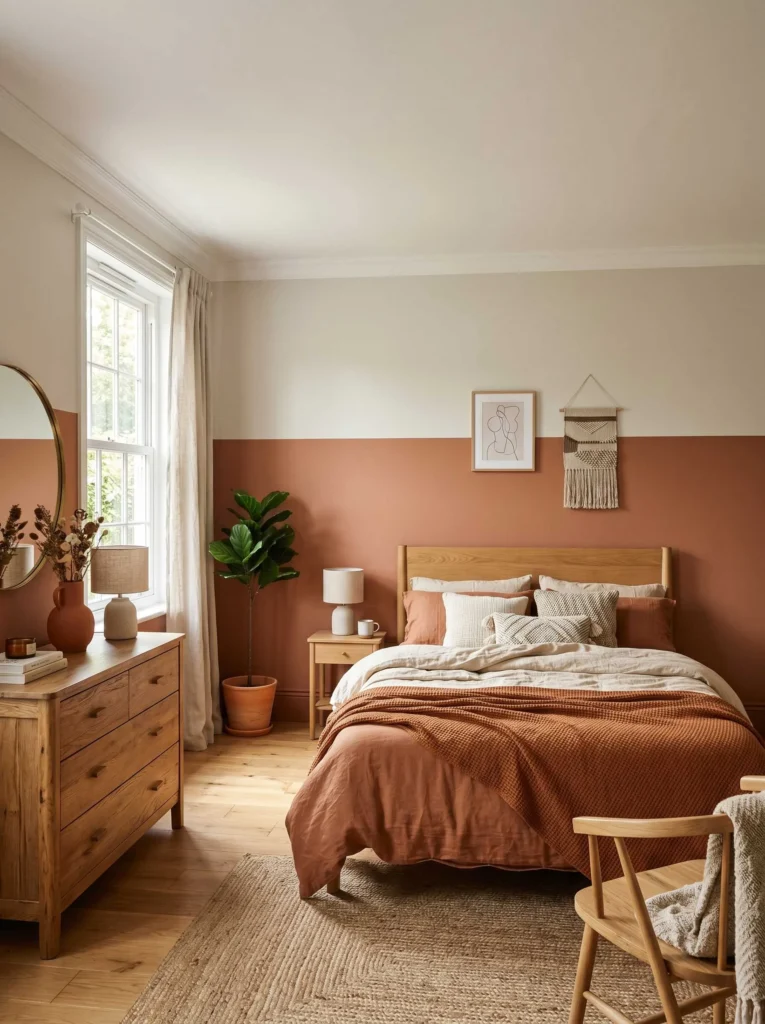
A soft color-blocked wall section not a full accent wall, but a deliberate section of warm clay or earthy terracotta painted from the baseboard up to about two-thirds of the wall height is a quietly modern approach to adding depth in a minimalist neutral bedroom. It draws the eye downward and creates a grounded, earthy energy that feels very current and also very timeless. Keep the tone close enough to the ceiling color that the contrast is warm rather than jarring. This approach works especially well in rooms with white or greige upper walls because the clay section below feels like a natural extension of the earth tones already present in the wood and textile choices throughout the room.
Natural Wood Ceiling Beams for Warmth and Architecture
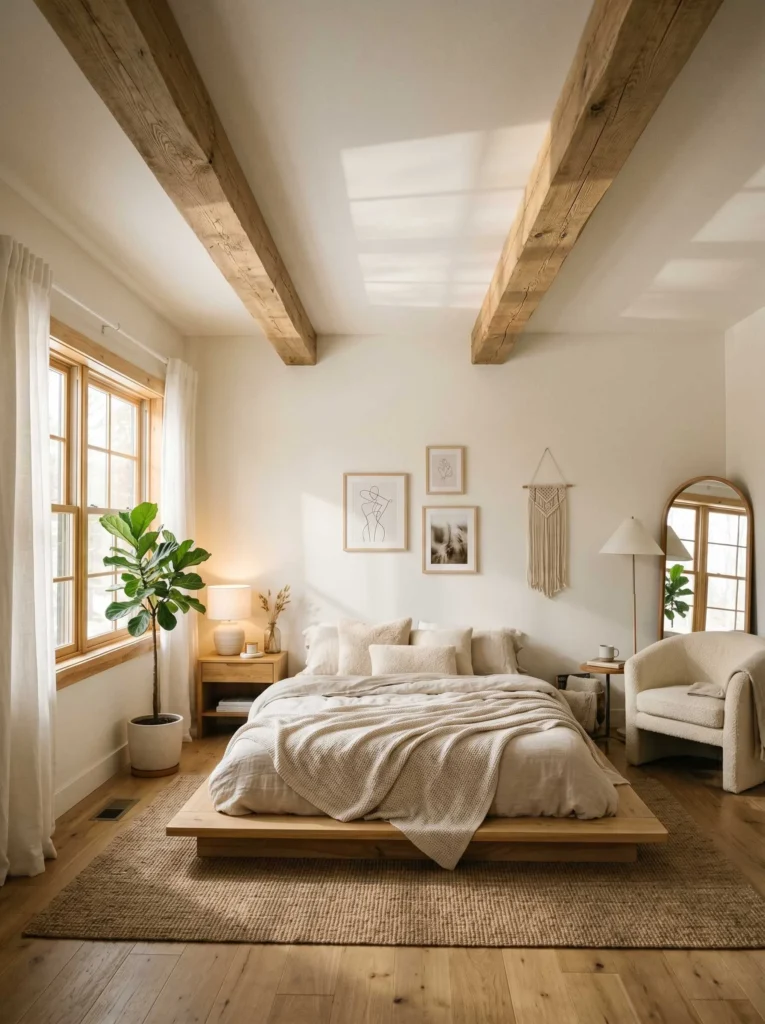
Exposed natural wood ceiling beams are one of those architectural details that completely transform a minimalist neutral bedroom from nice to genuinely stunning. They add height perception, warmth, and an organic quality that no amount of furniture or decor can replicate. Even if your ceiling doesn’t have original beams, faux wood beam kits can look remarkably convincing when painted or stained correctly. Choose a warm medium-toned wood that echoes other natural elements in the room the nightstand, the floor, the shelf. The beams don’t need to fill the entire ceiling even two or three running parallel across the width of the room above the bed create a beautiful framing effect that anchors the whole space.
A Wabi-Sabi Inspired Corner Vignette
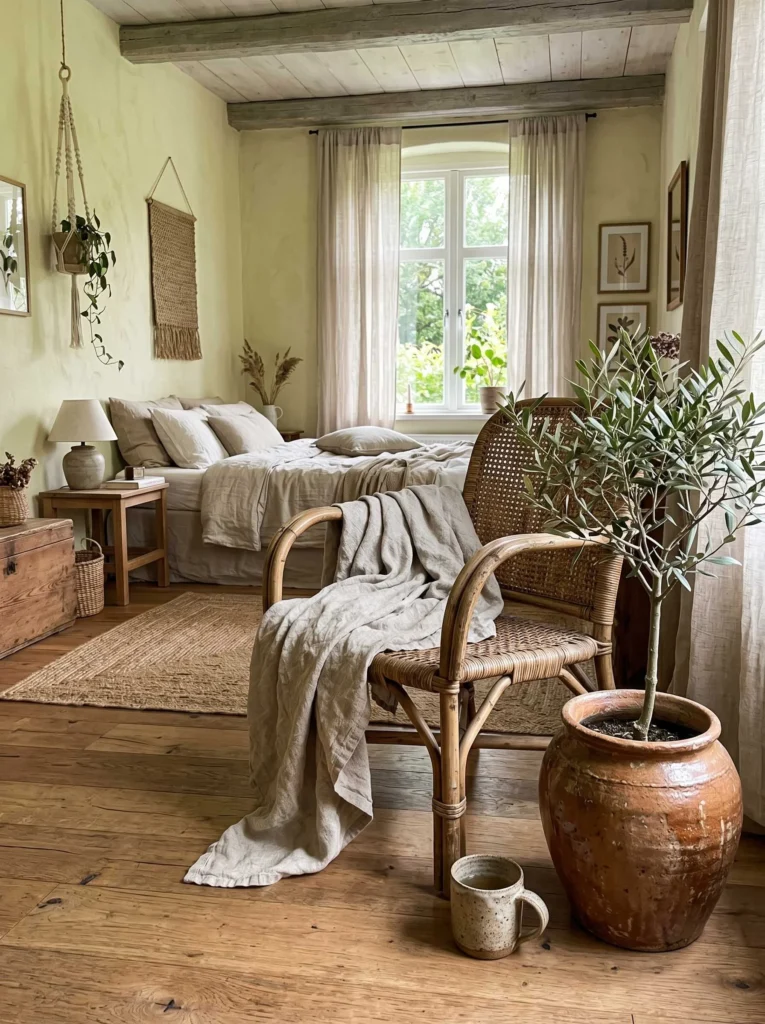
Wabi-sabi the Japanese philosophy of finding beauty in imperfection is honestly the spiritual foundation of the minimalist neutral bedroom aesthetic when it’s done really well. A corner vignette built on wabi-sabi principles might include a slightly imperfect ceramic pot with a small olive tree, a worn linen throw draped casually over a chair arm, and a small handmade stoneware cup on the floor below. Nothing is perfectly arranged. Things are positioned where they feel natural rather than where they look most symmetrical. The imperfection is the beauty. This is the kind of corner that makes people stop and look twice, not because it’s elaborate, but because it feels genuinely real and alive.
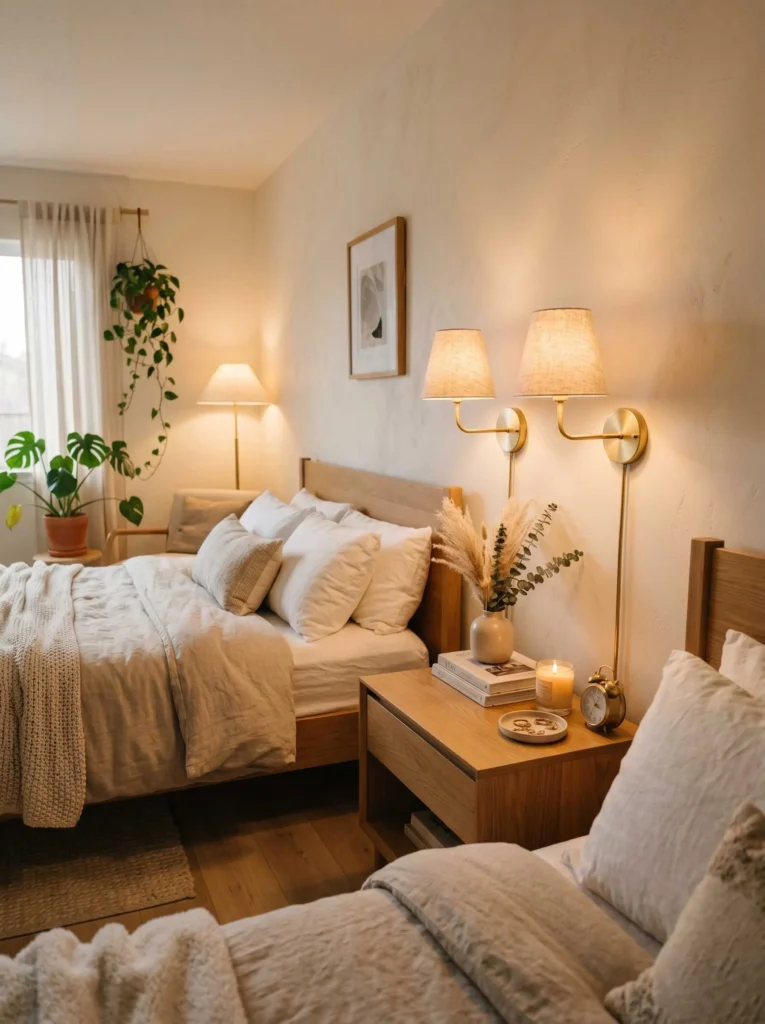
Minimalist Bedside Sconces Instead of Table Lamps
Switching from table lamps to wall-mounted bedside sconces is one of those small changes that has a disproportionately large effect on how a minimalist neutral bedroom feels. Sconces free up the nightstand surface completely, which immediately makes the room feel cleaner and more intentional. Choose sconces with simple brass or matte black arms and small fabric shades in linen or cotton. Position them just slightly above eye level when seated in bed so the light falls where you actually need it for reading. The wall-mounted element also draws the eye upward in a gentle way, which makes the room feel taller without changing anything about the ceiling. It’s a subtle shift that genuinely transforms the bedside area.
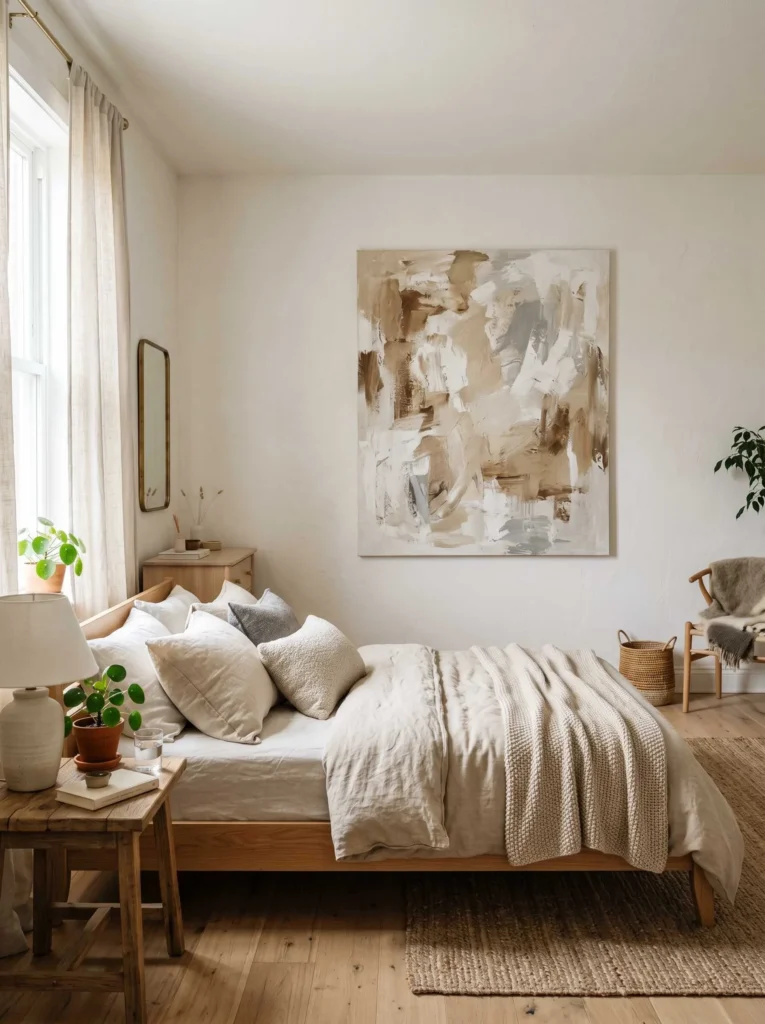
A Neutral Abstract Canvas as a Statement Piece
Every minimalist neutral bedroom benefits from one piece that functions as a real statement something that holds visual weight without adding color chaos. A large abstract canvas in tones of sand, warm white, raw umber, and soft grey does this perfectly. The piece should be big enough to feel significant but simple enough that it doesn’t compete with the calm of the space. Hang it alone on a wall with plenty of breathing room on all sides. No frame is needed if the canvas is gallery-wrapped, and honestly I think frameless canvases feel more contemporary and less fussy. The artwork becomes the room’s quiet anchor the thing everything else relates back to, even subtly.
Soft Bouclé Headboard in Warm Sand
A bouclé headboard is one of the best single investments you can make for a minimalist neutral bedroom because it brings in so much texture and warmth in a single, highly functional piece. The looped, nubby surface of bouclé fabric in a warm sand or oat tone catches light in the most beautiful way it looks different depending on the time of day, which keeps the room visually interesting even in its simplicity. A simple, slightly oversized rectangle headboard with no tufting or ornate framing is the right shape for this aesthetic. The height should reach high enough on the wall to feel architectural. Pair it with smooth linen bedding and the contrast in textures does all the work for you.
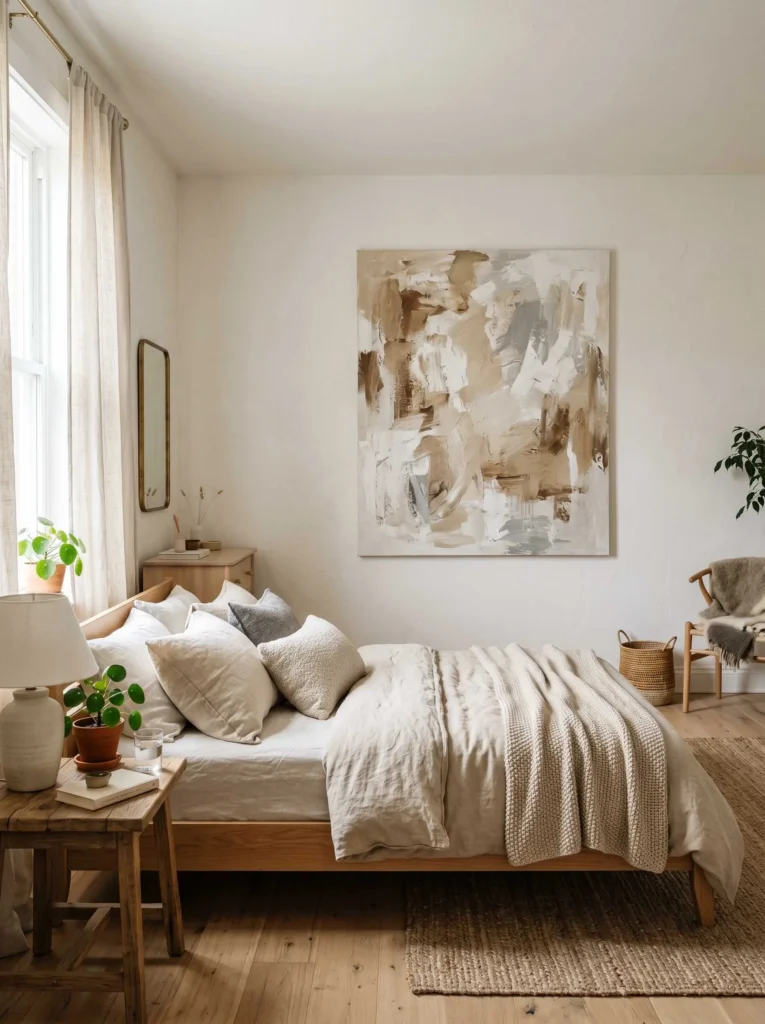
A Folded Linen Throw as Everyday Styling
The way you style a bed matters almost as much as the bedding itself in a minimalist neutral bedroom, and a casually folded linen throw is one of the simplest and most effective styling tools available to you. Fold the throw into thirds lengthwise, then drape it across the lower third of the bed in a loose, relaxed fold that doesn’t look too deliberate. Choose a tone that’s slightly different from your bedding if the sheets are ivory, go for a warm oat or a deep natural linen. The contrast is gentle but present. This kind of everyday styling makes the bed look effortlessly curated rather than rumpled and forgotten, which is the whole spirit of the aesthetic.
A Potted Olive Tree or Fig Tree for Organic Scale
Adding a tall potted plant particularly an olive tree or fiddle leaf fig to a minimalist neutral bedroom introduces scale, life, and organic color in a way that feels completely natural and unhurried. The subtle silver-green of olive leaves against warm white walls is genuinely one of the most beautiful combinations in interior design right now, and it’s not a trend that dates quickly. Position the plant in a corner that receives indirect natural light, planted in a simple terracotta or matte black ceramic pot. The height of a small tree also balances the low horizontal lines of a platform bed and dresser, which brings a welcome sense of vertical rhythm to the room’s overall composition.
A Clean, Uncluttered Vanity Corner in Warm Wood
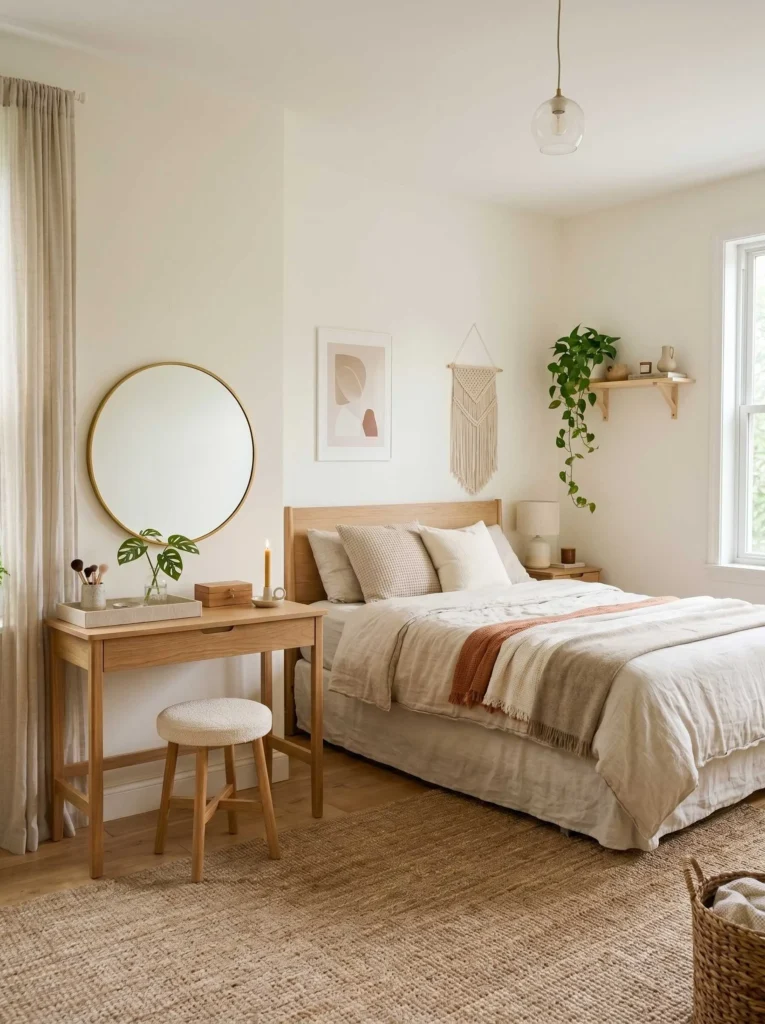
A small vanity corner can be a really lovely addition to a minimalist neutral bedroom as long as it’s kept genuinely clean and edited. A simple wooden vanity table with slim legs and a small frameless mirror or a round mirror in thin brass keeps the look light and airy. Style the surface with only the things you actually use daily, arranged on a small tray in matching materials. A few glass or ceramic vessels for brushes, a small plant cutting, a favorite candle nothing more. The vanity should feel like an extension of the room’s calm rather than a separate chaotic zone. When it’s done right, it adds a sense of personal ritual to the space that feels very intentional and beautiful.
Warm Terracotta Accents in Small, Deliberate Doses
Terracotta is one of those tones that lives perfectly within the minimalist neutral bedroom palette without ever feeling like a departure from it. The key is using it in very small, deliberate doses — a single terracotta ceramic pot, a small woven pillow with a terracotta stripe, or a set of terra-clay taper candles on a shelf. These warm orange-earth tones bring depth and richness to a palette that could otherwise feel a little flat or cold. They also photograph beautifully alongside warm woods and natural linens, which is part of why this combination appears so often in the kind of Pinterest-worthy rooms that make you want to stay in bed all morning.
Style Tips to Elevate Your Minimalist Neutral Bedroom Look
- Stick to a palette of three to four tones at most warm white, natural linen, warm wood, and one earthy accent. Adding more creates visual noise that works against the minimalist neutral bedroom feeling you’re going for.
- Always choose natural materials over synthetic ones when you have the option linen, cotton, jute, rattan, and solid wood all age beautifully and add genuine warmth that manufactured materials just don’t replicate.
- Edit ruthlessly and often. A minimalist bedroom requires ongoing editing, not a one-time overhaul. If something isn’t actively beautiful or useful, it doesn’t belong in the space.
- Layer lighting intentionally never rely on one light source. A combination of warm table lamps, sconces, and a floor lamp gives you flexibility and creates a much more inviting atmosphere than overhead lighting alone.
- Use texture as your primary design tool in place of color. Varying textures between smooth, rough, nubby, and woven is what keeps a neutral palette visually interesting without breaking the calm.
- Leave empty space intentionally. Negative space an empty wall, a clear surface, an uncluttered corner is an active design choice in a minimalist neutral bedroom, not an oversight.
Frequently Asked Questions
What colors count as neutral in a minimalist neutral bedroom? Neutrals in a minimalist bedroom go well beyond plain white. Warm creams, oat tones, soft greiges, warm taupes, sandy beiges, and natural linen shades all qualify. The key is that the colors feel grounded and calm rather than bright or saturated they should make the room feel like a quiet exhale.
How do I make a minimalist neutral bedroom feel warm and not cold? The warmth in a minimalist neutral bedroom comes entirely from material and tone choices. Warm-toned wood furniture, linen and bouclé textiles, amber-toned lighting, and earth-toned accents like terracotta or clay all prevent the space from feeling sterile. Cool whites and grey-heavy palettes tend to read as colder, so bias toward warm undertones throughout.
Can I add personality to a minimalist neutral bedroom without ruining the look? Absolutely and honestly, you should. Personality comes through in the objects you choose, not the number of things you add. One meaningful piece of art, a handmade ceramic, a plant you love, a vintage textile these things tell a story without creating visual clutter. The minimalist neutral bedroom aesthetic is about intentionality, not emptiness.
How many decorative items are too many for a minimalist bedroom? There’s no fixed number, but a useful test is this: if removing any single item makes the room feel emptier rather than cleaner, you’ve found your right amount. As a general starting point, keep surfaces to a maximum of three to five objects each, and leave at least half of every surface completely clear.
conclusion
If there’s one thing I want you to take away from all of this, it’s that the minimalist neutral bedroom aesthetic is not about having less it’s about being deeply intentional about what you keep. Every texture, every material, every object should feel chosen rather than accumulated. When a room is built that way, you can actually feel it the moment you walk in. It settles you. It signals rest. That’s a genuinely powerful thing for a bedroom to do, and it’s completely achievable at every budget and in every size space. So save this post, pin your favorite ideas, share it with someone whose bedroom deserves a refresh, and then go make something beautiful that actually feels like you.