
If you’ve ever dreamed of stepping outside into a garden that feels like something out of a storybook, you’re not alone. Cozy cottage garden ideas for beginners are honestly one of the most searched things in the gardening world right now and I totally get why. There’s something so warm and inviting about that effortless, slightly wild style where flowers tumble over each other, pathways feel hidden, and everything smells incredible. The best part? You don’t need a huge yard or years of experience to pull it off. Even a tiny patch of soil or a few containers on a porch can become something magical. Let me walk you through some of my favorite ways to bring that cottage charm to life.
Start With a Wildflower Seed Mix and Let It Do Its Thing
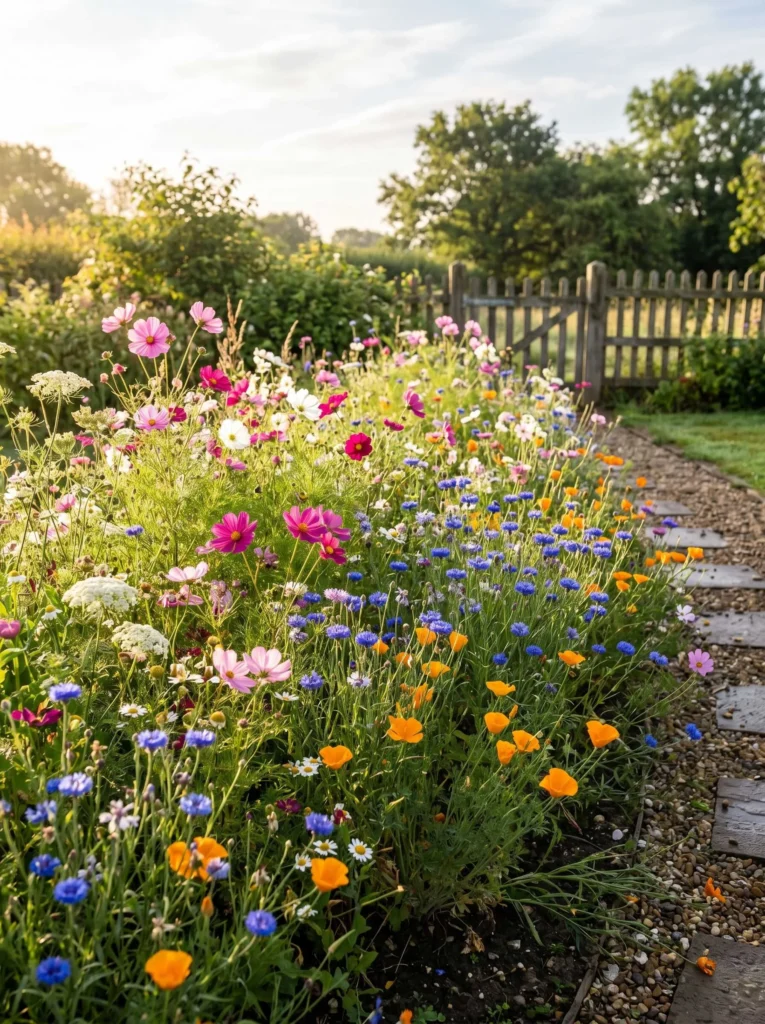
One of the easiest ways to kick off a cottage garden is to scatter a wildflower seed mix and honestly just… let it grow. You don’t have to map everything out perfectly. Wildflowers like cosmos, cornflowers, and California poppies naturally create that loose, romantic look that’s so central to the cottage style. I think the beauty here is in the imperfection flowers lean on each other, colors blur together, and the whole bed starts to feel alive and almost self-sustaining. Pick a sunny spot, loosen the soil a bit, scatter your seeds, water gently, and wait. The results are almost always more beautiful than anything you could have planned.
Add a Climbing Rose to a Fence or Trellis
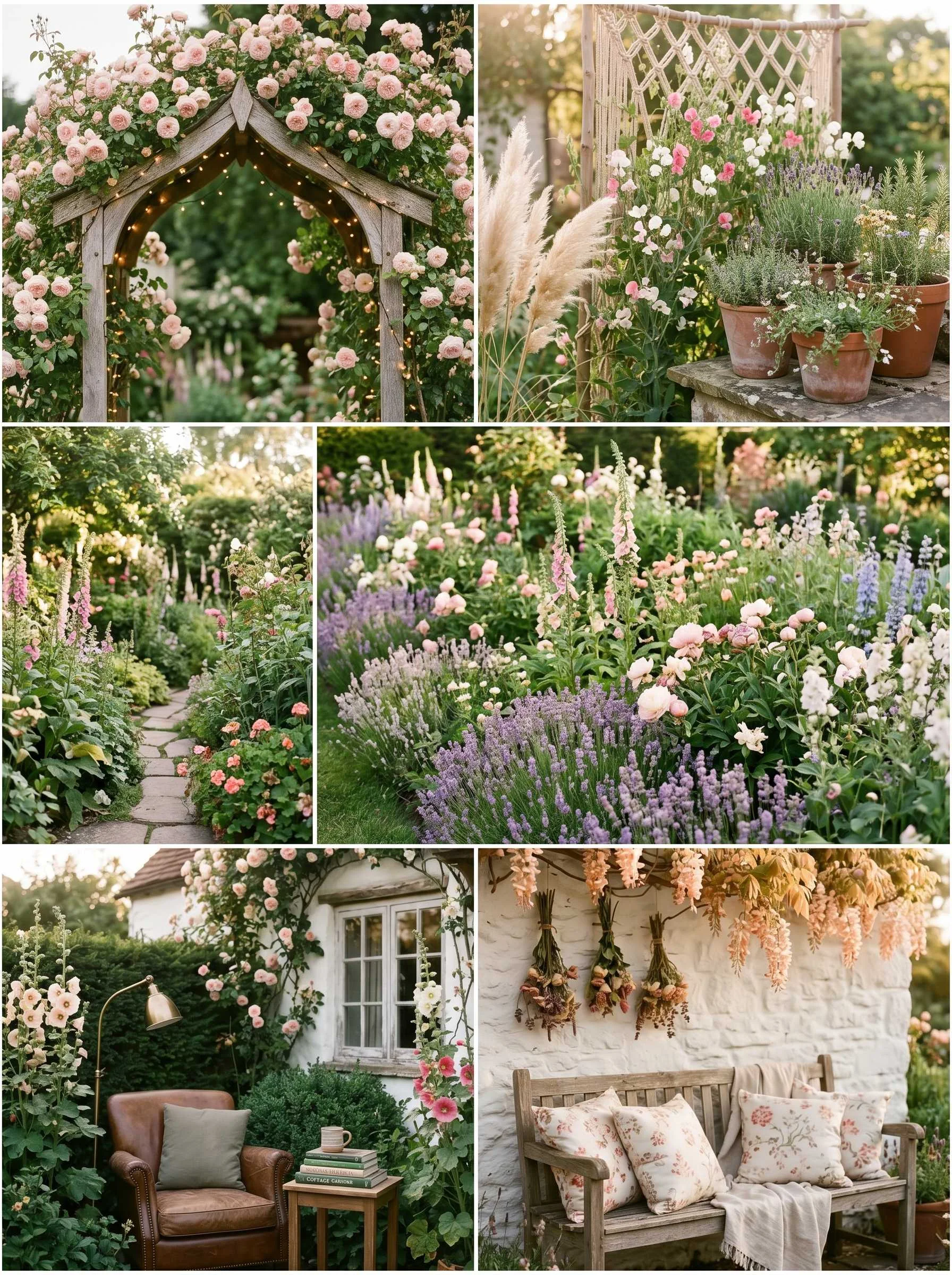
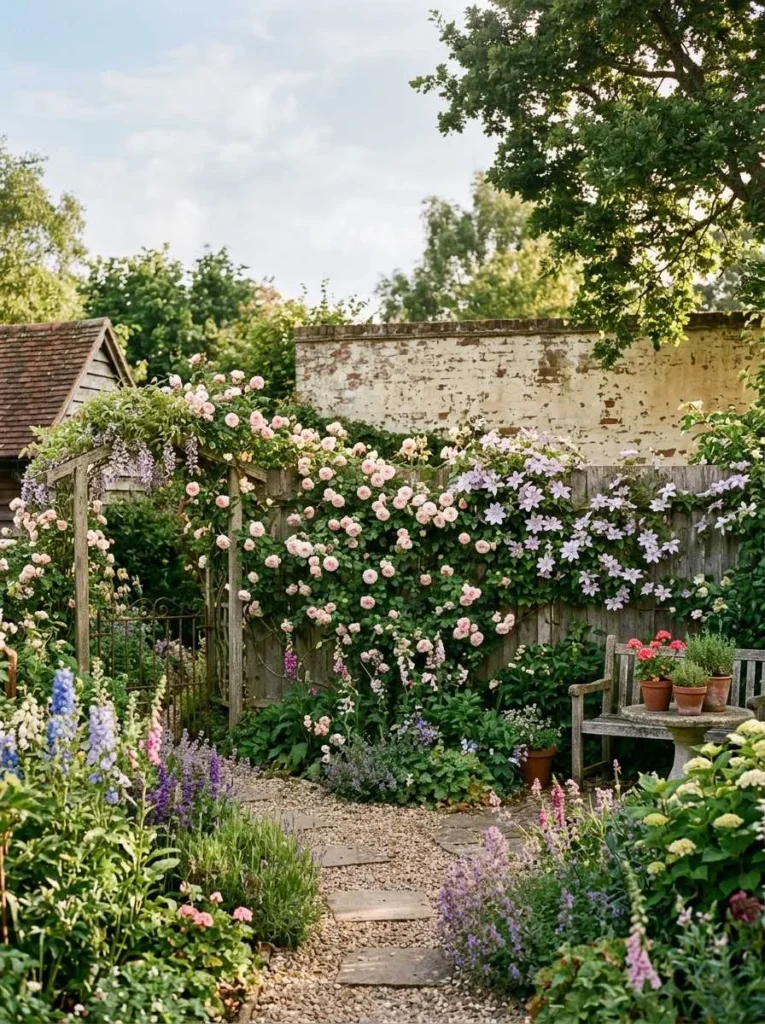
Nothing says cottage garden quite like a rose climbing up a weathered wooden fence or a rustic trellis. Varieties like ‘New Dawn’ or ‘Cecile Brunner’ are especially forgiving for beginners they’re vigorous growers and don’t require the level of fussing that hybrid tea roses do. I love the way climbing roses soften hard edges and make a garden feel like it’s been there for decades, even if it hasn’t. Pair them with clematis weaving through the canes for a layered, lush effect that’s incredibly romantic. The soft pinks and creamy whites work especially well against stone walls or painted wood.
Plant Lavender Along a Pathway for That Dreamy, Aromatic Feel
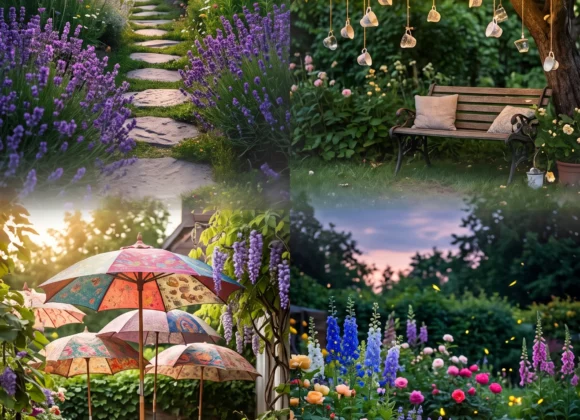
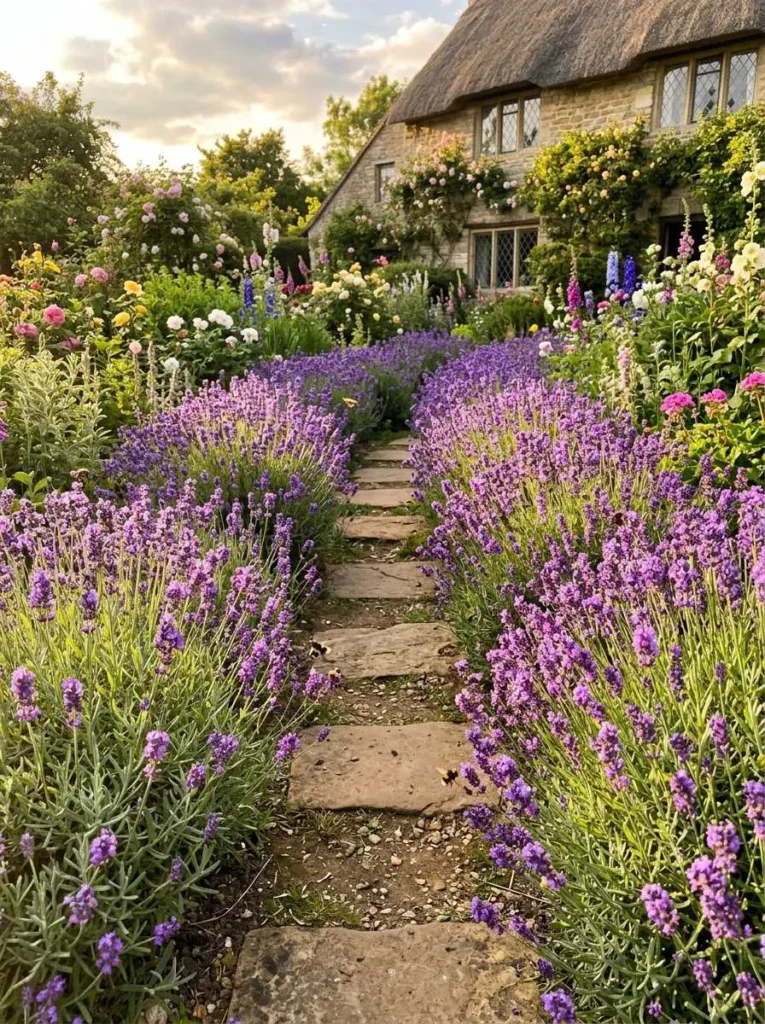
Lavender is honestly one of the hardest-working plants in a cottage garden. It looks beautiful, smells incredible, attracts pollinators, and it’s pretty tough once it gets established. I’d suggest planting it in low drifts along a garden path so that when you brush past it, you get that gorgeous rush of scent. ‘Munstead’ and ‘Hidcote’ are both compact varieties that work well for smaller spaces. The purple-blue spikes against silvery-green foliage create a soft, muted palette that feels both relaxed and intentional. It’s one of those plants that makes a garden feel like it was designed by someone who really knows what they’re doing even if this is your first season gardening.
Create a Raised Bed With Mixed Herbs and Edible Flowers
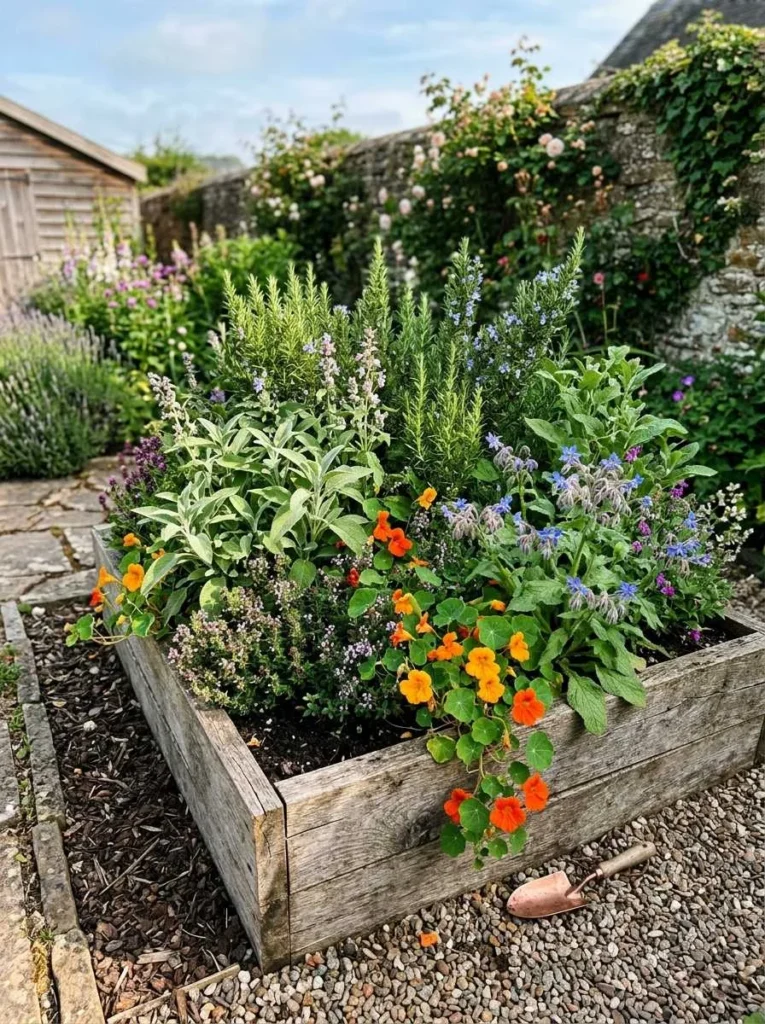
Cottage gardens have always had a practical side it’s not just about looking pretty. A raised bed filled with a mix of herbs like thyme, sage, and rosemary alongside edible flowers like nasturtiums and borage is such a satisfying combination. It smells amazing, it’s useful for cooking, and visually it creates that layered, abundant look that’s so characteristic of the style. I feel like raised beds also make it much easier to manage the soil, especially if you’re working with clay or rocky ground underneath. Fill yours with good quality compost-rich soil and you’ll be amazed at how quickly everything takes off.
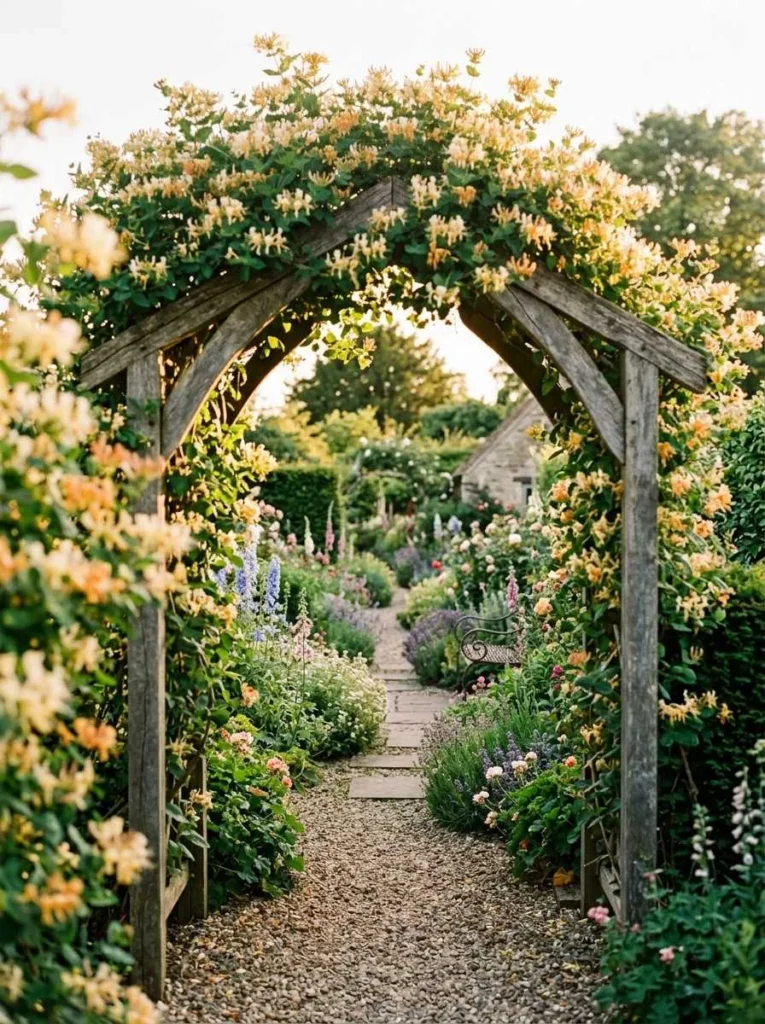
Use a Wooden Arch Covered in Honeysuckle as a Garden Entrance
There’s something almost magical about walking through an arch covered in flowering vines to enter a garden space. Honeysuckle is one of my favorite choices for this because it grows fast, smells unbelievably sweet in the evening, and it’s very forgiving of beginner mistakes. You can find rustic wooden arches at most garden centers or even build a simple one yourself with a few timber posts and some wire. Position it at the entrance to your garden or even just at the entrance to a specific garden bed and plant honeysuckle at the base on both sides. Within a season or two, you’ll have something that looks genuinely stunning.
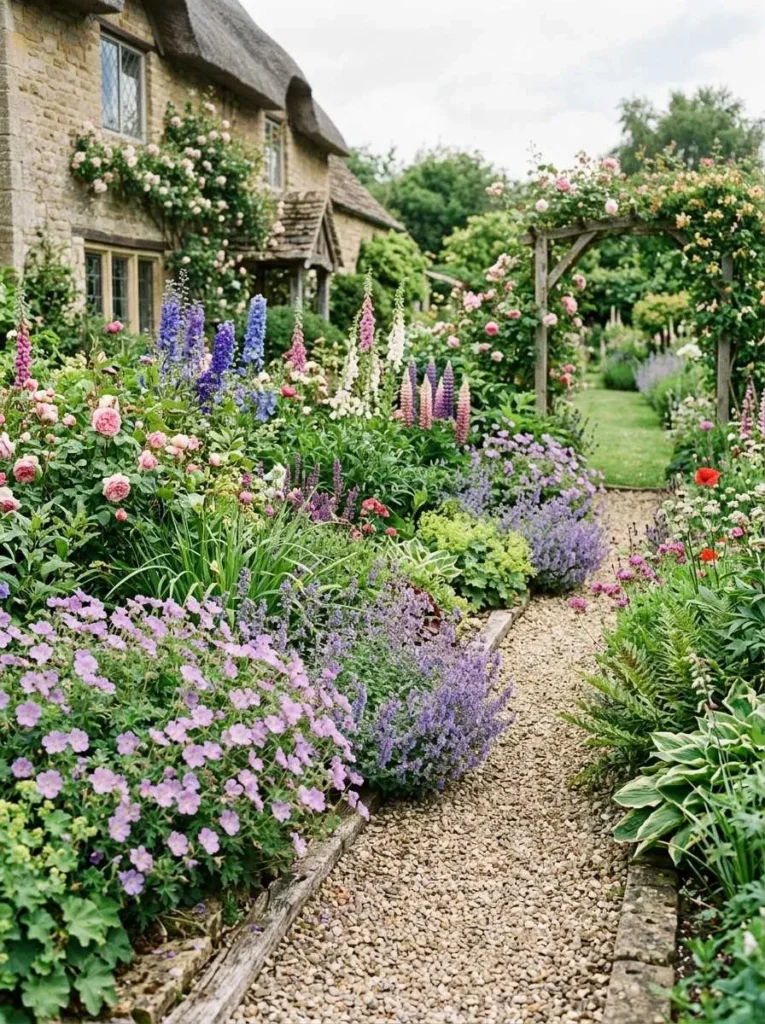
Fill in Gaps With Hardy Geraniums and Catmint
One of the secrets to that lush, no-gaps cottage garden look is using low-growing perennials as fillers between bigger plants. Hardy geraniums (not the tender pelargoniums you see in pots) and catmint are absolute workhorses. They spread gently, bloom for months, and spill beautifully over path edges. The soft mauves and blues of catmint especially complement almost any flower color you might have nearby. I think of them as the glue that holds a cottage planting together they tie everything into one cohesive, flowing design without demanding much attention at all. Cut them back after the first flush of flowers and they’ll bloom again.
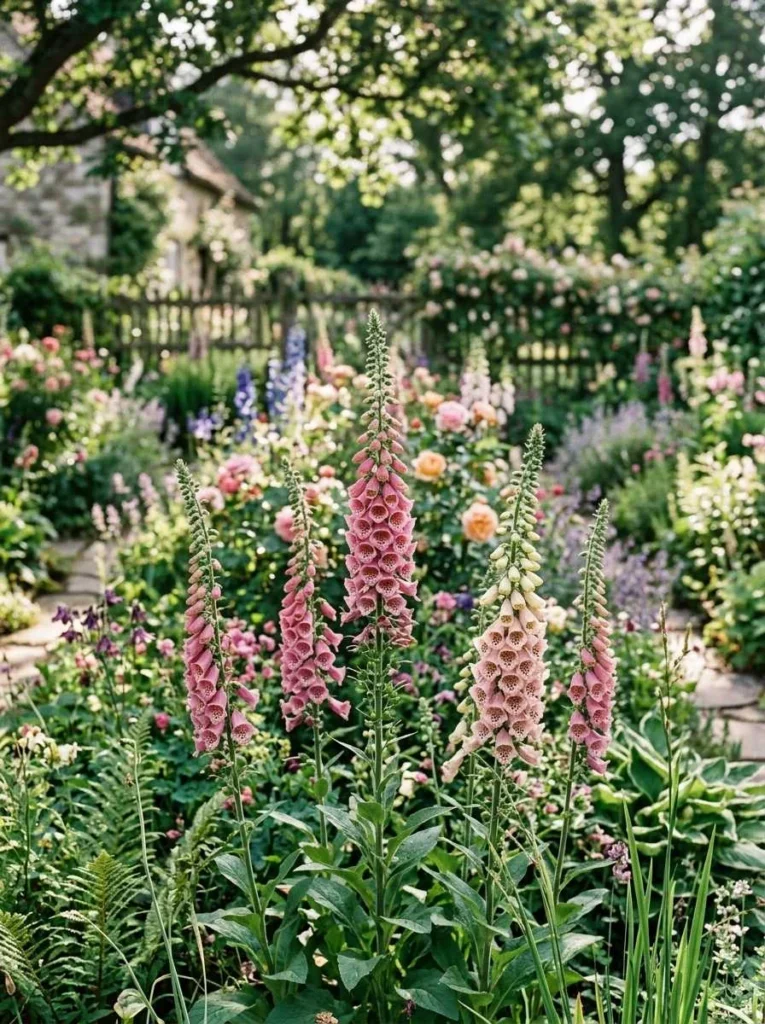
Plant Foxgloves for Height and That Classic English Garden Drama
If you want that quintessential tall-and-dramatic element that makes cottage gardens look so lush in photographs, foxgloves are your answer. They’re biennials, which means you plant them one year and they flower the next but once you have them established, they self-seed and come back reliably every year. The tall spires covered in tubular flowers in shades of pink, purple, cream, and white add incredible vertical interest to any planting. I like to tuck them in behind lower-growing plants so they emerge unexpectedly and create that layered, naturalistic look. Just be aware they’re toxic if ingested, so keep that in mind if you have pets or small children.
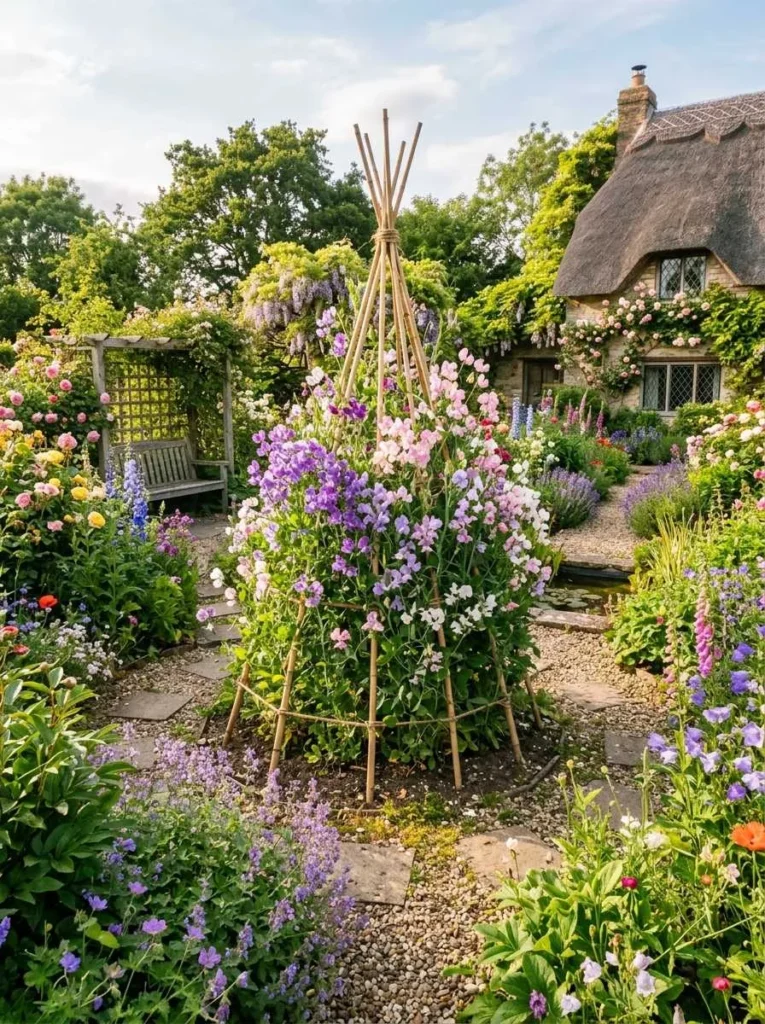
Grow Sweet Peas Up Rustic Bamboo Canes for Old-Fashioned Charm
Sweet peas feel deeply old-fashioned in the best possible way. There’s a reason people have been growing them in cottage gardens for centuries they’re fragrant, they’re colorful, and they’re surprisingly easy to grow from seed. Make a simple wigwam of bamboo canes tied at the top, push a couple of seeds in at the base of each cane, and water them in. As the season progresses, they’ll spiral up the canes and produce cut flowers almost faster than you can pick them. The more you cut, the more they produce so they’re genuinely one of the most generous plants you can grow. Shades of dusky pink, lavender, white, and deep burgundy all work beautifully together.
Include a Birdbath or Stone Ornament as a Focal Point
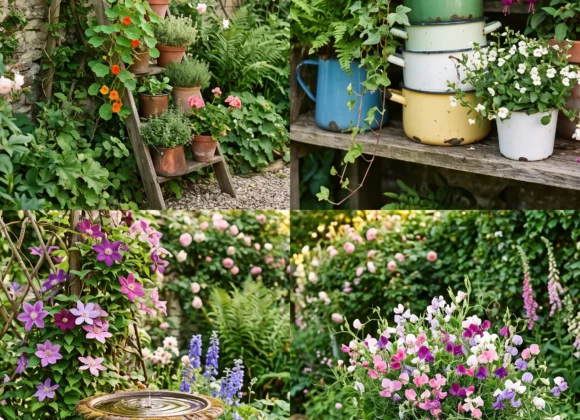
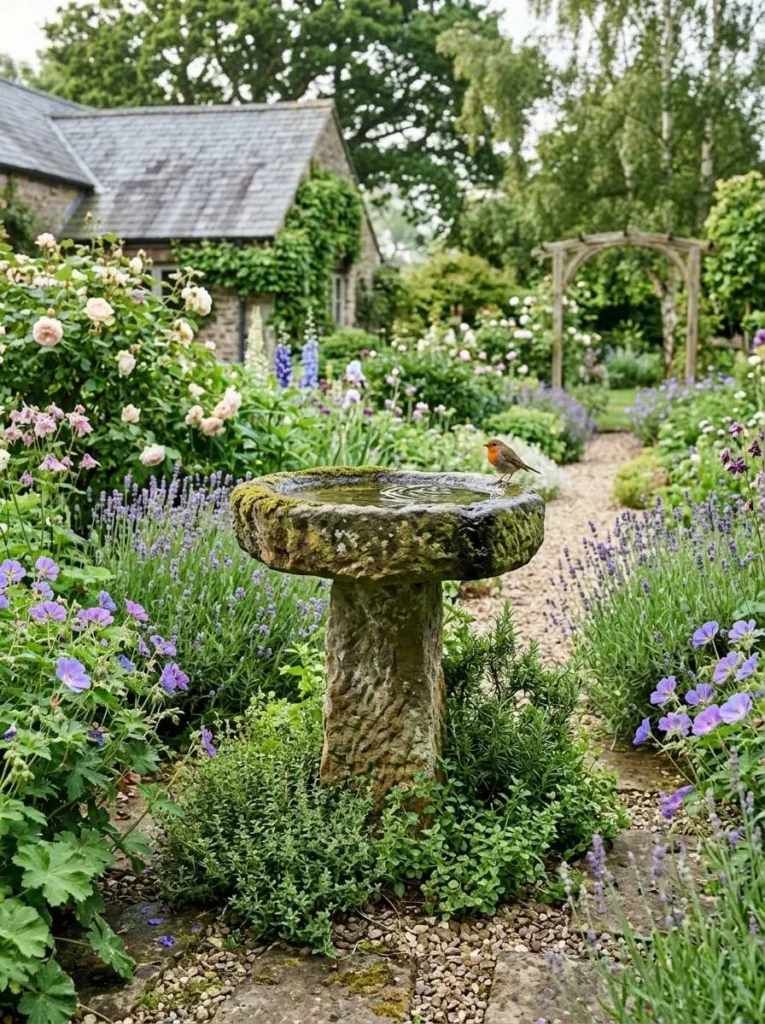
Cottage gardens feel most authentic when they include little moments of charm scattered throughout and a birdbath, a mossy stone sphere, or an old-fashioned sundial does exactly that. These focal points give the eye somewhere to rest among all the abundance of plants. I honestly think a weathered stone birdbath surrounded by low-growing herbs and sprawling geraniums is one of the most charming garden vignettes you can create. It also genuinely attracts birds, which adds movement and life to the space. Look for pieces at antique markets, salvage yards, or garden centers anything with a slightly aged, textured look works better than something shiny and new.
Plant a Row of Hollyhocks Against a Wall or Fence
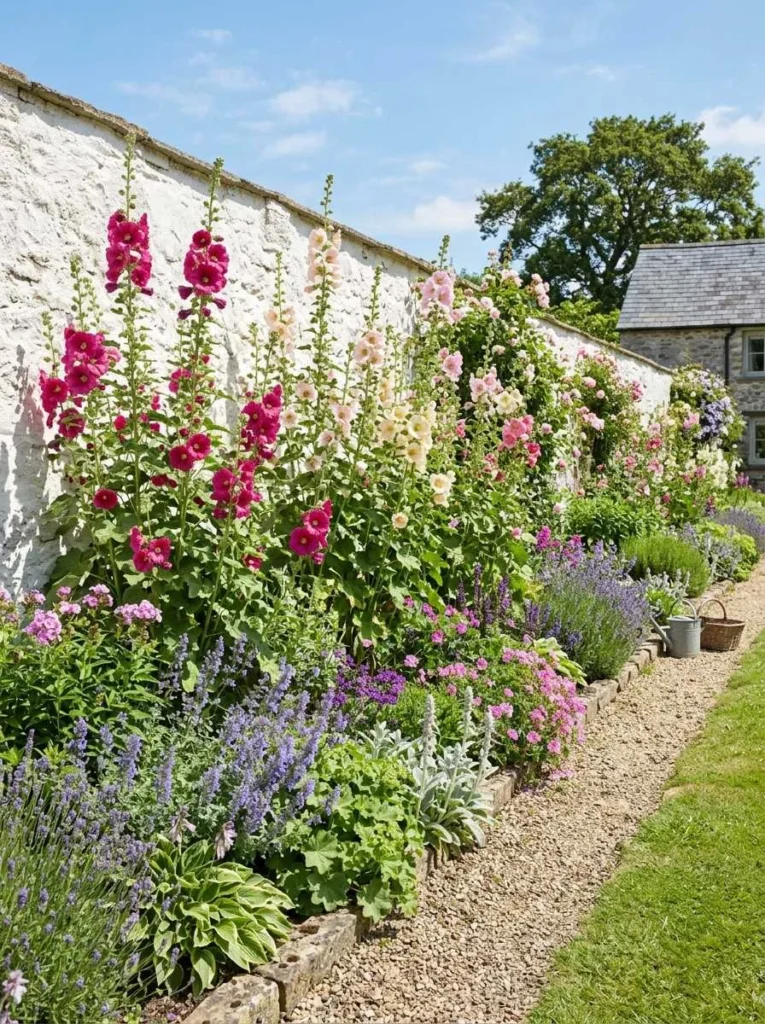
Hollyhocks are one of those plants that feel completely at home in a cottage garden. They’re tall, they’re bold, and they have this old-world quality that’s hard to replicate with anything else. They look especially good planted in a drifting row against a wall, fence, or garden shed the vertical backdrop makes them really stand out. Colors range from pale pink and white through to deep burgundy, almost-black, and rich magenta. They’re biennials like foxgloves, so you’ll need a bit of patience, but once they’re established and self-seeding, they become a reliable part of your summer display year after year.
Try a Herb Spiral for a Beautiful and Functional Feature
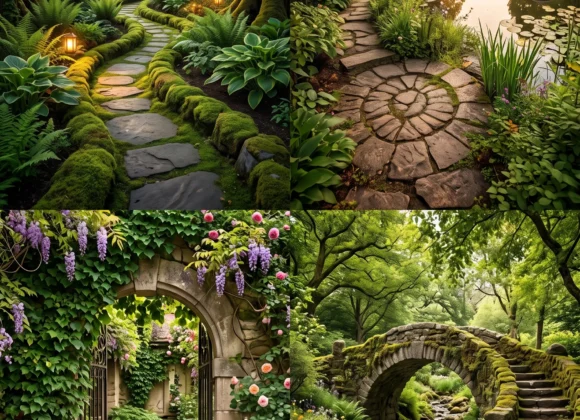
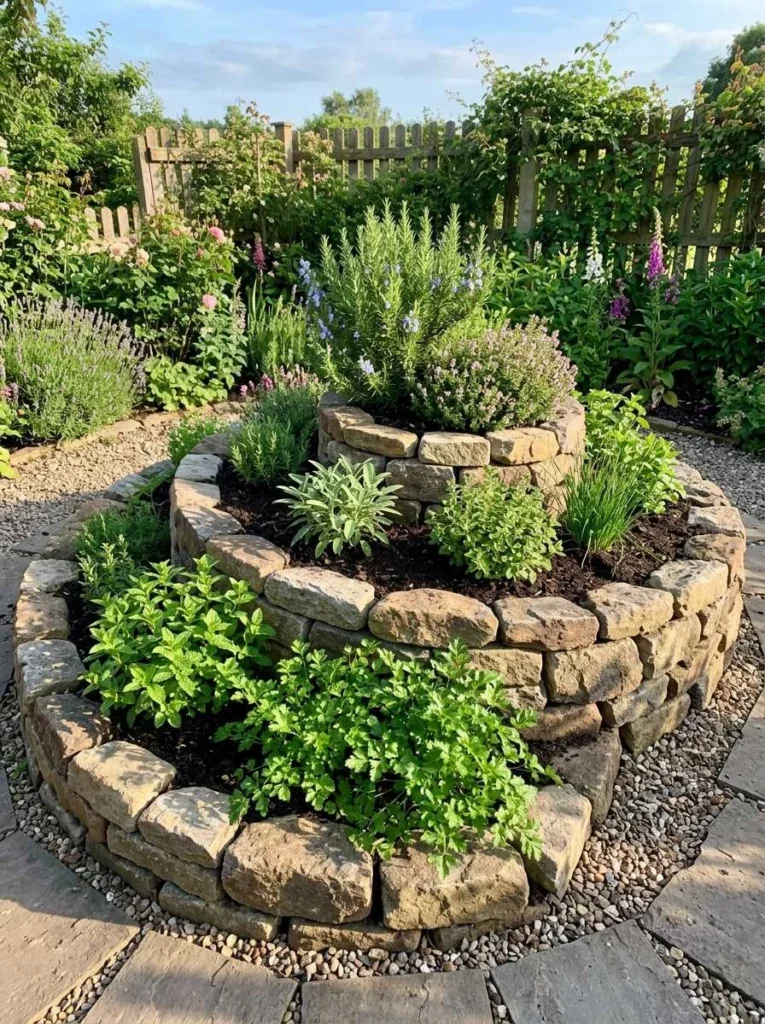
A herb spiral is one of those garden structures that’s both practical and incredibly pretty and it’s more achievable than it sounds. Essentially, you build a gentle spiral of stones or bricks that rises in height toward the center, creating different growing conditions (sun at the top, more moisture at the base) in a small footprint. Plant drought-tolerant herbs like rosemary and thyme at the top, and moisture-loving ones like mint or parsley lower down. The spiral shape itself becomes a beautiful sculptural feature in the garden, and the different textures and colors of the herbs create a lovely tapestry effect. It’s a great project for a first season because you can build it in an afternoon.
Sow Cottage Annuals Like Nigella and Ammi for an Airy, Romantic Feel
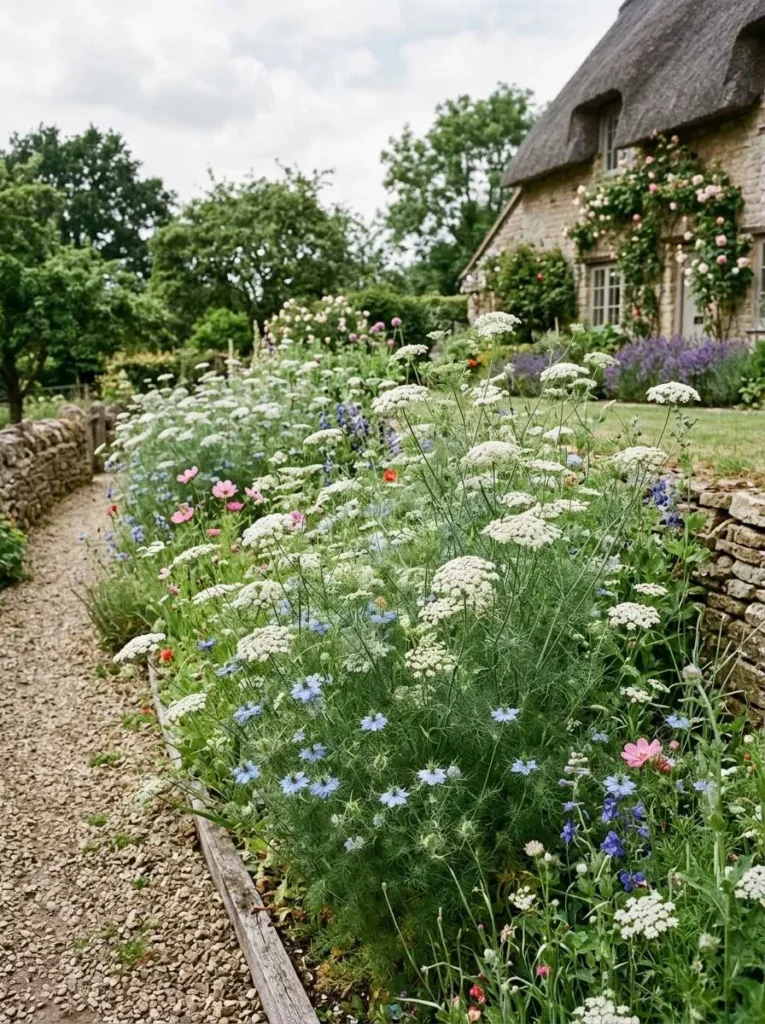
Some of the most beautiful cottage garden plants are actually quick-growing annuals that you sow directly into the soil. Nigella (also called love-in-a-mist) and Ammi majus (white lace flower) are two of my absolute favorites. Nigella has this feathery, soft quality the flowers are surrounded by a haze of fine foliage and the blue and white varieties are especially gorgeous. Ammi creates tall, airy umbels of tiny white flowers that give the garden a wild meadow feeling and are incredible in cut flower arrangements. Both are easy from seed and they self-sow reliably, so your display gets better every year with very little effort from you.
Place Vintage Containers and Terracotta Pots Throughout the Space
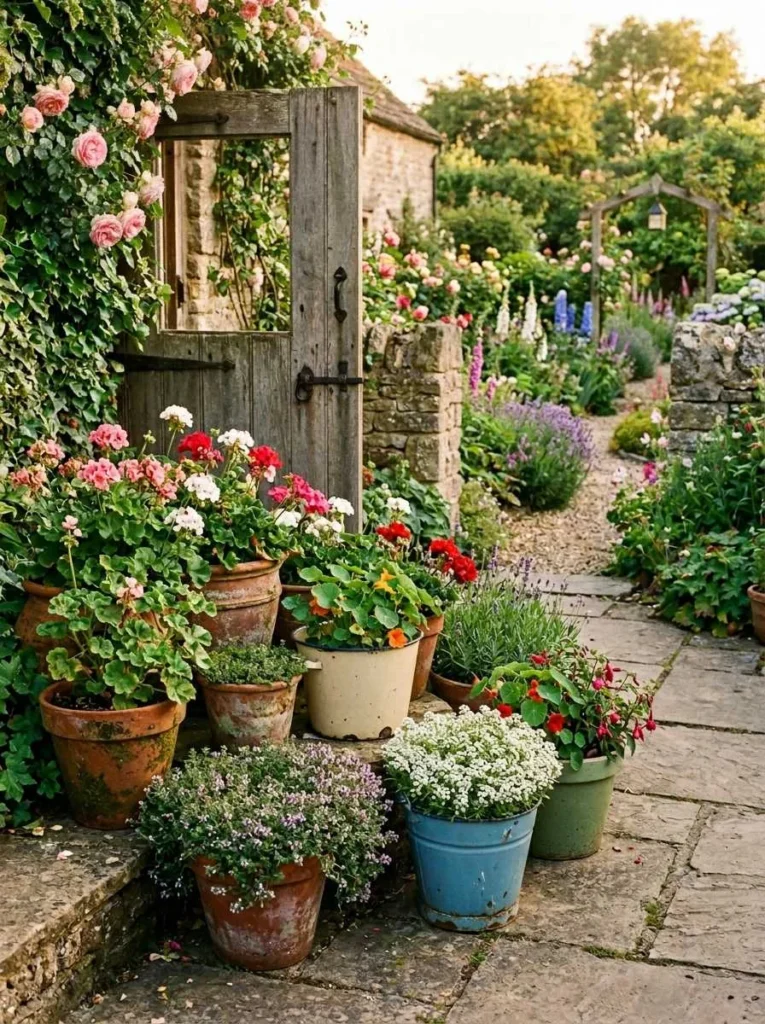
One of the things I love most about cottage gardens is how they incorporate a mix of materials and textures and vintage containers are a huge part of that. Old terracotta pots, enamel buckets, wooden crates, even old watering cans planted with trailing herbs or tumbling pelargoniums add so much character. Scatter them along pathways, on steps, around a doorway, or tucked between beds. They work especially well for plants that might spread too aggressively in open soil, like mint or certain creeping thymes. The aged, imperfect quality of vintage containers fits the cottage aesthetic perfectly — nothing here should look too polished or precise.
Grow a Cottage-Friendly Apple or Pear Tree as an Anchor Plant
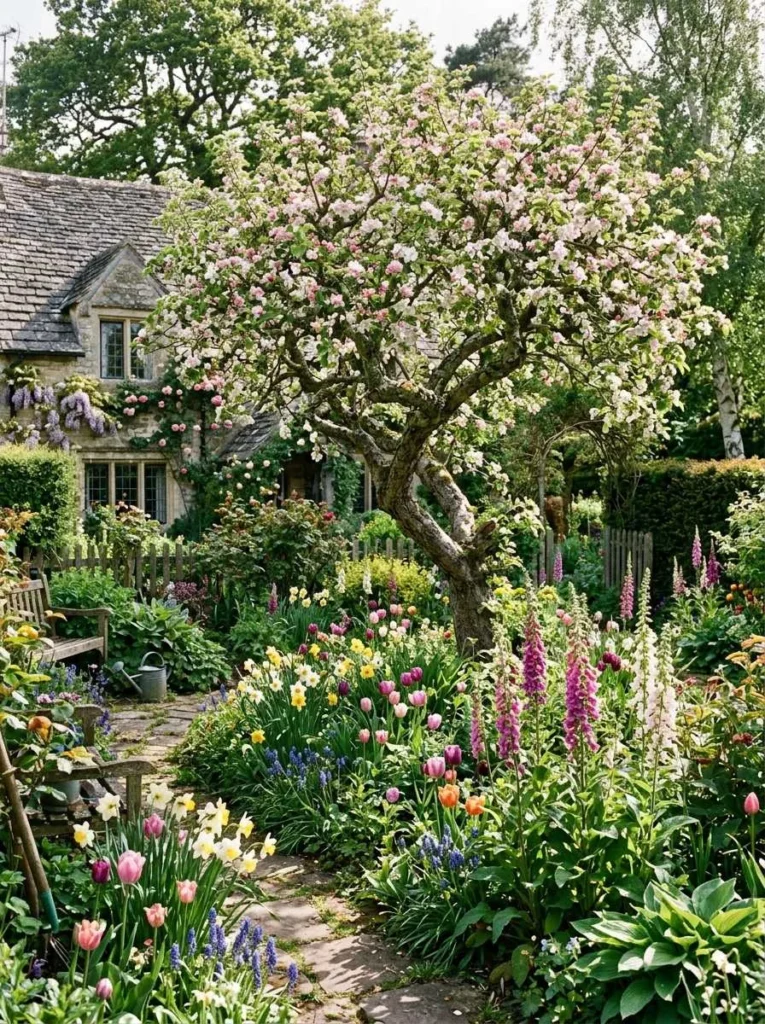
If you have a bit more space, planting a fruit tree even a small, semi-dwarf variety gives your cottage garden a real sense of permanence and maturity. Apple and pear trees have blossom in spring, fruit in autumn, and architectural interest in winter with their gnarled branches. They also work beautifully with underplanting try planting bulbs, foxgloves, and ground-covering perennials at the base to create a layered, naturalistic scene beneath the canopy. Over time, a cottage garden that has a fruit tree at its center starts to feel truly established, like it belongs to the landscape rather than being placed on top of it.
Use Self-Seeding Plants to Let Your Garden Evolve Naturally
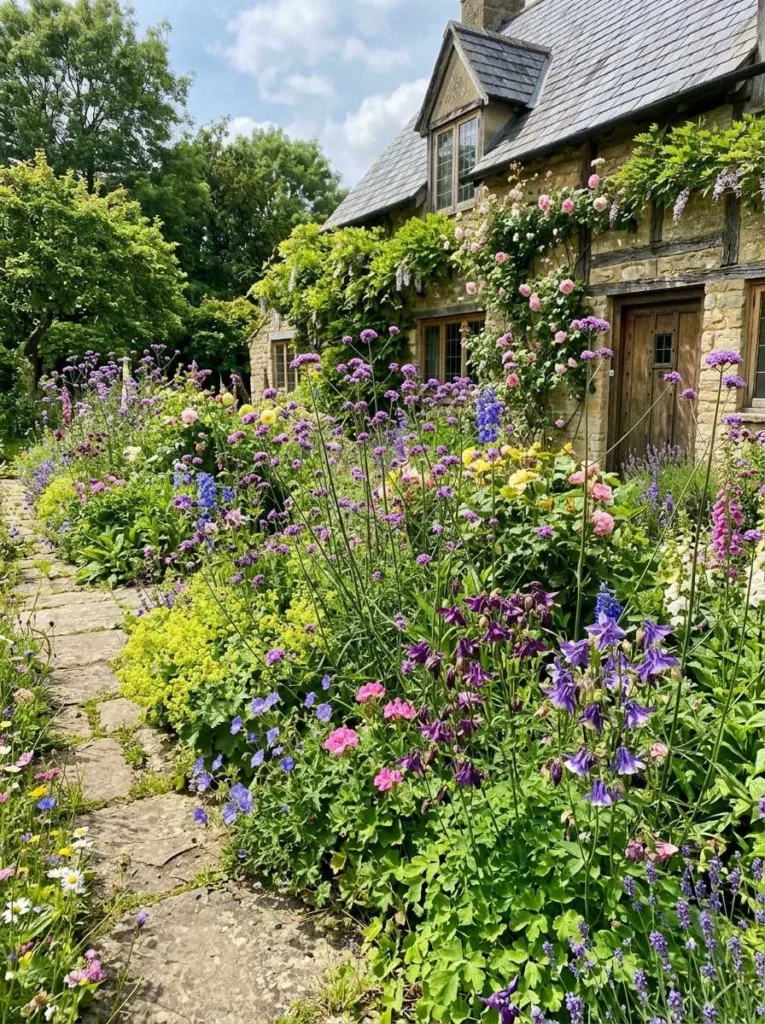
One of the most charming things about a mature cottage garden is the sense that it has a life of its own plants appear in unexpected places, combinations happen by chance, and the whole thing looks beautifully unplanned. You can encourage this from the start by choosing plants that self-seed freely. Aquilegia (columbine), honesty (Lunaria), and Verbena bonariensis are all wonderful examples. Let them drop their seeds at the end of the season rather than cutting everything back immediately. Over a few years, your garden starts to feel genuinely naturalistic plants weaving through each other in combinations you never would have planned but that look absolutely perfect.
Build a Simple Stone or Gravel Path Through Your Planting
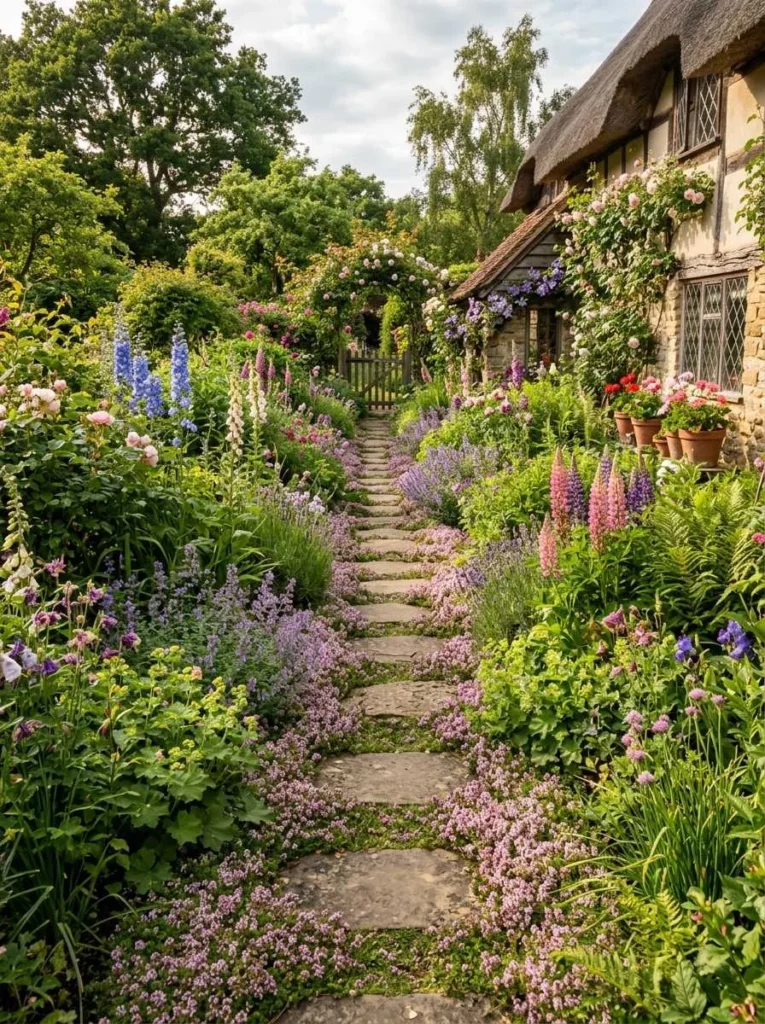
Every cottage garden needs a pathway even a very informal one. It gives structure to all the abundance and invites you to walk through the space and experience it up close. A simple path of stepping stones set into the soil, or a narrow strip of pea gravel, works beautifully. Allow plants to spill over the edges that’s actually the goal. Creeping thyme planted between stepping stones is particularly lovely because it releases fragrance when stepped on and forms a pretty mat of tiny pink flowers in summer. The path doesn’t need to lead anywhere particularly purposeful it can simply meander through a bed and circle back, creating a sense of discovery.
Add a Rustic Garden Bench Surrounded by Fragrant Plantings
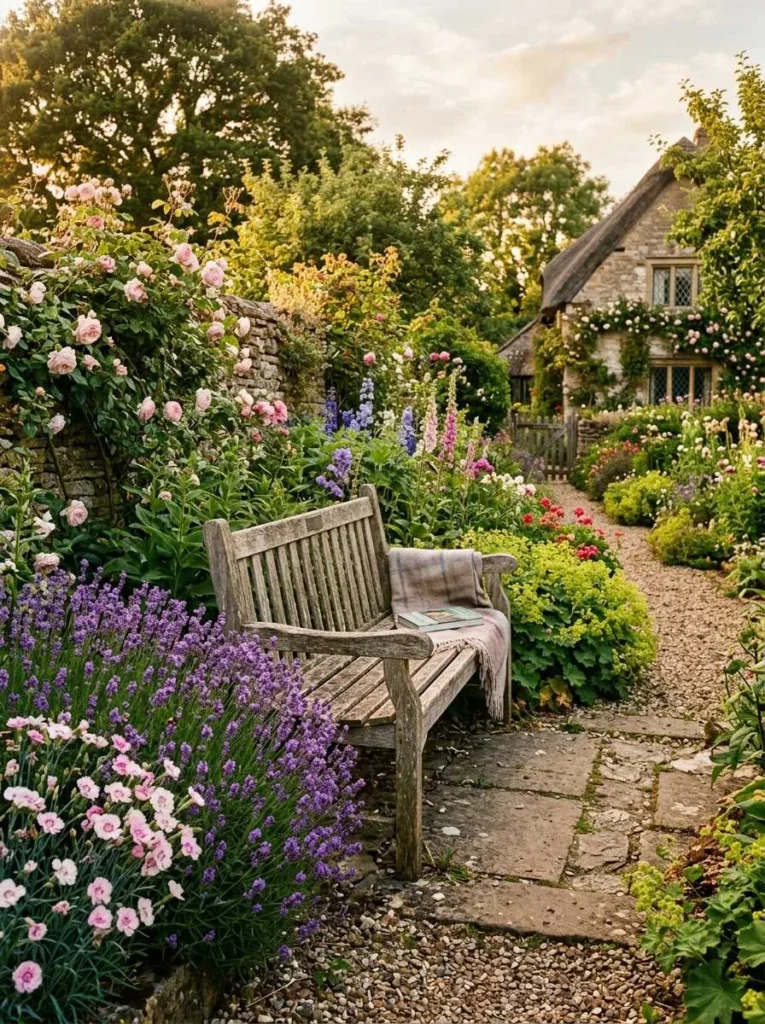
A garden seat tucked into a fragrant planting is one of those details that makes a cottage garden feel genuinely lived in and loved. Position a weathered wooden bench or a simple iron seat so that it’s surrounded by or at least adjacent to fragrant plants. Roses, lavender, honeysuckle, jasmine, and old-fashioned pinks (Dianthus) are all perfect choices. The idea is that when you sit down, you’re completely immersed in scent and texture. Even in a small garden, carving out a little spot like this gives the whole space a sense of purpose and romance that’s hard to achieve any other way.
Plant Dahlias for Late Summer and Autumn Color
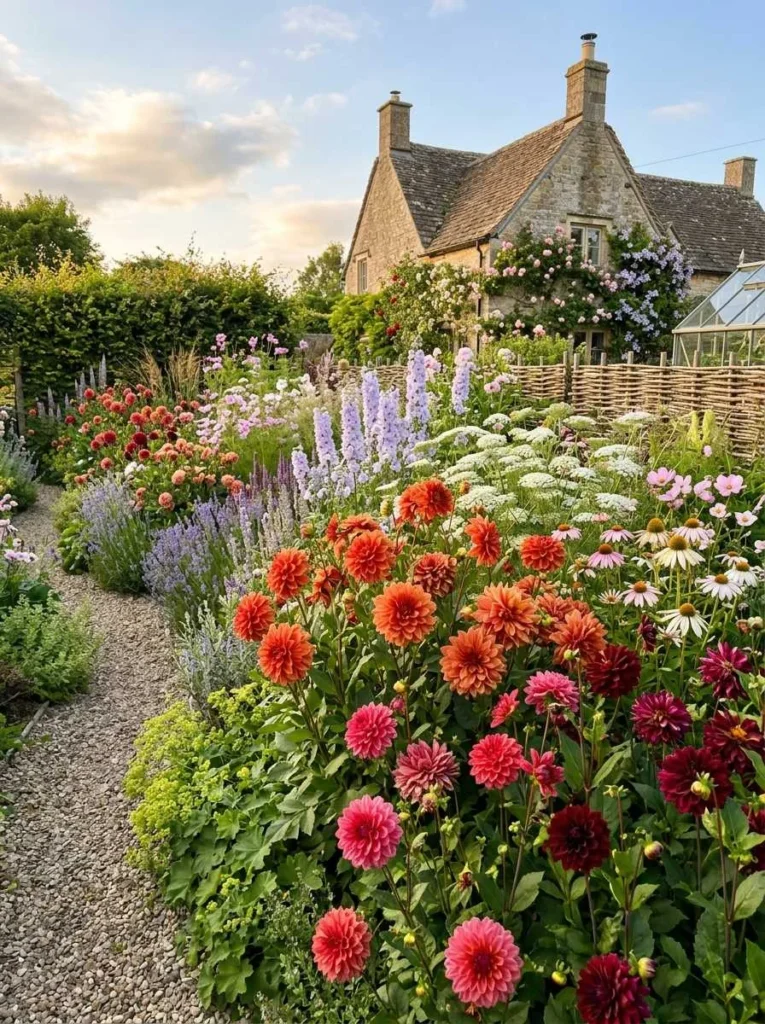
Cottage gardens can sometimes lose momentum by midsummer, but dahlias are the perfect solution. They come into their own just as many spring and early summer plants are starting to fade, carrying the garden through to the first frosts with an explosion of color. The dinner-plate varieties are dramatic and bold, while the smaller pompon and ball types feel more delicate and cottage-appropriate. Plant the tubers in late spring once the soil has warmed, and you’ll have flowers by midsummer that just keep coming. The warm tones terracotta, burnt orange, deep pink, rich burgundy are incredibly beautiful against the softer pastels of earlier flowering cottage plants.
Use Hazel Supports and Twiggy Sticks Instead of Plastic Stakes
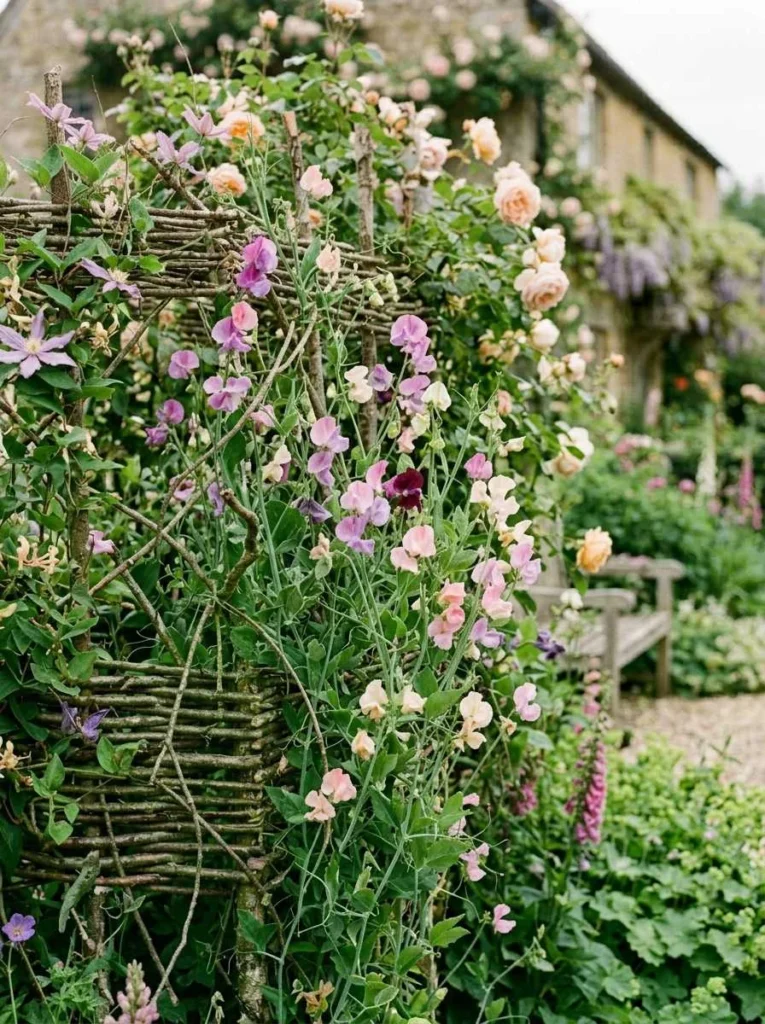
The materials you use in a cottage garden matter as much as the plants themselves. Plastic stakes and wire cages feel completely out of place in this aesthetic but hazel wigwams, bundles of twiggy birch sticks, or handmade willow supports look completely at home. They add a natural, crafted quality even to the structural, practical parts of gardening. Push bundles of twiggy sticks in around floppy plants like peonies before they come into growth in spring, and the plants will grow up through the support naturally so you won’t be able to see it at all by the time they bloom. It’s the kind of small detail that makes a garden feel thoughtfully tended.
Try Container Planting for a Cottage Feel on a Balcony or Patio
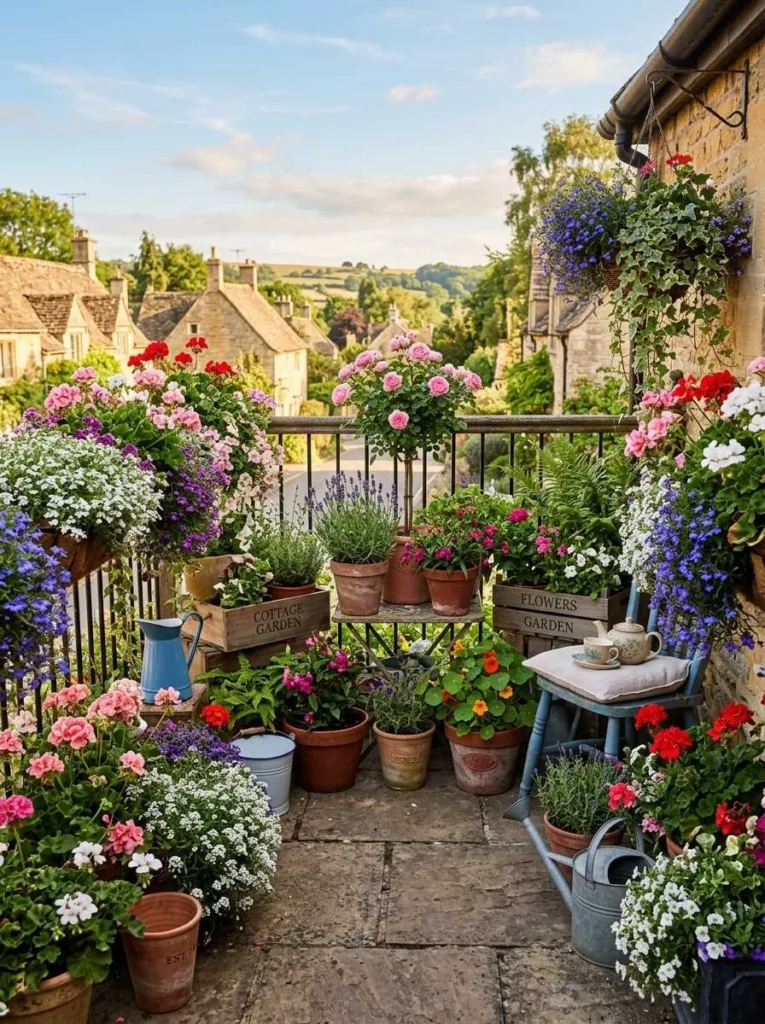
You genuinely don’t need a garden bed to achieve the cottage look. A collection of containers planted with a mix of trailing, upright, and fragrant plants can create the same abundant, romantic atmosphere on a balcony or patio. I’d suggest combining a standard rose or a small shrub as a central anchor, then adding trailing plants like ivy-leaved geraniums, sweet alyssum, and cascading lobelia around the edges. A few terracotta pots of different sizes grouped together look far more lush and intentional than one large isolated container. Top-dress with some moss or pebbles and it immediately takes on that naturalistic, slightly aged cottage aesthetic.
Plant Peonies for That Lush, Old-Fashioned Abundance
Peonies are one of the most beloved cottage garden plants and honestly, once you have them in your garden, you’ll understand why immediately. The flowers are enormous, fully double, and breathtakingly beautiful in shades of blush, white, deep pink, and coral. They’re also incredibly fragrant and make the most extraordinary cut flowers. The downside is they take a couple of years to get fully established, but after that they’re reliable, long-lived perennials that come back stronger every year. Plant them in a sunny spot with rich soil and make sure the crowns aren’t buried too deeply this is the most common reason people struggle with peonies that don’t flower.
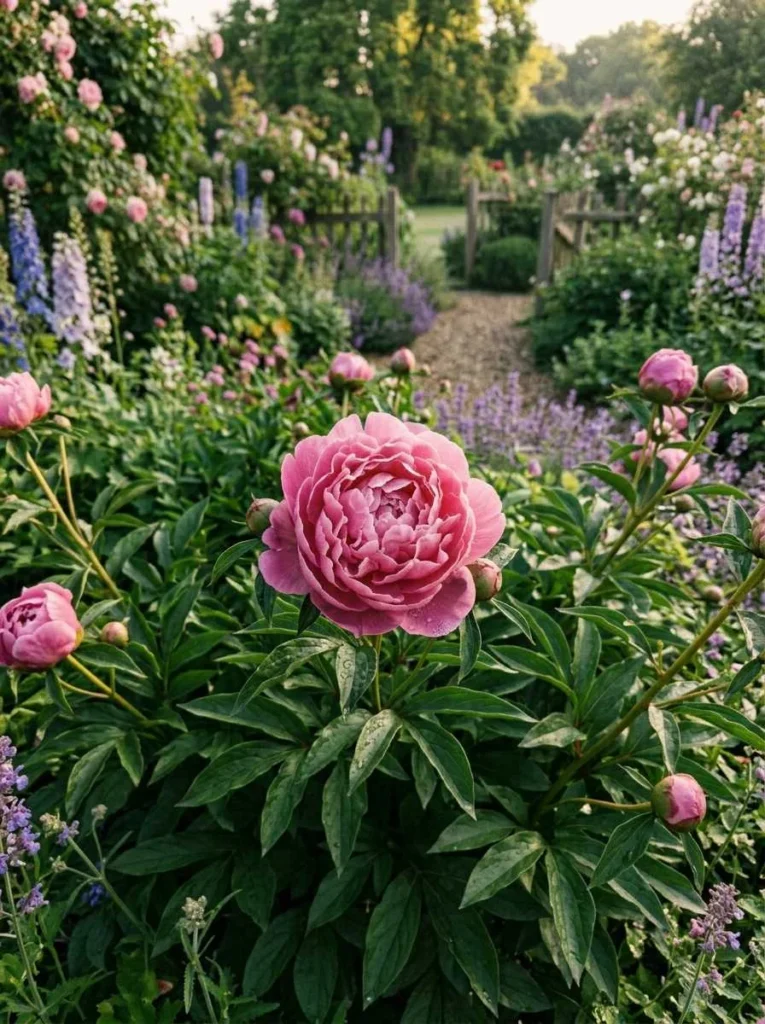
Create a Wildlife-Friendly Corner With Nettles and Teasels
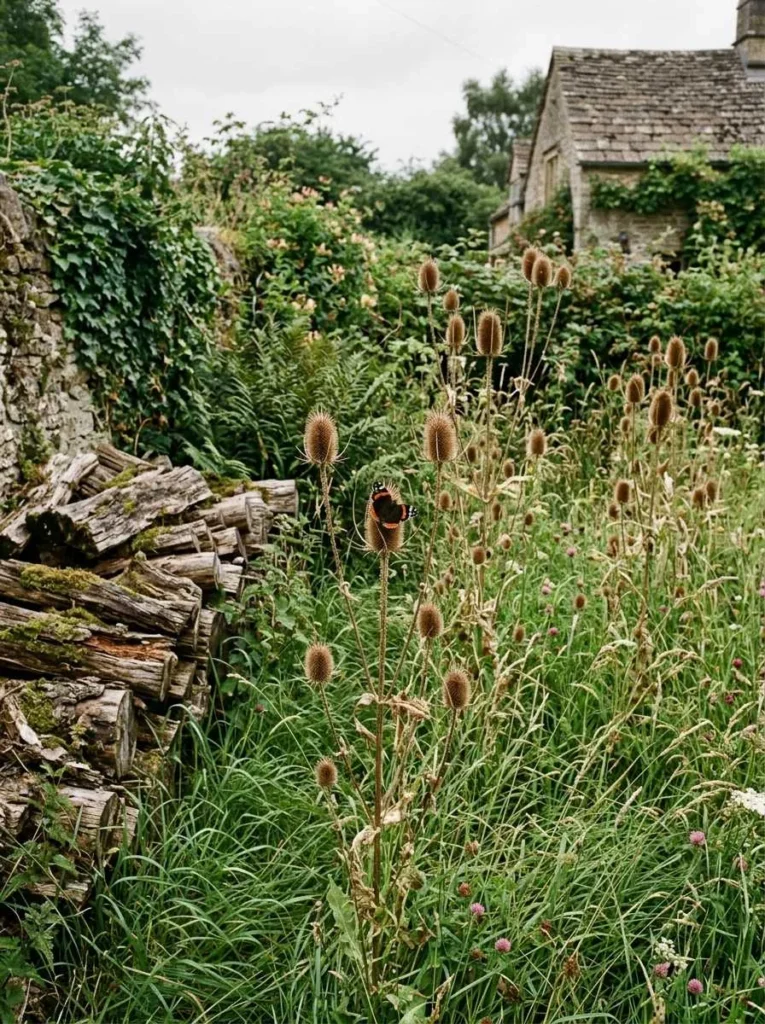
A really authentic cottage garden always has a slightly wild corner a spot where things are left a little more to themselves for the benefit of wildlife. Nettles, while not glamorous, are essential food for butterfly caterpillars. Teasels are architectural and beautiful in their own right, with spiky architectural heads that birds love to feed from in winter. A patch of long grass, some brambles trained loosely, and a log pile create habitat for hedgehogs, beetles, and frogs. I think these wilder corners actually add something genuine to a cottage garden they remind you that this style of gardening was always about working with nature, not against it.
Grow Cottage Pinks (Dianthus) Along Border Edges
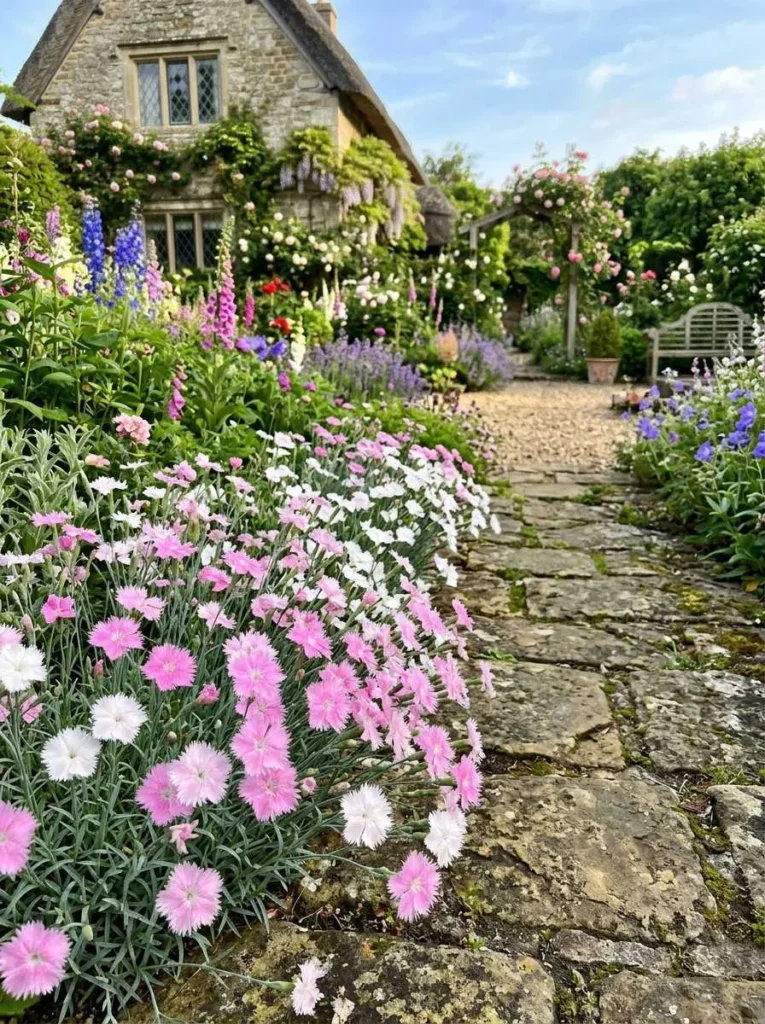
Old-fashioned Dianthus sometimes called cottage pinks or gilliflowers are one of the most perfectly suited plants to this garden style. They have a delicate, fringed flower in shades of pink, white, and candy-striped red, and they carry the most extraordinary spicy, clove-like fragrance. They’re low growing, so they work beautifully along the front of borders or spilling over path edges. They like well-drained soil and full sun, and they’re generally quite tough once established. Varieties like ‘Mrs. Sinkins’ and ‘Doris’ are classic choices with a long history in cottage gardens the kind of plants that have been passed from garden to garden between friends for generations.
Use Colour Drifts Rather Than Regimented Rows
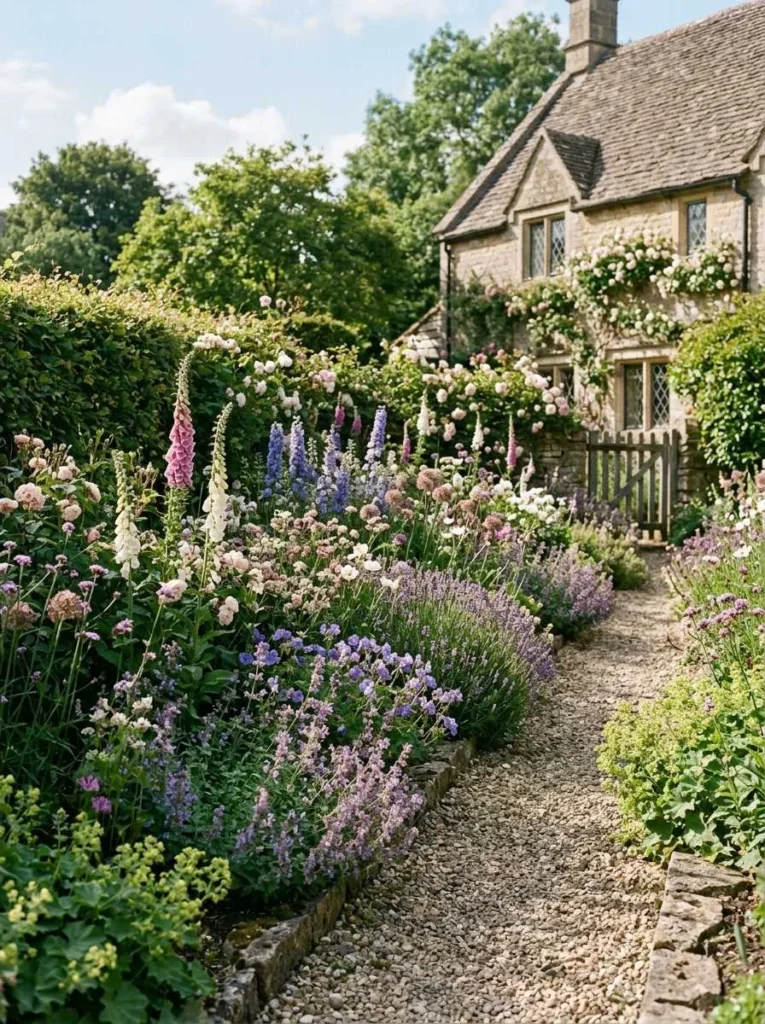
One of the most common mistakes beginners make is planting in very neat, regimented rows or blocks which tends to give a garden a more formal, municipal feel rather than that relaxed cottage atmosphere. In a true cottage garden, plants are arranged in irregular drifts and clusters that flow into each other. Think of it like paint strokes rather than squares on a grid. Plant in odd numbers (threes, fives, sevens) and allow the groups to weave between each other rather than sitting in separate blocks. It might feel slightly chaotic when you first plant, but as the season progresses and plants mature and spread, the whole thing comes together into something genuinely beautiful.
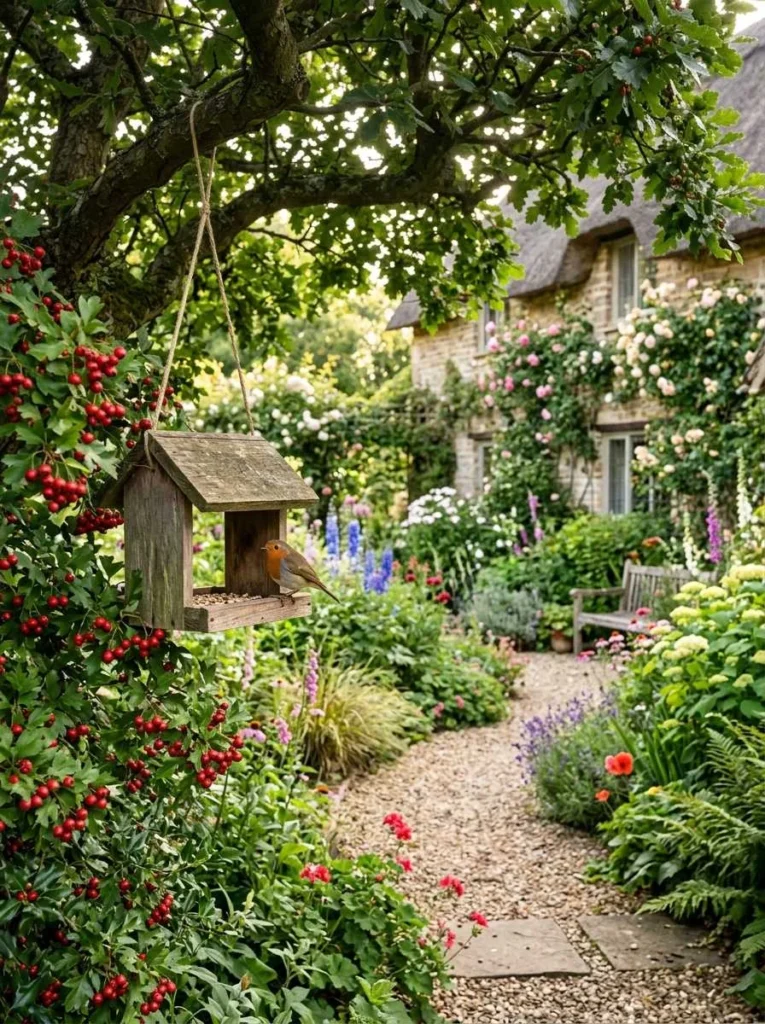
Add a Birdsong-Friendly Bird Feeder and Native Berry Shrubs
Sound is such an underrated part of a garden atmosphere and a cottage garden filled with birdsong has a quality that no amount of planting can replicate on its own. Adding a simple wooden bird feeder and planting native berry-producing shrubs like elderberry, hawthorn, or rowan creates a garden that attracts birds throughout the year. In return, they help with pest control by eating slugs, aphids, and caterpillars and the movement and sound they bring adds so much life to the space. I honestly think a garden that’s full of birds feels more alive and cared for than one that’s perfectly planted but completely silent.
Style Tips to Elevate Your Cottage Garden Look
- Layer your plants by height tall at the back, low-growing at the front so every plant gets light and the border looks full from all angles.
- Choose a soft, harmonious color palette (pastels, creams, dusky pinks, soft purples) rather than mixing too many bold contrasting colors.
- Use fragrant plants generously near seating areas, entrances, and pathways so the scent becomes part of the experience.
- Let some plants self-seed freely each year it’s the easiest way to build that natural, evolved look without extra work or expense.
- Incorporate vintage or weathered materials (old terracotta, stone, wood) to add texture and character that new materials simply can’t replicate.
- Water deeply and infrequently rather than little and often it encourages deeper roots and stronger, more resilient plants overall.
Frequently Asked Questions
What are the best cozy cottage garden ideas for beginners with a small yard? Even a tiny space works beautifully for a cottage garden. Focus on vertical growing climbing roses, sweet peas on canes, honeysuckle on an arch to maximize the space. Add containers, layer plants densely, and choose self-seeders so the garden fills in quickly and naturally.
How do I start a cottage garden if I’ve never gardened before? Start simple. Pick a sunny spot, improve the soil with compost, and sow a wildflower mix alongside a few easy perennials like hardy geraniums and catmint. Don’t overthink the design cottage gardens look best when they feel relaxed and unplanned.
What flowers are essential for a cottage garden style? Roses, lavender, foxgloves, hollyhocks, sweet peas, peonies, and hardy geraniums are all classic choices. Mix in some self-seeding annuals like nigella and cosmos to fill gaps and add that beautiful, spontaneous quality that defines the cottage garden look.
conclusion
There’s something genuinely joyful about creating a cottage garden especially when it’s your first one. It doesn’t have to be expensive, complicated, or perfectly planned. Some of the most beautiful cottage gardens I’ve seen started with a packet of seeds, a few perennials from a neighbor, and a real willingness to just try things and see what happens. I hope these cozy cottage garden ideas for beginners give you the confidence to start somewhere even somewhere small. Because honestly, the moment you step outside and see something you planted blooming beautifully, surrounded by bees and butterflies, it’s one of the best feelings in the world. Save this post, pin it, share it with a friend who’s been thinking about starting a garden and go make something wonderful.