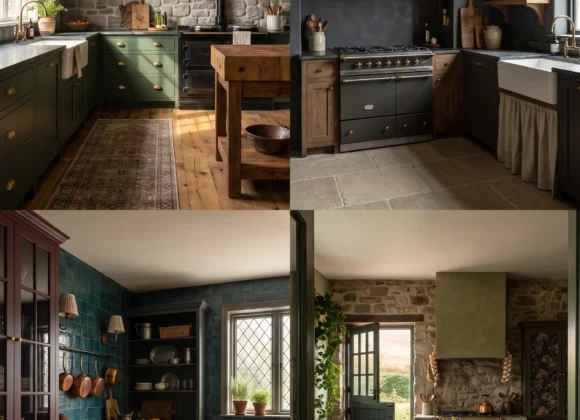


If you love moody, storybook spaces, a dark cottagecore kitchen with forest green cabinets and dried herbs might be your new favorite decorating dream. Honestly, it’s one of the coziest looks I’ve ever styled. Picture deep green paint, old wood, soft candlelight, and bundles of rosemary and lavender hanging overhead. It feels like a kitchen from a folk tale, but it still works for real cooking and busy mornings. Below you’ll find 30 different ways to build the look, whether you own your home or rent. Grab a cup of tea and let’s get into it.
Classic Shaker Doors in Deep Forest Green
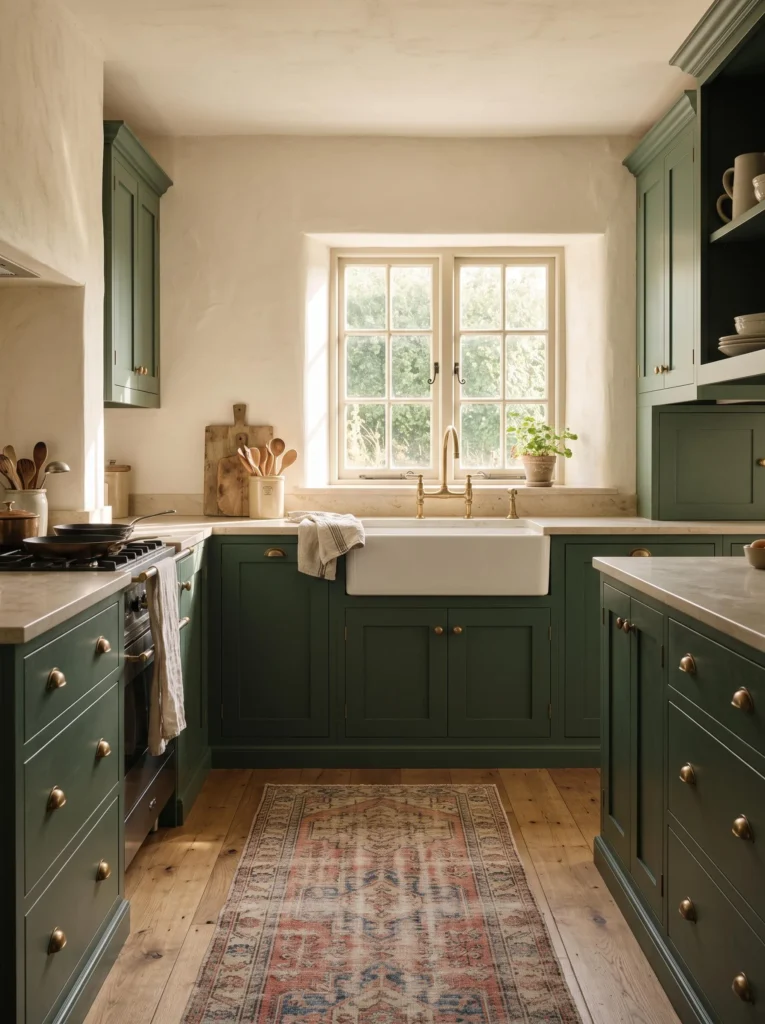
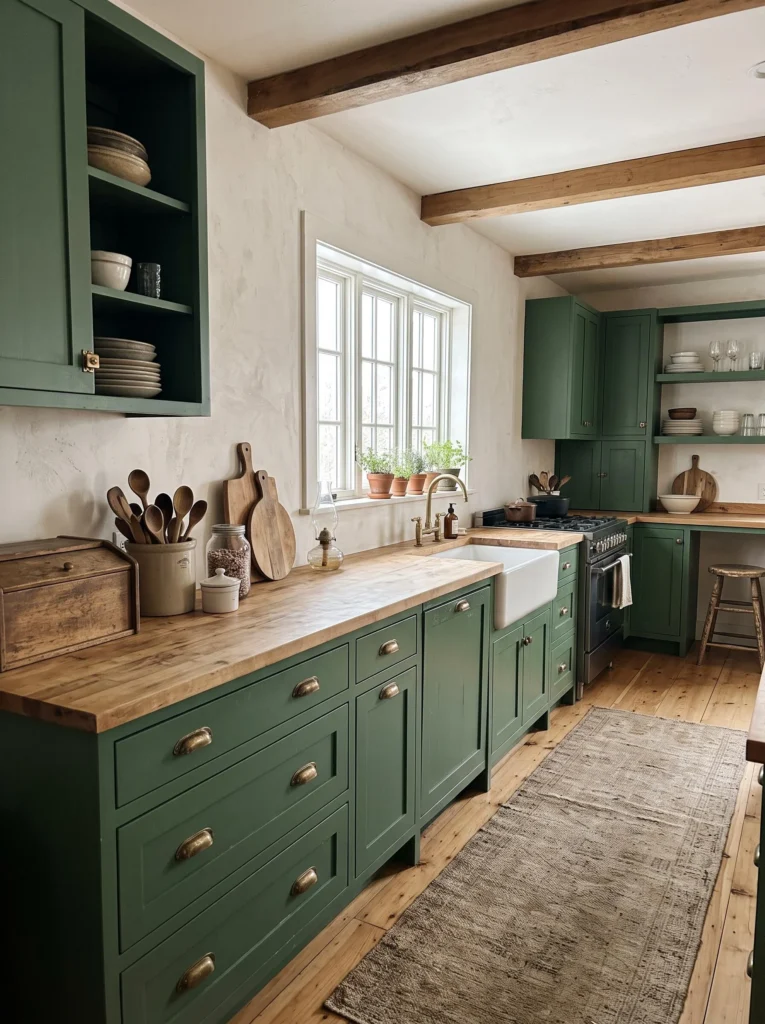
Start with the cabinets, because they carry the whole mood. Paint plain shaker doors in a deep forest green with a soft matte finish, then add aged brass knobs for warmth. Pair them with creamy off-white walls so the green really glows. Keep counters mostly clear, and tuck tea towels and wooden spoons into shallow drawers. A faded wool runner softens the floor. I love a warm bulb here, since cool light makes green look flat. This works because the dark color feels grounded, and the brass stops it from turning heavy. Repaint your existing doors with cabinet-grade paint to get the look cheaply.
Open Shelves Loaded With Antique Crockery
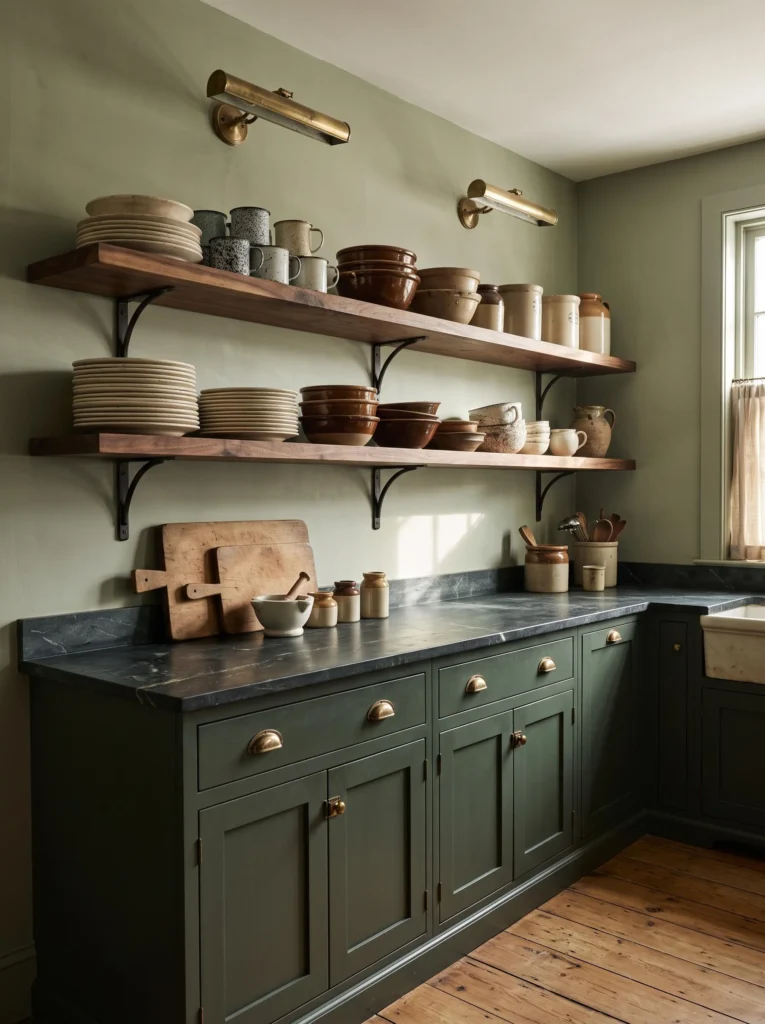
Swap a few upper cabinets for chunky open shelves and the room instantly feels collected. Use thick oak boards stained a warm walnut, then stack cream ironstone plates, speckled enamel mugs, and brown glazed bowls. Mix heights so it looks gathered over time, not bought in a day. Tuck a small brass picture light above each shelf for evening glow. Wall color can stay a soft sage so the dishes stand out. Open shelving works because everyday items become decor. Keep it tidy by storing only pieces you truly use, and hide the plastic stuff in a closed drawer.
A Butcher Block Island With a Hanging Herb Rack
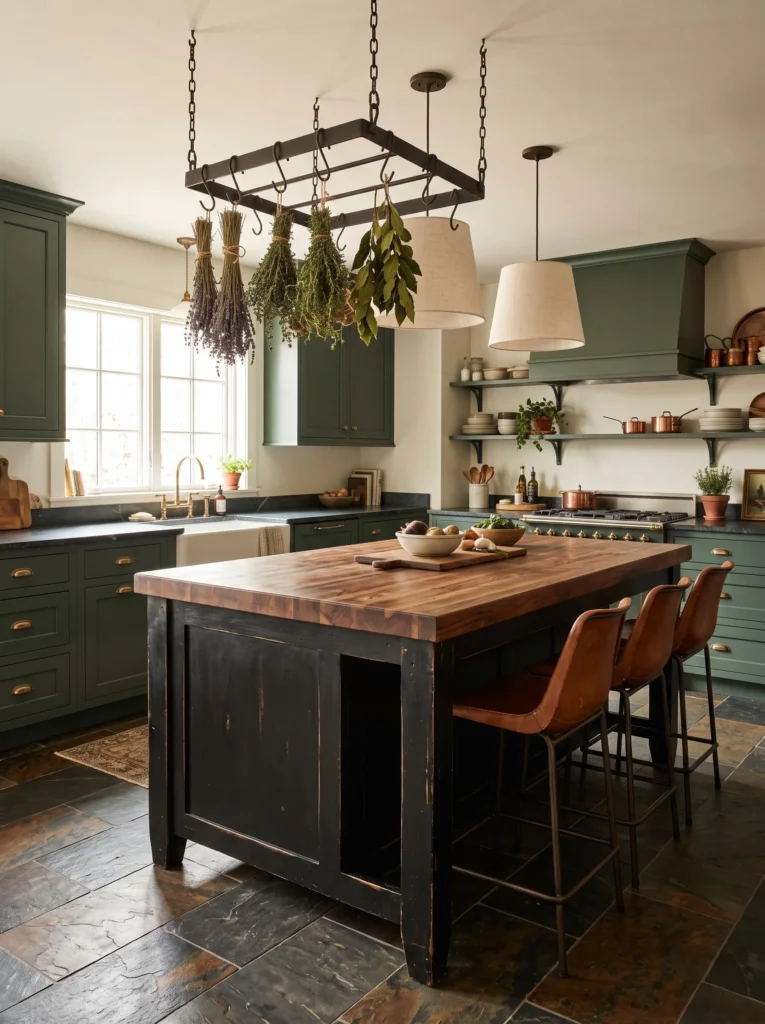
An island gives the kitchen a gathering spot, and a worn butcher block top makes it feel handmade. Choose a chestnut-toned island base in aged black, then hang a wrought iron rack above with lavender, thyme, and bay leaves tied in twine. Add two or three leather-seat stools in a tobacco brown. A pair of linen-shaded pendants adds a gentle pool of light. Seal the wood with food-safe oil so it ages beautifully. This idea works because the herbs stay within arm’s reach and look pretty while they dry. Hang bundles at different lengths for a natural, layered feel.
Apothecary Drawers for a Witchy Pantry Wall
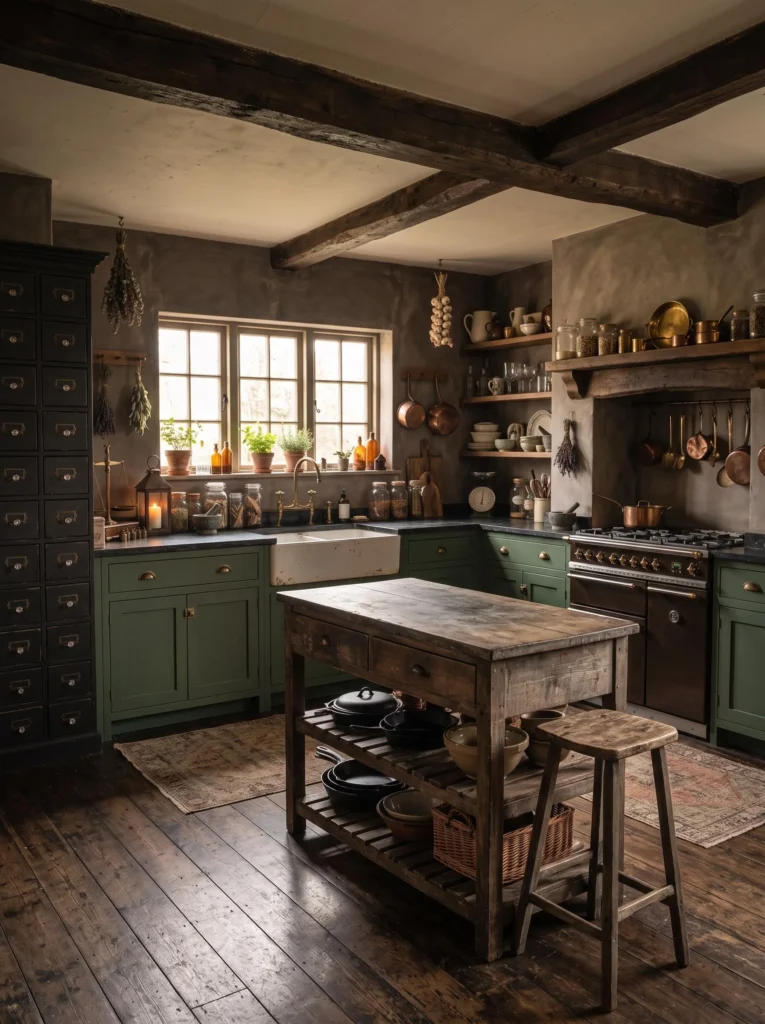
Nothing says dark cottagecore like a wall of tiny labeled drawers. Look for a vintage apothecary cabinet or build a similar one from reclaimed pine, then stain it nearly black. Fill the drawers with loose teas, dried chamomile, peppercorns, and cinnamon sticks. Glass knobs add a delicate shine against the dark wood. Set it beside forest green lower cabinets so the whole corner feels connected. A small candle lantern on top gives it a cozy glow. This works in a dark cottagecore kitchen with forest green cabinets and dried herbs because every drawer serves a purpose and stays pretty. Use handwritten paper tags for a soft finish.
Moody Floral Wallpaper Behind the Range
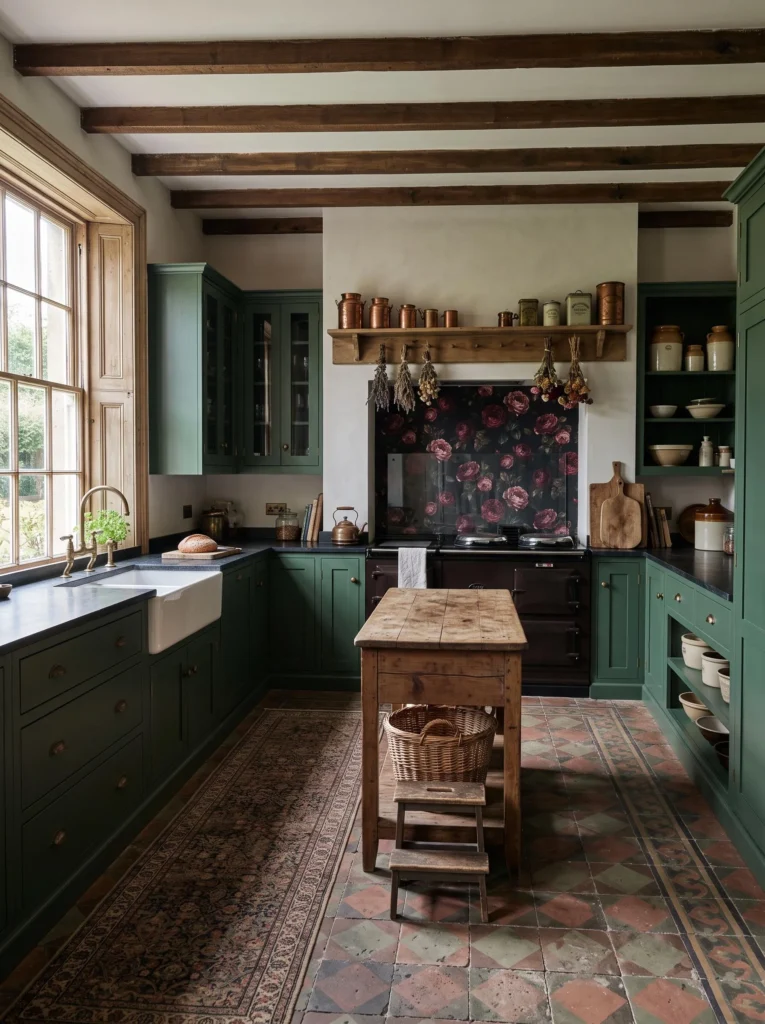
Skip plain tile and try a wipeable wallpaper with small dark florals, like deep burgundy roses on an inky background. Place it only behind the stove and a short stretch of counter, and cover it with a clear glass panel for splashes. Forest green cabinets look wonderful against it, especially with antique brass pulls. Add a rustic wood mantel shelf above the cooktop for copper jars and dried bundles. The pattern feels romantic without taking over. Choose a peel-and-stick version if you rent. It works because a small area of pattern adds depth while the rest of the room stays calm.
Black Soapstone Counters With Natural Wear
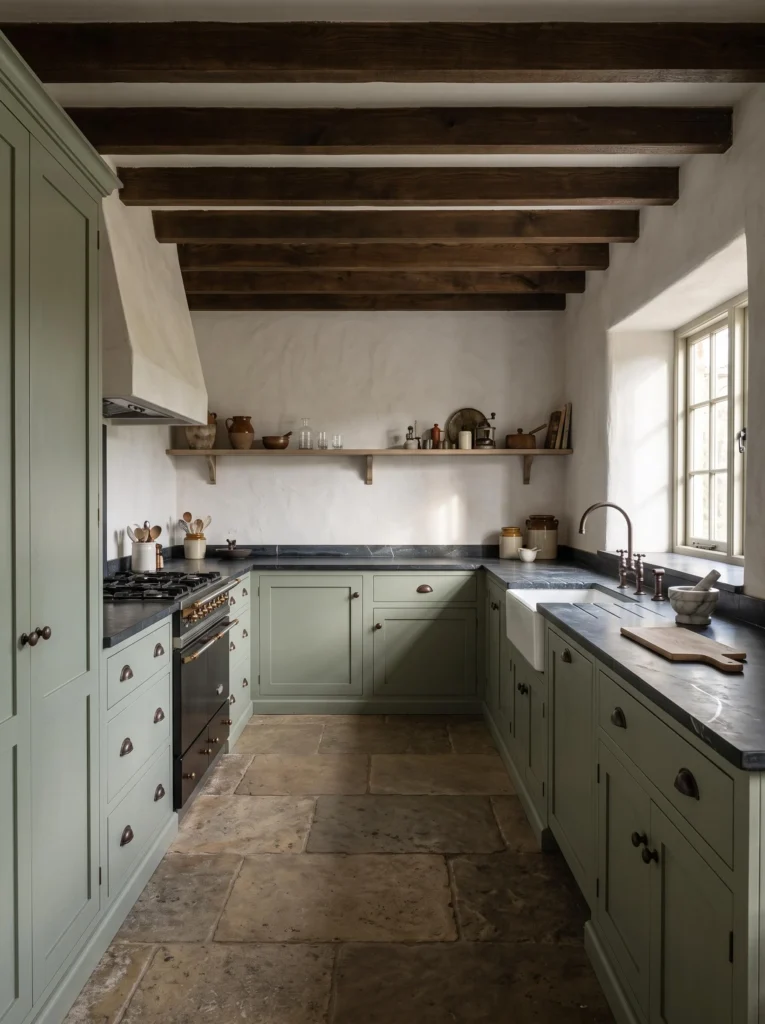
Soapstone brings a quiet, chalky darkness that suits this style perfectly. The charcoal surface develops a soft patina over time, and I think that’s the charm. Pair it with muted green lowers, a farmhouse apron sink, and a bridge faucet in oil-rubbed bronze. Rub mineral oil on the counters every few weeks for an even deep color. Keep a marble mortar and pestle near the stove for crushing herbs. Cheaper alternatives like honed black quartz also work. This idea succeeds because the surface hides everyday marks, and the texture feels handmade. Add a slim wooden cutting board that stays out as decor.
A Window Garden Above the Farmhouse Sink
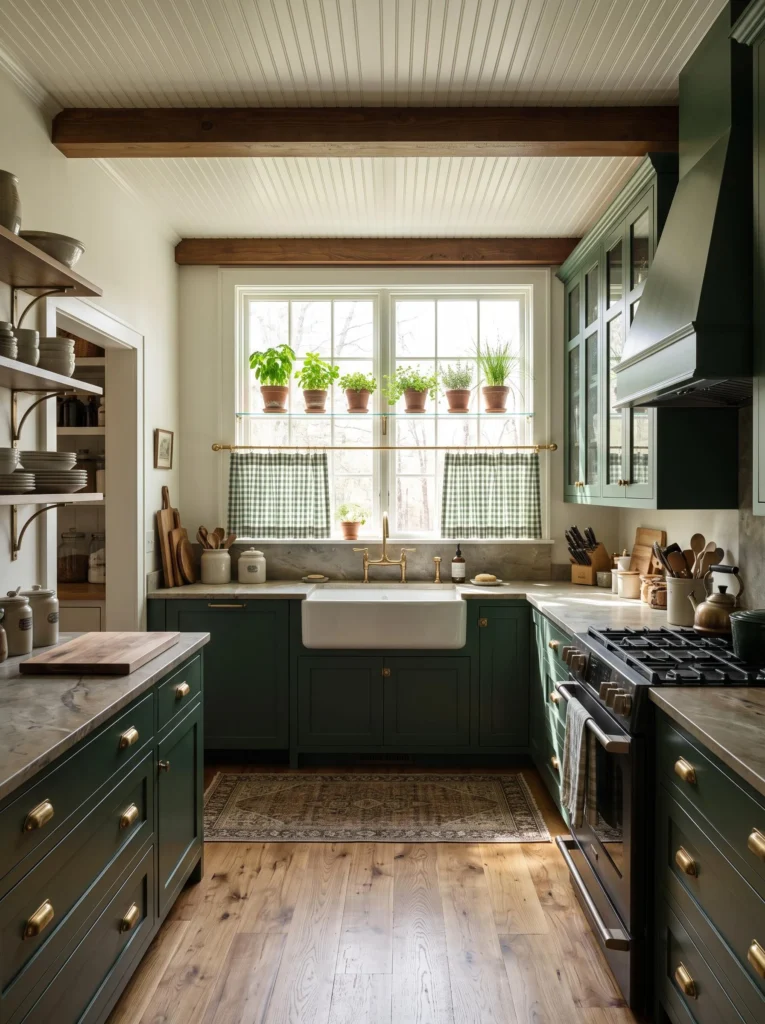
Let the sink window become a living shelf. Install a narrow glass shelf across the window and line it with small terracotta pots of basil, mint, parsley, and chives. Hang a gingham cafe curtain on a brass rod for privacy and softness. The sink itself can be a deep white fireclay apron style, which pops against dark cabinetry. Add a wall-mounted brass faucet and a ceramic soap dish. Natural sunlight is the star here, so keep the glass sparkling. This works because fresh herbs and dried herbs sit together, giving the kitchen both life and age. Water the pots with a vintage tin can.
Copper Pots on a Wall-Mounted Rail
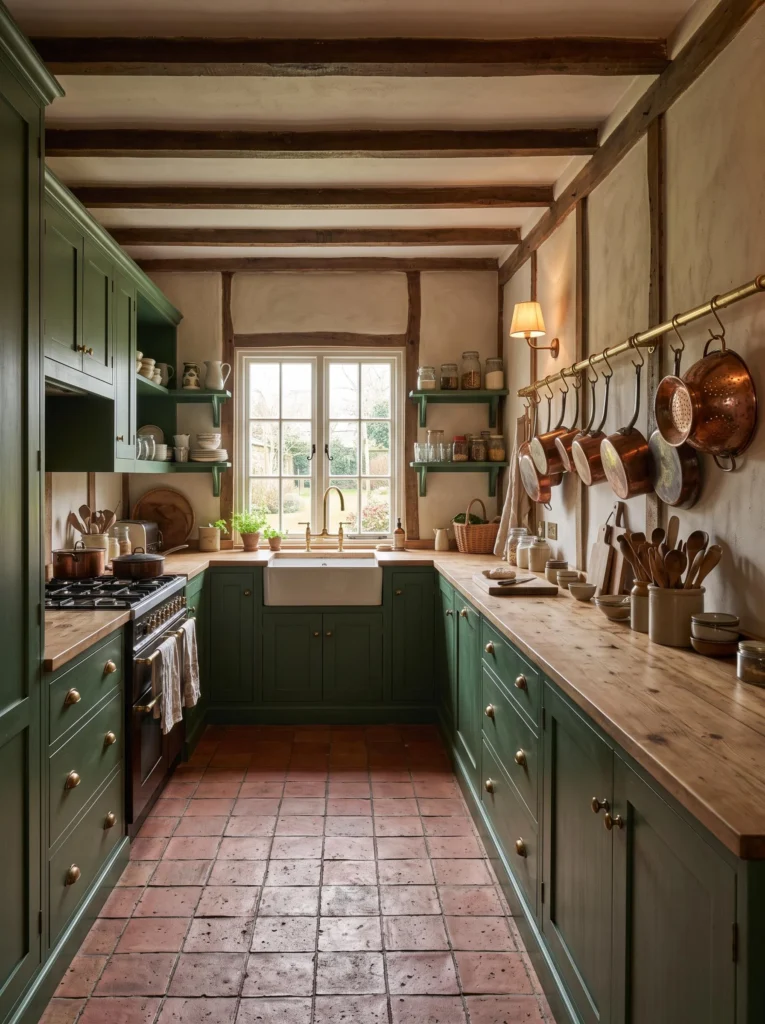
Copper brings a glowing, reddish warmth against dark green. Mount a simple iron or brass rail along one wall and hang saucepans, skillets, and a worn colander from S-hooks. Don’t buy a matching set. Mismatched pieces with dents and dull spots look so much more charming. Beneath the rail, a slim plank counter holds crocks and wooden utensils. A single sconce with a cloth shade throws light across the metal. Cleaning isn’t required, since the tarnish gives character. This idea works because storage becomes decoration, and it frees up cabinet space for bulkier items. Thrift stores and flea markets are your best friends here.
Rough Timber Beams and a Low Ceiling Feel
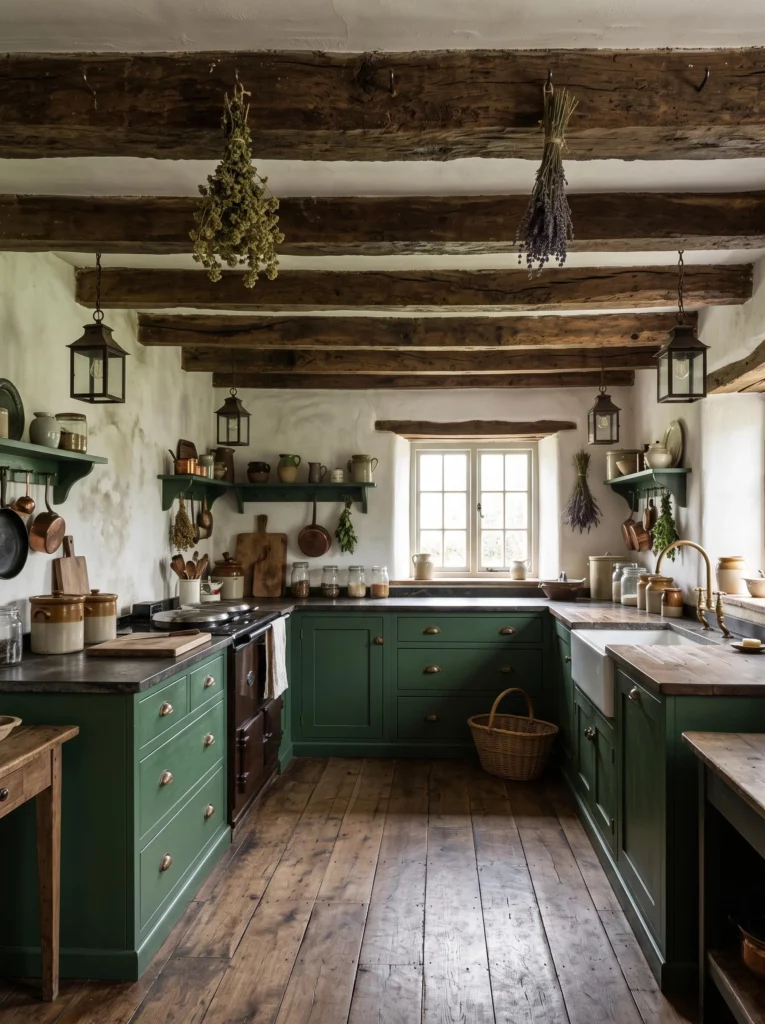
If you have a low ceiling, lean into it. Add faux beams made from lightweight hollow planks stained a dark umber, and hang bundles of oregano and lavender from small hooks. The cabinets can stay forest green while the walls go a warm plaster white. Lime-wash paint gives the walls a soft, cloudy texture. Use wrought iron lanterns as hanging lights so the ceiling doesn’t feel crowded. This works in a dark cottagecore kitchen with forest green cabinets and dried herbs because the beams give the herbs a natural drying spot and add old-world structure. Use a stud finder before hanging heavier items.
A Tiny Galley Kitchen for Renters
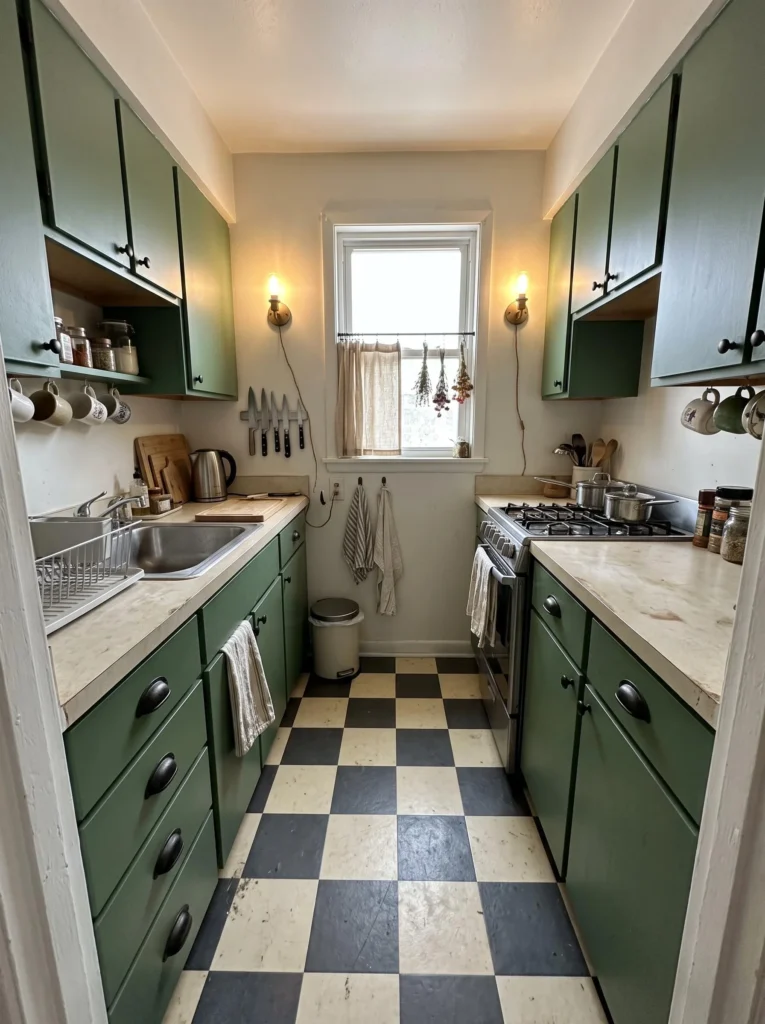
Small kitchens can be the coziest ones. In a narrow galley, use peel-and-stick cabinet film in deep pine green and swap the handles for simple black iron cups. Lay a removable vinyl floor in a worn checkerboard pattern of cream and charcoal. Hang a tension rod across the window for a thin linen valance and a few dried bundles. Mount a magnetic knife strip and a slim shelf over the stove to keep counters open. Nothing here needs a contractor. It works because the dark color makes walls feel deeper, and removable materials keep your deposit safe. Use plug-in sconces for soft lighting.
A Walk-In Pantry With Slatted Wood Shelves
A pantry can be a showpiece, not a cupboard you hide. Line the walls with deep moss paint and add slatted oak shelves that let air move around jars of grains, honey, and preserves. Use glass canning jars with cork lids and woven baskets for potatoes and onions. A small stool with a rush seat doubles as a step. Hang a bunch of sage by the door to keep it smelling earthy. A single brass flush mount light is enough. This works because organized, visible storage feels abundant and calm. Label only with simple chalk tags, never bold printed stickers.
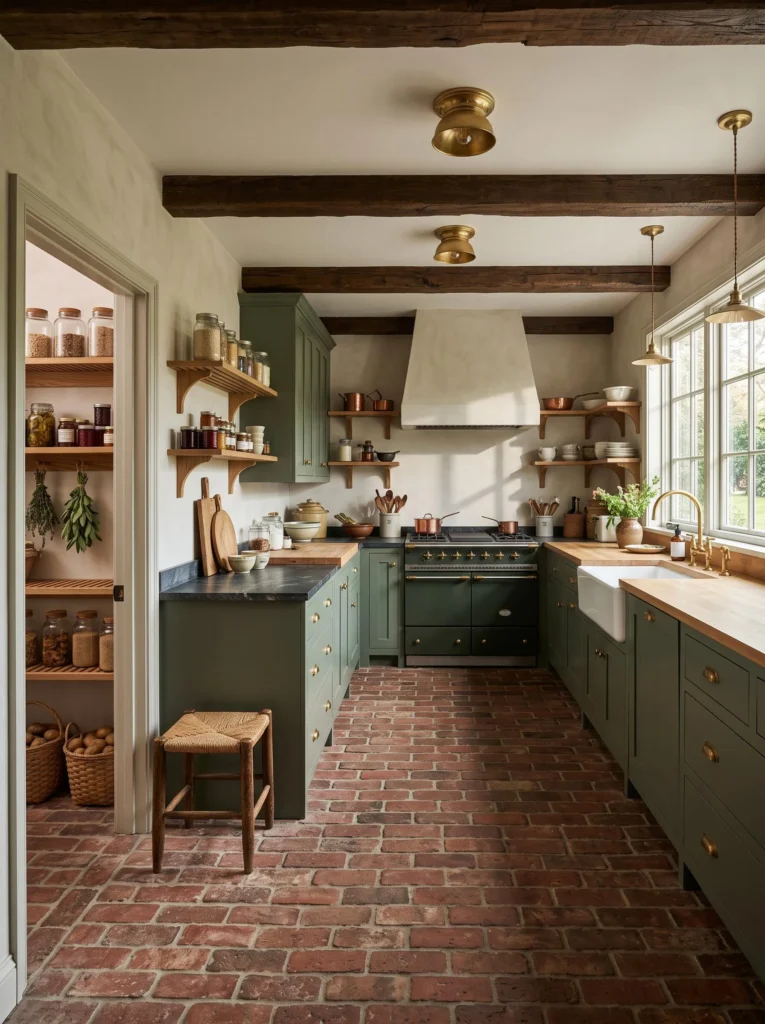
A Heavy Farm Table With Mismatched Chairs
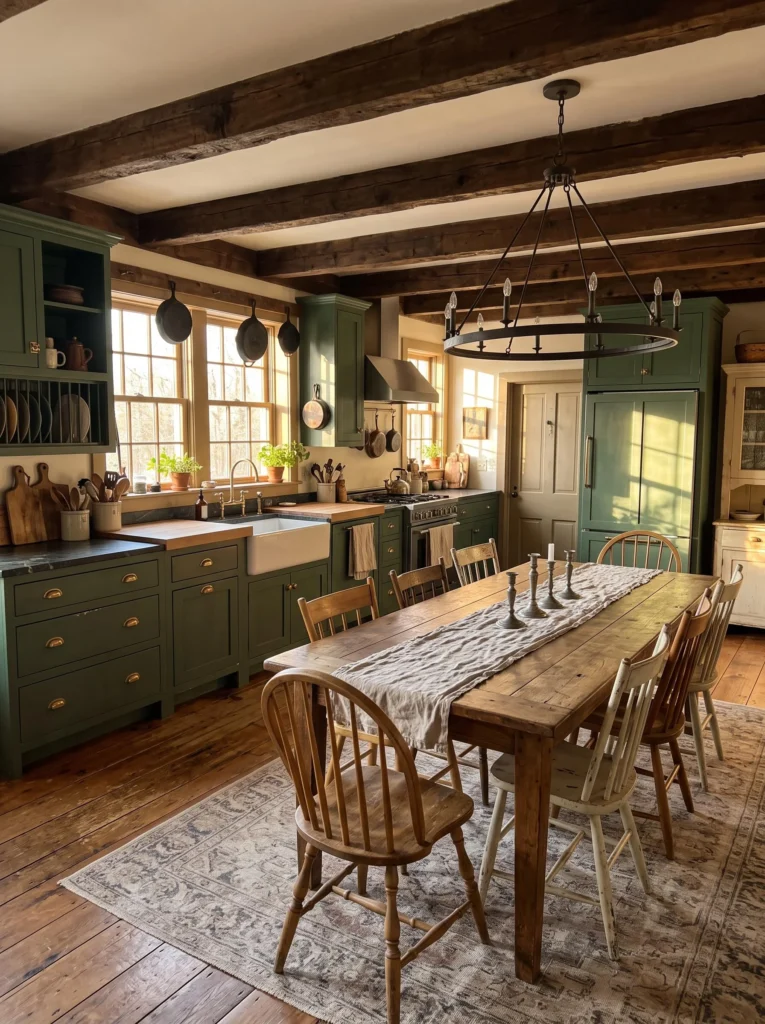
If you have the room, a long wooden table turns the kitchen into the heart of the home. Look for a scarred oak or pine farm table with turned legs, then surround it with chairs that don’t match, like a spindle back, a ladder back, and a simple bench. Layer a faded linen runner and a few beeswax taper candles in pewter holders. Over the table, hang a wide iron chandelier with a soft glow. The green cabinets sit quietly behind. It works because the mismatched seating feels like family history. Add seat cushions in muted plaid for comfort.
Handmade Zellige Tile in Moss and Cream
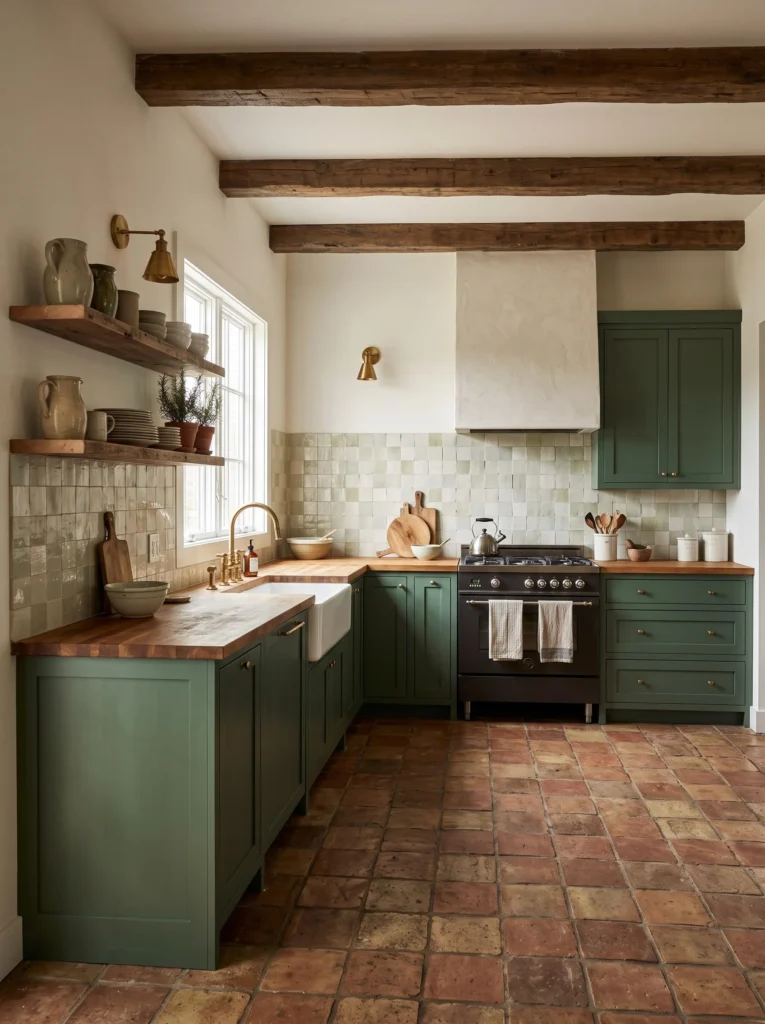
Zellige tiles have a wonderfully uneven surface that catches light like water. Install them as a backsplash in soft cream or a pale moss green with creamy grout, and let the little imperfections shine. The glossy glaze plays nicely against matte forest green doors. Add a rustic wood floating shelf with a few ceramic jugs and a bundle of rosemary. Brass sconces on either side make the tile shimmer in the evening. This works because shiny handmade tile adds depth without adding pattern. If budget is tight, use a crackled ceramic subway tile that mimics the look.
Candlelight and Iron Lanterns at Night
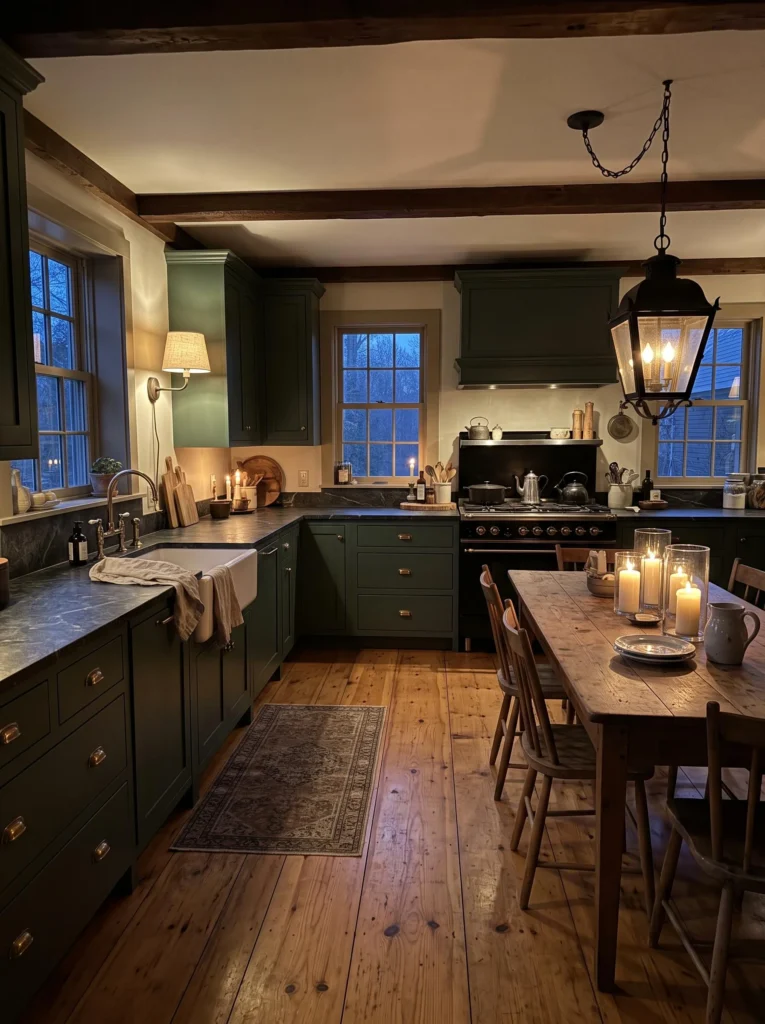
Dark kitchens come alive after sunset. Place a few pillar candles in hurricane glass on the counter, and hang one black iron lantern over the table with a dimmable bulb inside. Mount a plug-in wall sconce with a linen shade near the sink. Keep the surfaces wood or stone, since glossy ones bounce light harshly. A small beeswax candle near the stove adds a faint honey scent. This is pure mood, and I think it’s what sells the cottagecore feel. Always use a safe distance from hanging herbs, and swap real flames for flickering LED candles when you can.
A Freestanding Hutch for Dishes and Linens
Cabinets don’t have to be built in. A weathered freestanding hutch in chipped cream or black brings real age to the room. Use the glass top section for teacups and cut glass, and the lower doors for table linens and baking pans. Line the shelf edges with scalloped paper in soft gray. Lean a small oval mirror against the back for a sparkle of reflected light. The hutch sits well beside forest green lowers because both feel timeless. This works since it adds storage without remodeling. Look for solid wood pieces online and refresh the knobs with antique brass.
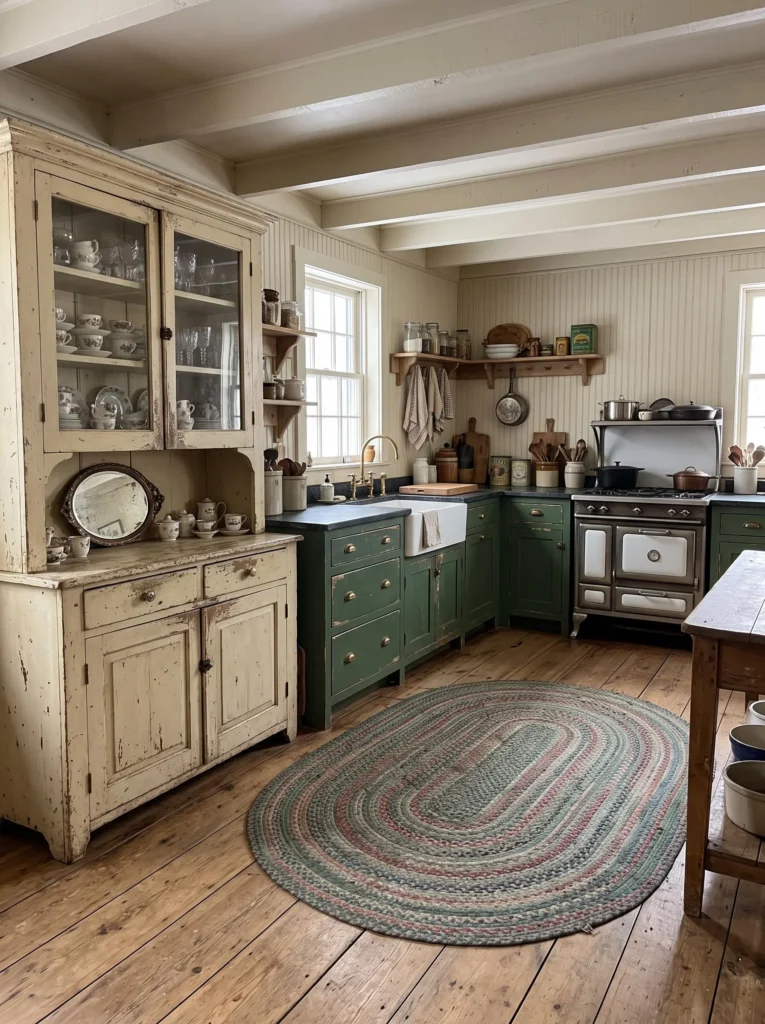
Worn Flagstone Floors and a Faded Runner
The floor is your quiet foundation. Real flagstone or a slate-look porcelain tile in gray-brown tones gives the room a cottage cellar feel. Layer a long Persian-style runner in rust and indigo, a little faded, since faded looks better than bright. Choose heavy iron-framed stools that won’t slide. Radiant heat or thick socks make stone friendly in winter. Keep grout lines wide and slightly rough. It works because the cool, uneven surface balances the soft textures above it. If a full tile job isn’t possible, a rug with a stone-print pattern placed over vinyl is an easy renter move.
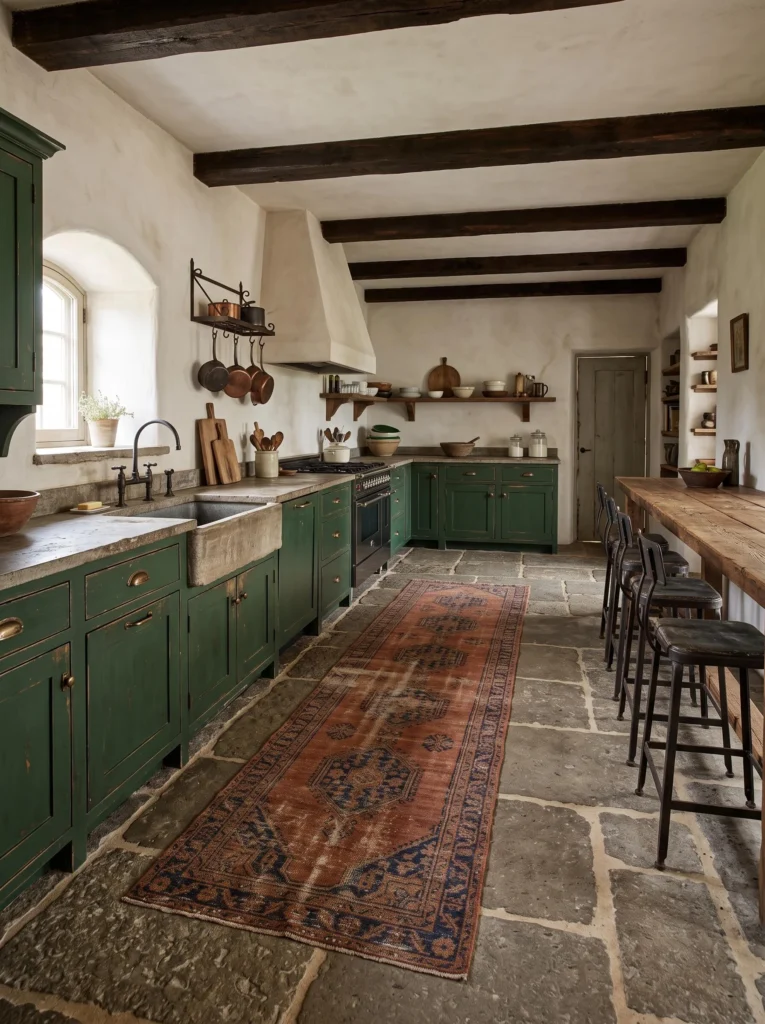
A Bay Window Nook With Cushions and Books
Give the kitchen a reading corner. Build a bench into a bay window with hidden drawer storage underneath for cookbooks and linens. Top it with a thick cushion in oatmeal wool and throw pillows in mustard and rust velvet. A small round pedestal table holds a teacup and a candle. Sheer cream curtains let the sunlight spill in during the day, and a plug-in reading light takes over at night. The nook works because it makes the kitchen a place to linger. Frame the window with a rustic timber trim painted a deep olive.
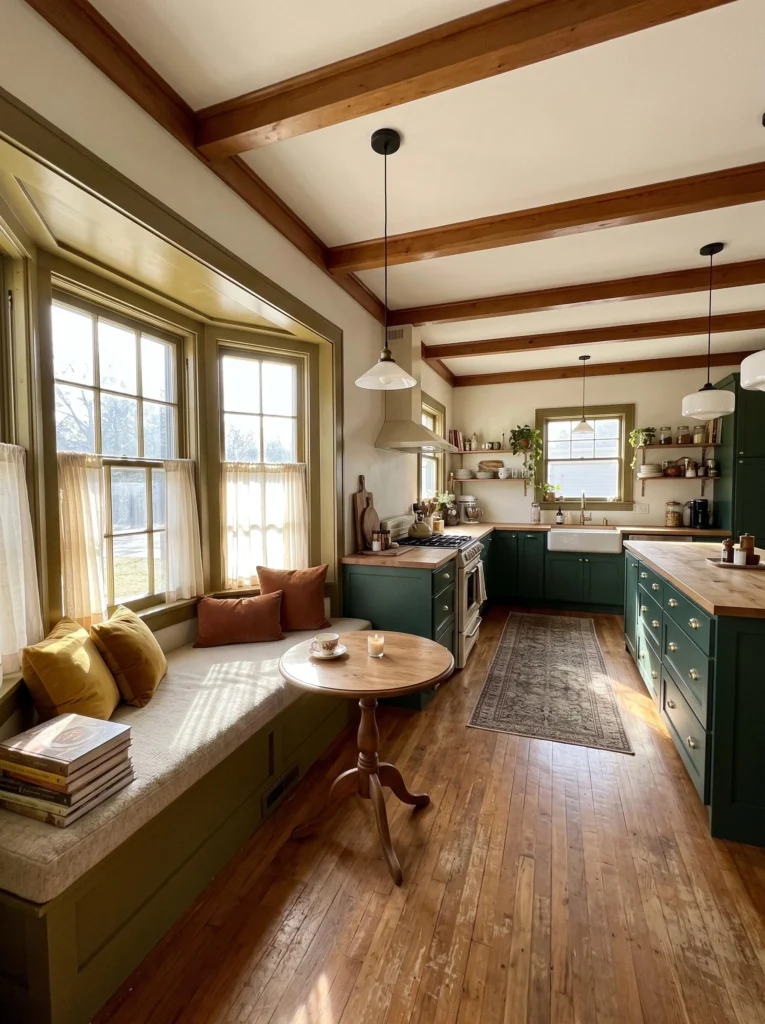
Gingham Cafe Curtains and Embroidered Linens
Soft textiles make dark rooms feel loved. Hang cafe curtains in a small olive-and-cream gingham across the lower half of the window, then add embroidered tea towels in muted floral patterns on the oven handle. A linen tablecloth with frayed edges gives a lived-in look. Choose natural cotton, linen, and wool only, since synthetics look shiny against old wood. Cabinet doors in forest green keep the color story consistent. This works because fabric brings in the gentle, handmade charm that paint and wood can’t. Wash everything softly so it stays slightly rumpled and natural.
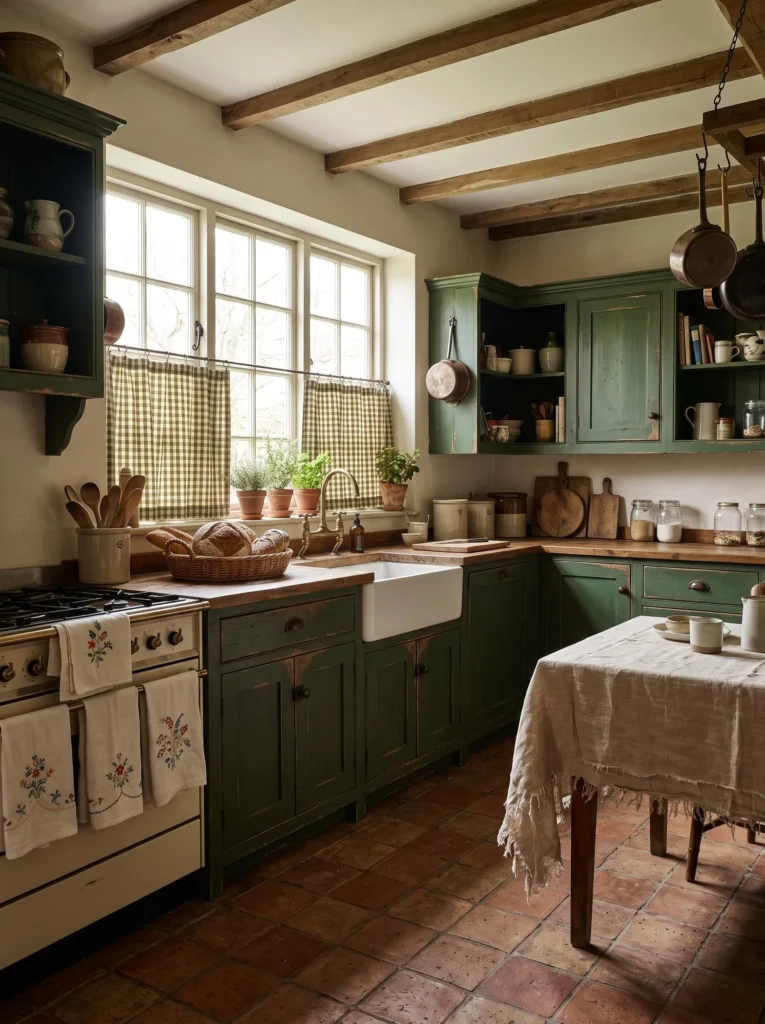
A Vintage Cream Range as the Focal Point
A retro cooker can anchor the whole room. Pick a cream or black enamel range with chrome knobs, and surround it with deep green cabinets and a tin splashback. Hang a simple iron pot rail over it with a few dried herb bundles tucked in. Add an enamel kettle in speckled blue on the back burner. A wide range hood covered in plaster or painted wood trim keeps things cozy. This works in a dark cottagecore kitchen with forest green cabinets and dried herbs because the range feels like a hearth, and the herbs hang right where cooking happens. Always check the ventilation for safety.
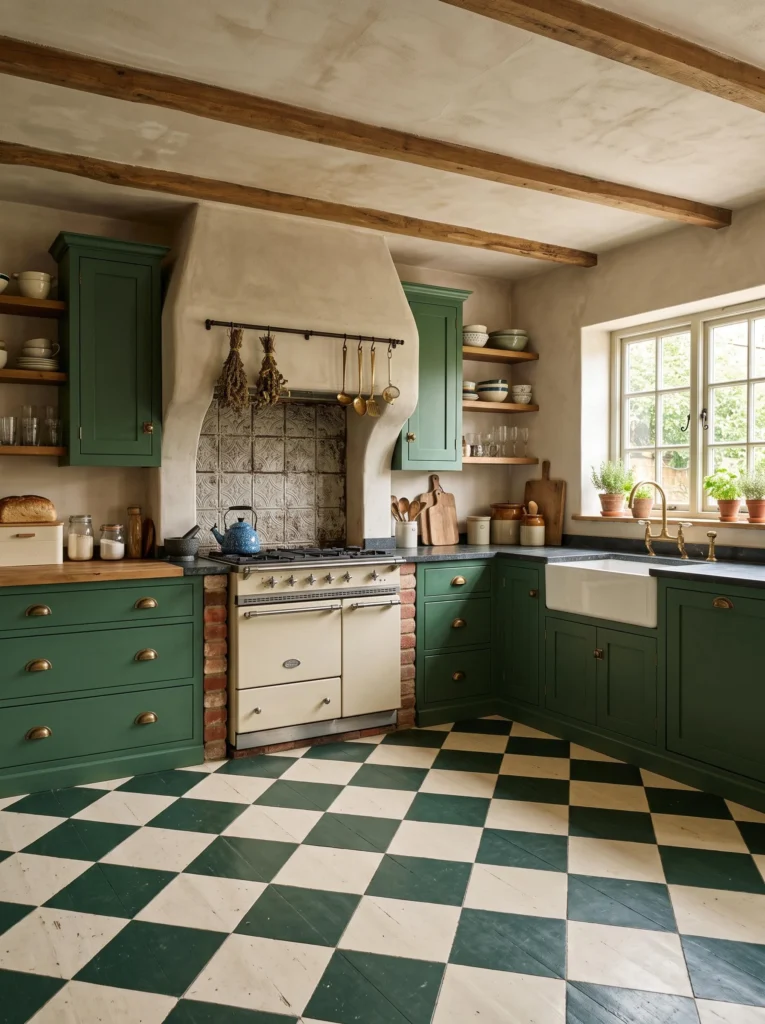
Foraged Branches and Wild Centerpieces
Bring the woods inside. Gather fallen branches, ferns, pinecones, and dried seed pods, then arrange them in a big stoneware crock on the counter. Swap them out as seasons change, with bare twigs in winter and wild grasses in summer. Add a wooden bowl of apples or pears beside it. A moss-covered tray under the vase gives a soft woodland feel. Stick to earthy browns, deep greens, and faded golds. It works because natural elements make the kitchen feel connected to the outdoors. Keep it simple, and never place anything flammable close to the flame.
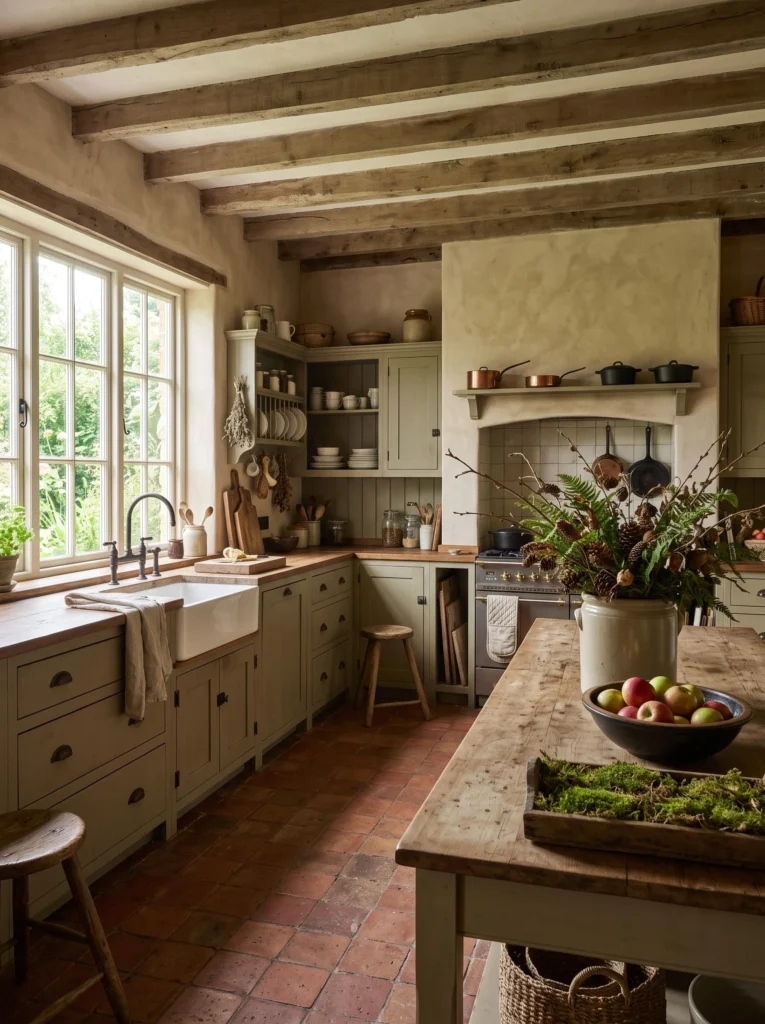
A Gallery Wall of Mismatched Plates
A plate wall adds personality with very little cost. Hang a mix of blue-and-white transferware, hand-painted floral plates, and a few plain cream ones on a deep olive or charcoal wall. Use invisible plate hangers and vary the sizes. Place a small pine shelf below with a couple of brass candlesticks. Aim for an organic cluster, not a perfect grid. The plates work like art, and they remind everyone of grandmother’s cabinet. It looks best with warm picture lights overhead. This idea succeeds since collected pieces tell a story. Shop thrift stores and estate sales for unique, affordable finds.
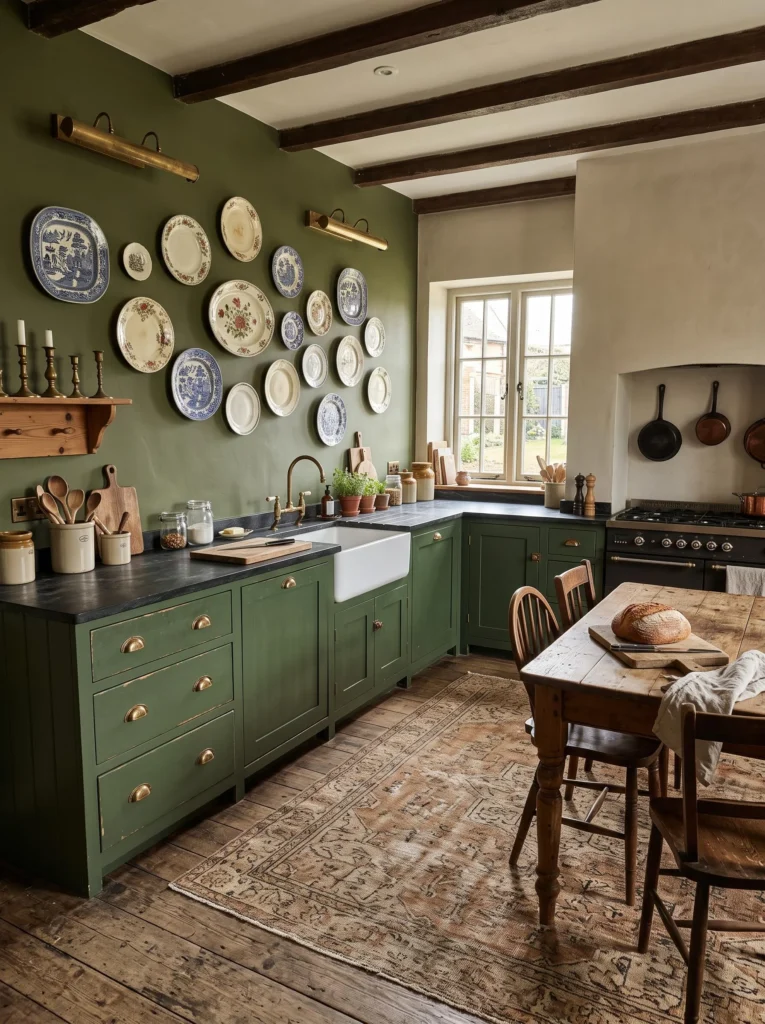
Glass-Front Cabinets With Lace Liners
Replace a few solid upper doors with glass fronts, then line the backs with vintage lace or soft linen. The result looks like an old china cabinet. Paint the frames forest green and fit them with small porcelain knobs. Display cream pitchers, silver spoons, and mismatched teacups. Install thin battery-powered puck lights inside so everything gleams at night. It works because glass gives you display space while keeping dust out. The lace adds a delicate, nostalgic feel that balances the heavy dark wood. If you don’t want to cut doors, simply swap panels for seeded glass.
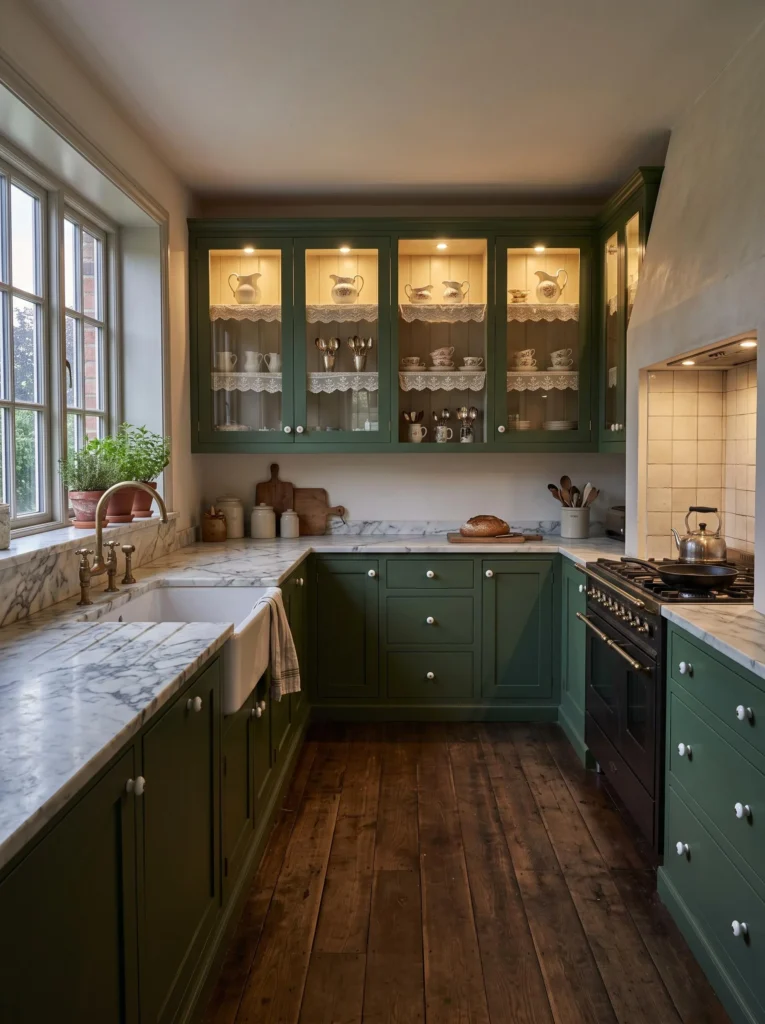
Baskets, Rattan, and Woven Storage
Woven textures soften heavy cabinets. Tuck large lidded baskets under a console for potatoes, onions, and spare linens, and hang a few flat wicker baskets on the wall as quiet art. Add a rattan pendant light for a gentle golden glow. Natural wicker in honey tones contrasts well with deep green paint. A braided jute runner in front of the sink protects your feet. This works because baskets hide clutter beautifully and add texture in a way that feels humble and handmade. Keep the weave loose and organic, never shiny or perfectly uniform.
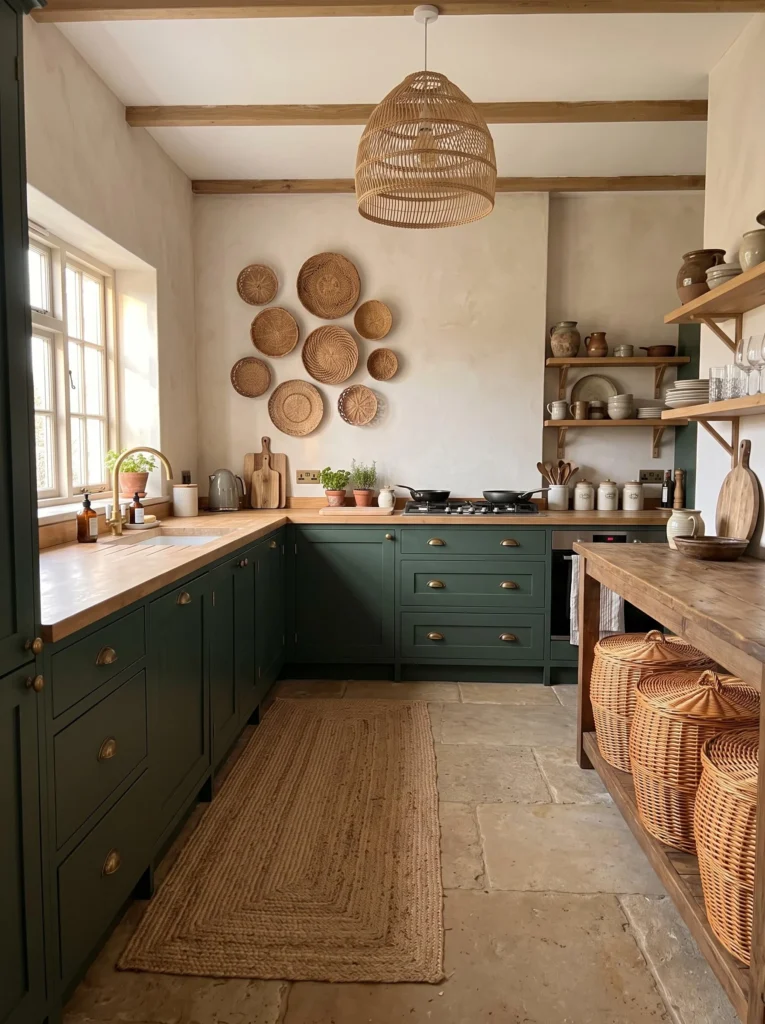
A Dark Wood Bar Cart for Evening Wine
A small cart can turn a corner into a cozy evening spot. Choose a walnut or blackened oak cart with brass trim and old casters. Fill it with amber bottles, crystal tumblers, a copper jigger, and a small vase of dried lavender. A mirror tray under the glasses catches candlelight. Place it near a window or beside the dining area so it stays out of the cooking flow. This works since the kitchen feels social, and the dark wood blends with the green around it. Add a tiny plug-in lamp with a pleated shade for a soft glow.
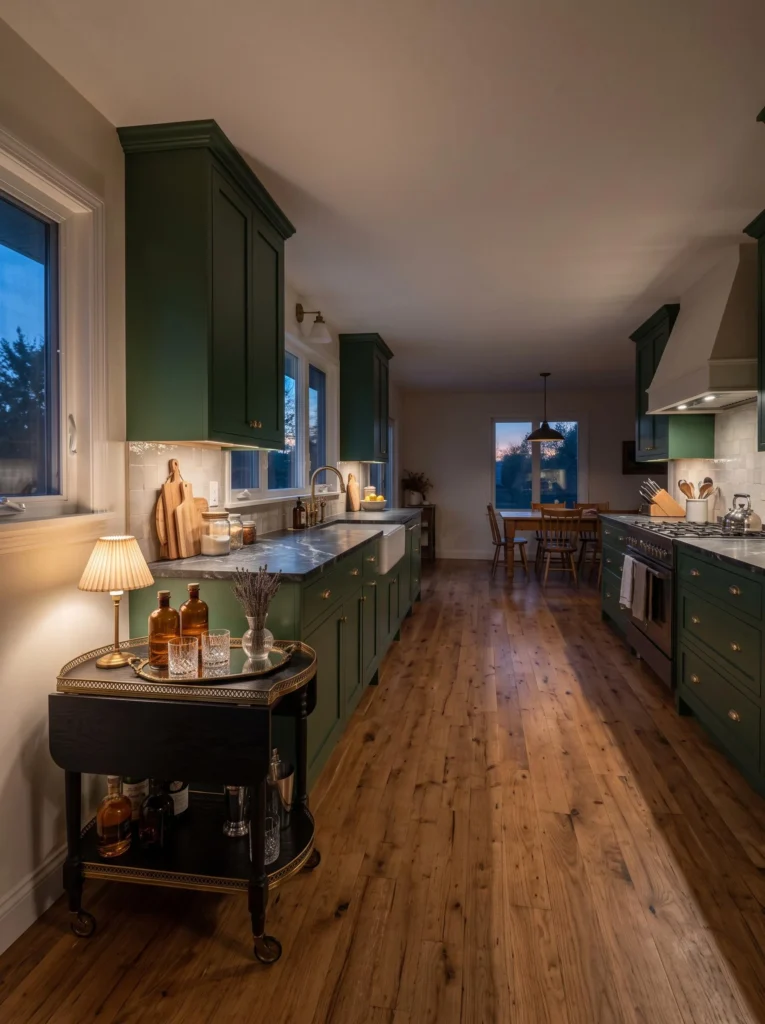
Pressed Tin Ceiling for Old-World Texture
Look up for a unique detail. A pressed tin ceiling painted in warm cream or aged pewter adds a gentle pattern that catches the lamplight. It works especially well in a room with low beams and dark cabinets since it lifts the room visually. Use lightweight faux tin tiles if the real ones are too pricey. Hang a simple milk glass pendant in the center. The ceiling gives the kitchen a Victorian pantry feel. It works because the pattern adds interest in a spot most people ignore. Keep the walls simple so the ceiling doesn’t compete.
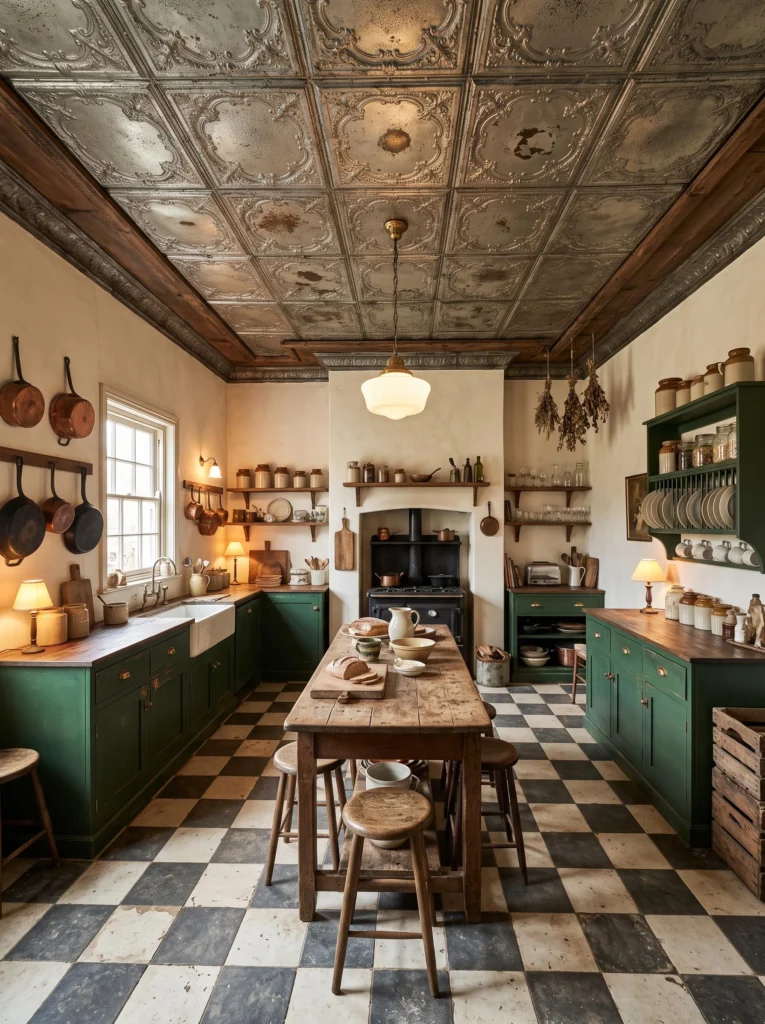
Exposed Brick and Whitewashed Plaster
Raw brick adds natural warmth to forest green. Expose one wall, scrub it, and seal lightly, or use thin brick veneer if you’re renting. Whitewash the rest in soft lime plaster for a hand-troweled look. Hang a wide cutting board and a few brass hooks for aprons. A deep green cabinet run against the brick looks like it has been there for centuries. Add an oak shelf with old glass bottles for soft reflections. It works because the red-brown tones balance the cool green. Skip glossy finishes, and let the textures speak for themselves.
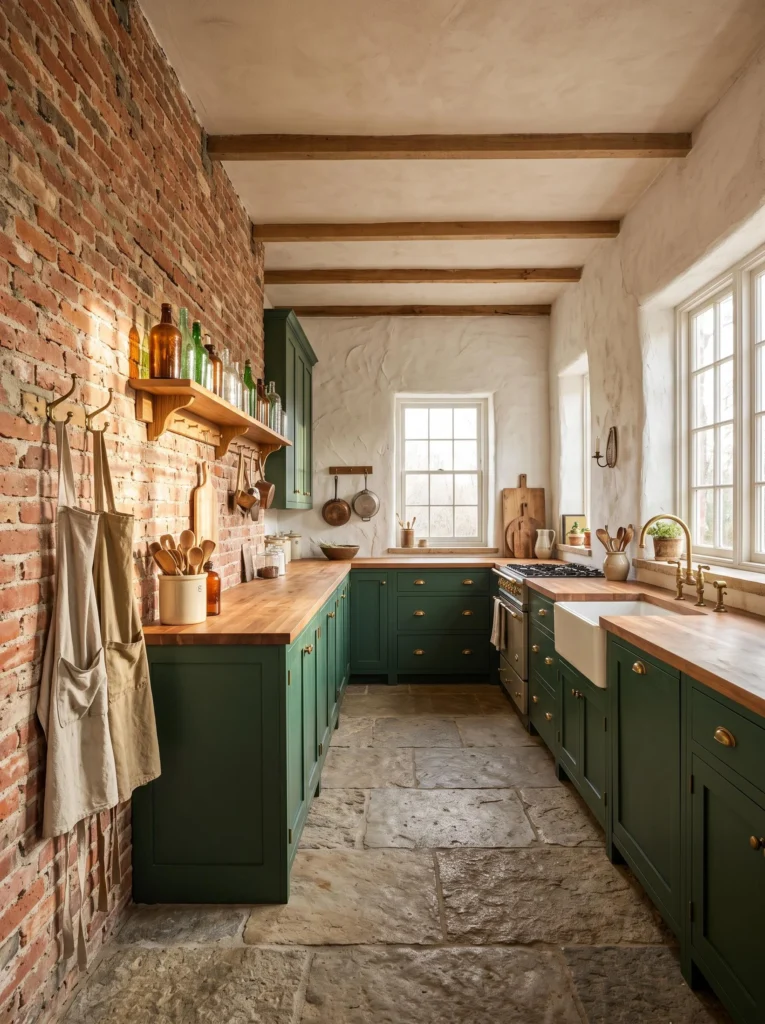
A Breakfast Banquette in Worn Leather
A built-in bench makes a small kitchen feel smart and snug. Build a banquette along one wall and cover it in cognac leather that wrinkles beautifully with age. Add a small round pine table and a pair of bentwood chairs. Hide storage inside the bench for seasonal pots and baking sheets. Hang a plaid wool throw over the back for texture. A wall sconce with a linen shade gives off a warm morning glow. It works because the rich brown leather contrasts nicely with deep green. Add an old framed botanical print to finish the nook.
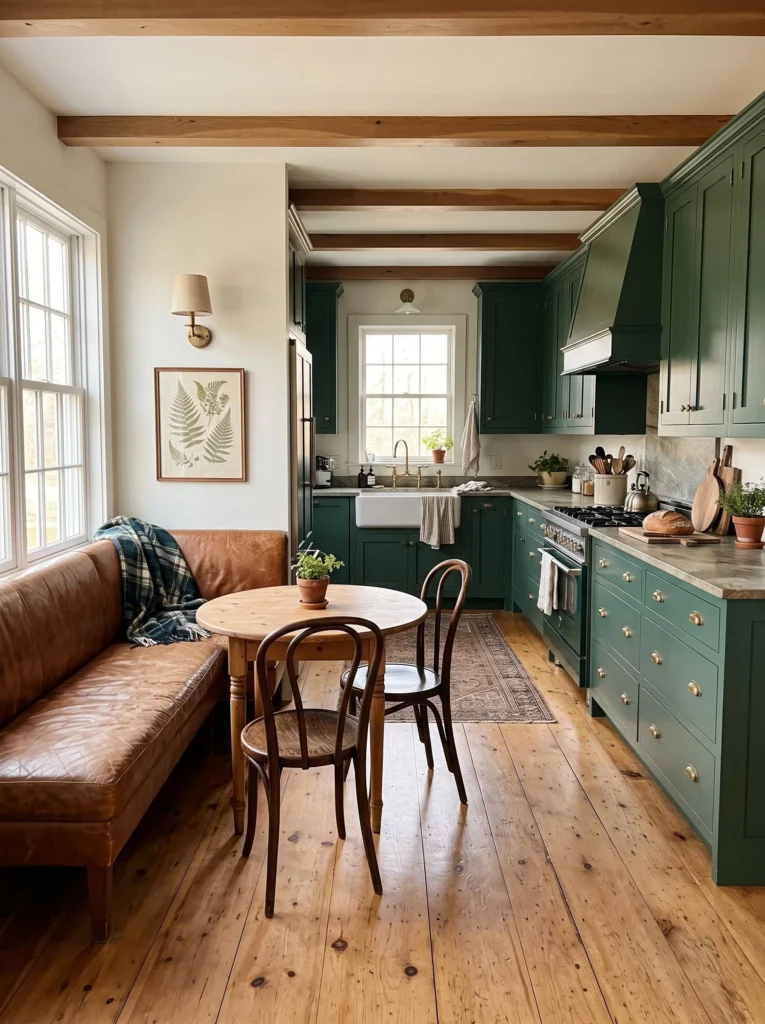
Everyday Counters Styled With Wood and Stoneware
Styling the counters matters more than most people think. Group a wooden bread box, a stoneware crock of wooden spoons, a salt cellar, and a glass jar of dried beans on a long butcher block. Keep the pieces in muted browns, creams, and olive. Lean one cutting board against the backsplash, and set a small oil lamp nearby. Don’t fill every inch. Leave open spaces so the eye can rest. This works because the display looks useful and intentional, not staged. Rotate a few items monthly, like a small bowl of lemons or a bundle of fresh thyme.
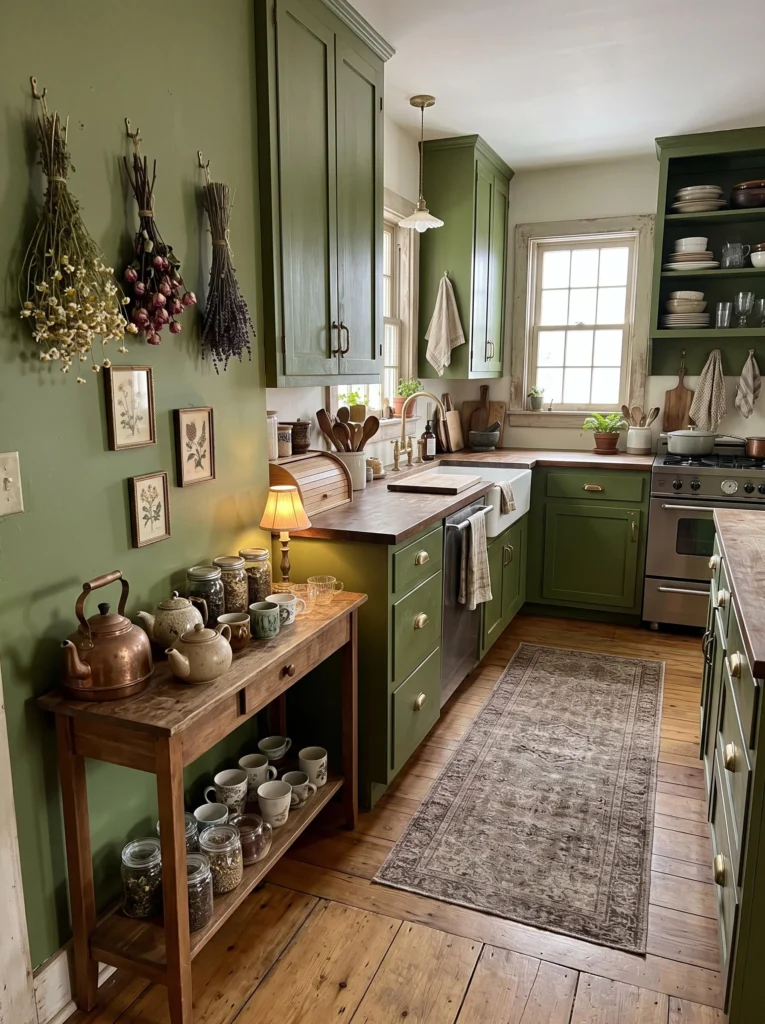
A Cozy Tea Corner With Dried Flowers
A little tea station makes mornings feel special. Set up a narrow console with a copper kettle, a ceramic teapot, and a tray of mismatched cups. Hang a bundle of dried chamomile, rosebuds, and lavender on the wall above it. Add a small glass canister of loose-leaf tea and a wooden honey dipper. Paint the wall behind in a deep mossy shade so the pale florals pop. A tiny shaded lamp makes it feel like a little cafe. It works because a small, focused corner gives you ritual and charm. Choose a slim piece so the walkway stays clear.
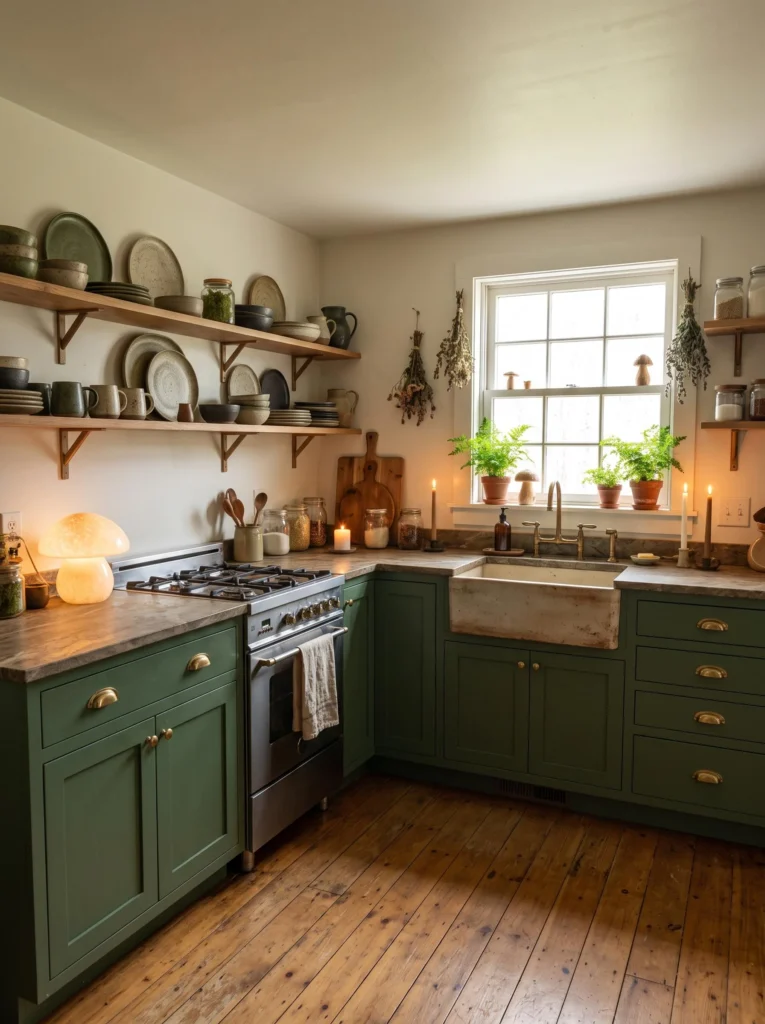
Mossy Ceramics and Mushroom Details
Finish the room with small whimsical touches. Choose hand-thrown ceramics with speckled glazes in moss, oatmeal, and charcoal, then add a mushroom-shaped lamp or a carved wooden mushroom near the window. Tuck tiny fern pots on the sill and a small jar of dried moss on a shelf. Keep it subtle, so it feels charming and not cartoonish. Warm candlelight brings out the glaze details. It works because small, quirky objects give a room personality and storybook magic. Mix matte and glossy glazes for variety, and buy from local potters whenever you can.
Home Styling Tips
- Choose a matte, deep forest green paint with a hint of gray, since pure bright greens look too modern for a cottagecore feel.
- Use warm white bulbs around 2700K and add layers of light, like sconces, lanterns, and candles, so dark rooms don’t feel gloomy.
- Hang dried herbs like rosemary, lavender, and thyme in small odd-numbered bundles, away from direct heat and splashing water.
- Mix at least three natural materials, such as aged wood, brass, and linen, to keep the room warm and textured.
- Renters can use peel-and-stick cabinet film, removable wallpaper, and plug-in sconces to get the look without losing a deposit.
- Edit your counters often, leaving open space so the style looks collected and calm instead of cluttered.
FAQs
What makes a dark cottagecore kitchen with forest green cabinets and dried herbs feel cozy?
It’s all about layers. Deep green paint, warm wood, soft linen, and gentle lighting create a hugging feeling. Hanging dried herbs add scent and texture, and they make the room feel lived in right away.
How do I hang dried herbs safely in the kitchen?
Tie small bundles with twine and hang them upside down in a dry spot with good airflow. Keep them away from the stove flame, sink splashes, and direct sunlight so they last longer and stay safe.
Can renters create this look without painting?
Yes. Use peel-and-stick cabinet film in deep green, swap the handles, and add removable wallpaper. Then bring in baskets, linens, and plug-in lamps. Everything can come off when you move.
Will dark green cabinets make a small kitchen feel tiny?
Not if you handle the lighting well. Dark colors can make walls fade into the background and add depth. Use warm bulbs, a light floor or runner, and a few reflective accents like brass or glass.
Conclusion
I hope these ideas gave you plenty of inspiration for your own cozy corner. A dark cottagecore kitchen with forest green cabinets and dried herbs is really about warmth, patience, and collecting pieces you truly love. You don’t need to copy every idea at once, so pick two or three and start slowly. Save your favorites, bookmark this page for later, and share it with a friend who loves moody, earthy homes. Personally, I think the best kitchens grow with time, so let yours tell its own story.